September 2022 – The Barn and Little Wolf

The Barn Costa Rica Santa Teresa – This coffee is from a new farmer for me and the subscription. Santa Teresa is the name of the new farm by Roger Urena, located in Tarrazu, Costa Rica. Roger comes from many generations of coffee farmers, and after leaving Costa Rica to work in the United States, he returned to the beautiful high elevation farm near the mountain peak of Santa Teresa, the namesake of the generational farm. Upon returning to the farm to take over operations, Roger noticed that rare and experimental varietals from other Costa Rican farmers sold for big dollars, and that Santa Teresa needed to be expanded beyond just Caturra and Catuai. The next year, Roger planted such as Pacamara, SL34, Geisha, and Sudan Rume. With all of these varietals Roger is learning how to dial in the pulping machine for each lot based on fermentation timing, flipping, and drying. With this particular lot, it is grown at elevations from 1600-2050 MASL and is full Catuai. This lot was processed as a yellow honey, which in this case means the whole cherries were rested in tanks overnight and in morning are passed through the pulping machine to remove most but not all of the pulp. Leaving some pulp on the seed is what creates the “honey” process. The seeds are then dried on raised beds with the remaining mucilage for around 12 days. The flavors from this coffee range from pleasant to exciting depending on the brewing method. The espresso was super intense and complex, while a batch brew I made was more mild and a cup I could just sip on all day. I tasted notes of honeydew, caramel, and papaya, with a lingering oolong tea mouthfeel. I brewed this coffee with a 16:1 water to coffee ratio and ground it right at my typical starting point. After a 45 second bloom, I poured three pulses spaced out by 35 seconds, ending my last pour at 2:25 for a 3:40 brew time.

The Barn Honduras Bomba de Fruta – I mean how could you not… what a freaking name. This coffee comes from the Caballero farm that the Barn has been buying from for years. The quality from here has always been at least good, but has been converging toward world class in recent years. Caballero family farm is located in the Marcala region of La Paz, Honduras, one of my favorite regions in Honduras. La Paz is emerging as one of the best climates for coffee growing in the world and is competing with substantially more famous and historic regions. Like the Santa Teresa, this coffee varietal is also Catuai. The process is a full natural, which can be super challenging in this region as the air is super humid and rain can come out of nowhere. This results in a drying period ranging from 20-40 days, depending on the harvest time and is important to keep the lots separated due to the varying fermentation times. It is clear this lot was an extended fermentation under low temperatures, as the flavor isn’t overly funky but insanely complex and tasty. I adore this cup in any brewing method or any pouring pattern. The cup is bursting with fruit. I am tasting fresh field strawberries, blueberry jam, and cajeta sweetness. I brewed this with a 15.8:1 ratio and ground it one click coarser than my usual starting point. After a 35 second bloom, I poured three pulses spaced out by 40 seconds, ending my last pour at 2:30. My final brew time was 3:40.

Little Wolf Nicaragua Regalo De Dios – The Regalo De Dios farm comes to us from the Balladerez family in Northen Nicaragua, a family I have been hearing more and more about over the last year or two. The farm sits at 1350-1700 MASL and has a total of 72 hectares where nearly every possible varietal/hybrid is grown. I actually got super excited about this one because I thought it was the same Nicaragua SL34 we had from Little Wolf last year, which actually was La Benidicion. This is even MORE exciting because this means multiple farmers in Nicaragua are doing experiments with varietals and processing. The clouded forest that Regalo De Dios sits in creates a unique micro-climate that keeps temperatures between 10 and 16 degrees Celcius year round, perfect for extended fermentations. In the cup I tasted lots of caramelized sweetness right at the front, then I got more chocolate covered raspberry, Would probably never have guessed natural on this one, maybe a lighter honey like a yellow or red. The cup was full of figgy sweetness any way I brewed it. I brewed this with a 16.3:1 ratio and ground it right at my typical starting point. After a 50 second bloom, I poured three pulses spaced out by 35 seconds. My last pour ended at 2:30 for a 3:30 brew time.

Little Wolf Ethiopia Laayyoo – When Little Wolf first sent the email notifying that this lot with coming up, I got a little confused because I’ve heard of plenty of Ethiopian coffees that say something like Layo Teraga or just Layo. It looks like Laayyoo is the full word to describe a specific type of tree that is indigenous to the region. The Laayyoo tree is used as a shade tree generally, and great for coffee gardens to shade the coffee trees from the intense Ethiopian Sun. Interestingly, the coffee we have here is grown by a group called Teraga. This brings the whole picture together for me as to why I thought of the name Layo Teraga. The Teraga group grows coffee at an elevation of 2100-2350 MASL brings the harvested cherries to Ture Waji and his washing station in Urage, Raro Nansebo. Waji is widely referred to as the “King of Guji”. Waji built his brand of Sookoo coffee (previously Dembi Uddo) in 2018 after Ethiopia coffee laws were revitalized to allow more trading done between the producers and international roasters. This cup has awesome jammy sweetness. I tasted rhubarb, cranberry, and kiwi. Very clean and elegant. I brewed this with a 15.7:1 water to coffee ratio and ground it 7-8 clicks coarser than my typical starting point. After a 30 second bloom, I poured two pulses spaced out by 45 seconds, ending my final pour at 2:00 for a 2:50 total brew time.

August 2022 – Kaffa’s Special Geisha Gift and SEY

Kaffa Peru El Cerro Geisha – This one is the gift – I knew I absolutely had to hop on this train as I have never seen a Geisha come out of Peru before. The climate and terroir of Peru is super similar to Ecuador, however there is less experimentation typically. I think this means the potential for crazy coffee is endless and it is good to see some of the producers stretching their wings. This Geisha comes from Efrain Carhuallocllo at his farm in Cajamarca (1900-2050 MASL). Efrain grows mostly Caturra crop but has recently dabbled in new trees such as Geisha. The cherries are picked and sorted, then pre-fermented in the cherry for 24 hours. They are then pulped and fermented for an additional 24 hours, then washed and dried for 15 days on raised beds. Efrain plans to buy new dryers and invest in new equipment to improve the quality of some of the newer experimental lots in the coming years. The cup tells a dynamic tale; I tasted juniper, lilac, peach, cardamom, and lemon curd. I am a huge fan of this one and decided to use the rest of it for espresso. I brewed this with a 15.5:1 ratio and I ground it one click finer than my typical starting point. I poured three pulses spaced out by 35 seconds, finishing my last pour at 2:15 for a 2:50 drop time.

Kaffa Peru La Palestine – As everyone should know by now I love a classic Peru profile for its simplicity. It is pure coffee seed juice when it is done well and is so pleasant to drink. Great as espresso, batch brew, immersion, anything. This is a full Caturra lot from the prized Cajamarca region located in the northern highlands of Peru in the Andes. This farm comes from the Alarcon Coronel family, it is a small farm with mostly Caturra and Red Bourbon grown around 1800-1900 MASL. This is a bit of an exciting lot, as it is not just a standard washing process which can be detected by the twist of flavors in this coffee compared to a standard Peruvian Caturra. The cherries undergo a pre-ferment in the cherries before being pulped and washed in the traditional method. This gives an extra acidity pop to the bean. In the cup I tasted fudge toffee brownie at the front, with cherry, and vanilla marshmallow. I brewed this with a 16.8:1 with a grind size two clicks finer than usual. I poured four pulses spaced out by 30 seconds, finishing my last pour at 2:50 for a 3:40 brew time.

Sey Kenya Gitutu AA – Gitutu comes from the Kiambu county just north of Nairobi and made up of SL28, SL34, Ruiru-11, and Batian varietals – a classic Kenya cooperative blend. This region of Kenya has been blowing me away in recent years and this one is no exception. I have always loved Kenyan coffee and once said it was my favorite coffee producing region – the profile on this is basically what my ideal profile is. I tasted rhubarb, cranberry, and grapefruit. The acidity on this one is pretty high so I apologize if that isn’t your thing. I brewed this with a 16.3:1 ratio and ground it four clicks coarser than my typical starting point. I had to let the bloom go a little longer than usual – around 45 seconds. I then poured three pulses spaced out by 35 seconds, finishing my third pour around 2:30 for a 3:10 total brew time.

Sey Honduras Daniel Moreno – This is going to be the last time we see the Daniel Moreno name on a bag. Daniel Moreno is the patriarch to the Moreno family of coffee producers in Santa Barbara. Think Mario Moreno, Danny Moreno, Mabel Moreno, the list goes on. Daniel passed away and this is the final tribute coffee to Daniel who helped create the famous coffees of Santa Barbara, Honduras. His legacy will of course live on through his kids who grow some of the best coffees in the world. This one is a classic Moreno Pacas varietal grown at El Campo, one of Daniel’s first experimental gardens. Pacas is typically a riskier crop to grow as it is super prone to disease and is a mutated varietal from Bourbon. The mutation causes a shorter plant to grow from seed and is considered one of the higher qualities of a Bourbon parent. The cup was mostly like a vanilla parfait with good granola and strawberries. I also hinted at some thyme on the finish. I brewed this with a 16.8:1 ratio and ground it one click coarser than my typical starting point and poured four pulses spaced out by 30-35 seconds allowing for the bed to fall a bit between each pulse. My final pour finished around 3:00 for a 3:45 brew time.

The late Daniel Moreno – courtesy of Collaborative Coffee Source

July 2022 – CleverCoffee / Vivid

Vivid Colombia Luz Divia Fierro Pink Bourbon – My first coffee ever from Luz Divia Fierro is of my favorite Pink Bourbon varietal, grown at 1650 MASL in the Acevedo district of Huila. Luz is among an emerging class of next level female coffee producers – she grows coffee with her husband’s father Elpidio, who originally owned the farm before passing it down, along with his vast knowledge of harvesting and processing. The actual farm name is El Meson; the earth consists of mostly loam soil with pockets of sand. The property features a waterfall and is partly on a national forest reserve. Luz planted around 20,000 Pink Bourbon trees several years ago when she began running the farm. This lot was washed and fermented for 40 hours total before depulping, and then dry fermented for an additional 24 hours before being thoroughly washed clean of any remaining mucilage. I tasted orange marmalade, a hint of jasmine, cranberry, and on the finish that good good Mott’s Applesauce. I ground this sweetie one click finer than my typical starting point and brewed this with a 15.5:1 water to coffee ratio. I poured three pulses spaced out by 35 seconds. If you notice your bed dropping super fast or even falling all the way below grounds, try pouring wider circles in a faster motion to stop that up. My third pour finished at 2:40 and my final brew time was 3:25.

Vivid Honduras Nahun Fernandez Pacas – It has been a minute since we had Nahun Fernandez coffee, the first time was early 2021. This coffee is just as interesting, as a fully Natural processed Pacas grown at 1600 MASL at the farm. Nahun harvests only the ripest cherries, then lays out the cherries to ferment in the sun. Once this is complete, the cherries are brought to the dry mill that Nahun and his family built and share. The collaboration with family, each of whom is performing their own experimentation techniques is pushing each of them to produce better coffee. Nahun is already advancing so fast that I can taste the progress from last time we used them in subscription as well as a random Parainema I had last year. I tasted melon and kiwi, with a mapley sweet finish. with super balanced acidity. This is much more delicate than expected which is a good thing to me, typically these coffees can be a little heavy. For brewing, I ground it 2 clicks finer than my normal starting point and brewed this with a 16.2:1 ratio. I let the bloom go for super long but as the coffee ages I will probably shorten it. Bloom should always be as long as the coffee needs it to be. I poured four pulses spaced out by 30 seconds, finishing my last pour at 3:00 for a total brew time of 3:35.

Clever Uganda Zinule – I had no idea what to expect with this one… I did not even know the process when I decided on it truthfully. This is a Washed SL14, SL28, and SL34 blend that comes from a brand new washing station called Bulambuli in Mt. Elgon, right up against the border with Kenya. Ben Mukhone is the official owner of the washing station and is working with Nordic Approach for importing purposes and education of local smallholders that supply the washing station with cherries. Most of the smallholders are growing coffee between 1800 and 2300 MASL, but typically averages around 2000. The idea behind bringing in these Kenyan varietals is interesting to me, as they have historical success and in my mind, can nearly guarantee quality with proper growing techniques and processing. Basically, if these gardens are bordering Kenya, what can be done to ensure the growing is done properly? This is where Nordic Approach knowledge comes in to assist and educate every level of the production line. In the cup I tasted Boysenberry, apple, and fresh strawberry jam. This is a super Kenya-esque cup but honestly it is cleaner, less acidic, and more balanced fruit. One of the best I’ve had and I will remember this coffee for a long time. I brewed this with a 16:1 ratio and ground it 2 clicks coarser than my typical starting point. I poured three pulses spaced out by 35 seconds. As typical with Clever, the bloom couldn’t last long since these coffees are LIGHT. My third pour finished around 2:10 for a 3:10 drop time.

Ben Mukhone of Bulambuli Processing Station

Clever Kenya Ruarai – Ruarai is the name of the river that runs alongside this gorgeous washing station located in Nyeri town in central Kenya. By now we all know my immense love for Nyeri and the bright, tropical flavors we taste from here. The Ruarai station is owned and operated by the Ruthaka Famers Cooperative Society, an organization in Nyeri that is made of several hundred smallholding farmers with an average garden size of 0.4 Hectares. Most of these farmers grow their coffee on the slops of Mt. Kenya. At the Ruarai station, water from the Ruarai river is used for all washing and processing. As with this specific blend, mostly all of the coffee brought here ends up as Washed process and is a mix of SL28, SL34, Batian, and Ruiru-11. Each farmer does their own sorting for ripe and unripe cherries. Once delivered, the cherries go through a disc pulping machine that removes the skin and external layer of pulp. The coffee seeds are then graded in to levels 1-3, and level 3 is thrown out due to low grade. In the cup I was blasted with raspberry, mandarin orange and ended with honey or almost candy sweet. Not as dry or heavily acidic as many Kenyans but still has playful brightness. I brewed this one with a 15.8:1 coffee to water ratio and ground it three clicks coarser than my typical starting point. I poured three pulses spaced out by 40 seconds, finishing my final pour at 2:30 for a 3:20 drop time.

June 2022 Coffee – Contrasting cups from April and Junto

Junto Rwanda Batoya Island Intango – This is the second Rwanda we have tasted from Junto – also from Baho Coffee. I don’t think of Junto as being a gatekeeper of excellent Rwanda but they do continue to surprise me and blow me away with the flavors they are bringing out of them. Bugoyi is the name of the washing station – located on the western border of Rwanda on Lake Kivu. Bugoyi collects cherries from around 1300 local farmers. The term “Intango” comes from the old style of clay pots that have been used by Rwandan farmers for centuries to ferment fruit. The resulting fermented juice was claimed to provide strength to warriors before a battle (I think we all get a lil liquid courage when we sip on some fermented juice 👀). This is a Low Oxygen Natural, but not fully anaerobic. The clay pots are not sealed, however as the whole cherry 100hr fermentation takes place, CO2 takes over the pot and pushes O2 out of the tank. Due to the nature of clay and how the pores change over time, the flavor profile here is truly unique to any other coffee in Rwanda or the world because of the microbes, yeasts, and bacteria that live in the porous clay. After this stage, the cherries are then moved to raised beds to dry. The cherries dry from 20% moisture to around 11%, this takes around 80 days. After this the seeds are milled and sent to us for roasting :). I tasted plum, strawberry, and herbs. It is most definitely a natural… It has a lovely brown sugar lingering finish though and I will for sure try to brew it differently and probably try it as espresso to get as much out of it as I can. I ground it one click finer than my typical starting point and used a 15.5:1 water to coffee ratio. My bloom only lasted about 35 seconds, and then I poured four pulses spaced out by 30 seconds. My final brew time ended at 3:00.

Junto Ethiopia Sedaqa Layered Fermentation – Sedaqa is a new washing station for us in the subscription. It is located in Bona Zuria in southern Sidama. While researching this farm it seems that everyone copy/pasted a standard write-up from an importer starting with “All sites have a claim to beauty since they are in the countryside of Ethiopia. But the Sedaqa Olonso site stands out for its simple breathtaking beauty that unfurls”. I couldn’t even find a picture of the beauty though! Anyway, this is a newer washing station that opened in 2019. The washing station is the processing home for about 300 local smallholding farmers. The cherries are dropped off and pulped, then put in fermentation tanks for 24-72 hours. After this, natural channels through the farm that come from rivers are used to fully remove the mucilage from the seed. After washing, the seeds are dried on raised African Beds, and turned manually by the station workers. Most of the cherries come from the local coffee gardens that only produce a few sacks of coffee per year. Due to the demand in specialty coffee, the farmers are being paid better, and Sedaqa is able to invest more in their community. These gardens are located at a staggering 2350 MASL. This cup was delicious and clean. I tasted orange marmalade and jasmine. The cup was balanced yet tart and lactic. Acidity is on point. I ground this six clicks coarser than my standard starting grind (I should probably just call 6 coarser my “Ethiopia Grind”. I brewed this with a 15.2:1 water to coffee ratio and had a weird pour. I basically did two blooms. My first bloom was short, only 1.5x the weight of the ground coffee and it lasted 25 seconds. Then I poured about 3x the total amount and let is bloom for another minute. So at the end I was at 1:30, and had 100 grams of water in the bed that started with 18 grams of coffee. I then poured two quick pulses with tight circles spaced out by 40 seconds. My final brew time was 3:10.

April Ecuador Pillcocaja Red Honey Ethiopia – BACK AGAIN with the Pillcocaja bangers! This farm is quickly becoming one of my favorites in the world and I have only ever had it from one roaster. Ana Maria and Nicolas are the owners of the farm and do all processing on site. The farm is located in Yunguilla Valley in Azuay, Southern Ecuador. The farm is located at 1650 MASL, and all the coffee trees grow under much larger native trees to the region. Until 2013, PIllcocaja was dedicated to growing and distilling sugar cane for liquor. After this, they landed a contract with Nestle to produce a huge lot of commodity gar-BAGE, but had special land with high quality soil to grow specialty. This led to April forming an extremely special relationship with Pillcocaja. I tasted melon and kiwi. Clean with excellent acidity. Possibly my favorite Pillcocaja I have ever had. I ground this one 3 clicks coarser than my typical starting grind and brewed it with a 15.8:1 water to coffee ratio. After a 40 second bloom, I poured four pulses spaced out by 35 seconds and finished my last pour at 2:45. The final brew time was 3:40.

April Costa Rica Volcan Azul Yellow Honey Marsellesa – Ok, so now this is like the 12th time we have had Alejo Castrok’s coffee from Volcan Azul so I will spare the grimy details of how the beautiful relationship sprouted between Patrik Rolf and Alejo Castrok. Importantly, this is a fully anaerobic Marsellesa, a varietal created as a hybrid between Catuai and Sarchimore. These are both super common varietals in Costa Rica. Sarchimore has excellent durability to leaf rust, and Catuai is just a fuckin winner. The resulting Marsellesa is a super durable plant that produces delicious sweet coffee. This coffee has great acidity as well. In the cup, I tasted blackberry, cardamom, Apple Pie, and a light, fruit-forward Cabernet. I ground this one right at my typical starting grind size and brewed this with a 15.8:1 ratio. I poured four pulses spaced out by 30 seconds after a quick 35 second bloom. The bloom dries out super fast and there is no reason to extend any further for this coffee. I finished my last pour at 2:40 for a 3:15 drop time.

May 2022: SEY and Kafferaven – ACIDITY TRIP

SEY Colombia Jhon Alexander Montoya – As we near the end of the diverse Colombia micro-lot season, I am excited to share this unforgettable gem. This is another Chiroso varietal from the Urrao region in Antioquia of northwest Colombia. This is possibly the 2nd or 3rd Chiroso in the subscription thus far. As a reminder, the Chiroso varietal is a newer crop recently brought to Colombia. It is technically an Ethiopian Heirloom species brought to Colombia, and has since been the winning coffee of multiple Cup of Excellence competitions. SEY has only recently started working with Montoya, but it is a relationship that they will pursue in following years to bring more of these advanced complexity profiles to their lineup. This and other Chiroso’s really should be priced higher than they currently are because of the cup profile. It doesn’t have the fame that a Gesha or a Yemeni has in the current specialty market, but if I was confronted with those three, I would for sure choose Chiroso. It is already up there in my all time favorites with Sidra and Pink Bourbon and I have only had two! In the cup I tasted bubblegum, lemon, and the essence of a light Cabernet. Brightness hits you up front with maple syrup throughout the cup. I brewed this one with a 16.2:1 water to coffee ratio and a grind setting one click coarser than my typical starting point. I let the bloom go for a full minute, then I poured three pulses spaced out by 40 seconds, finishing my last pour at 2:40. My final brew time was 3:30.

SEY Ethiopia Gore Dako – Gore Dako is a newer washing station located in the Agaro region of western Ethiopia. Gore Dako was recently opened by the absolute legendary Kata Muduga collective. Coffees overseen by Muduga are typically super clean and clarified, and not just lemon bombs either. The sweetness in these is much more clarified and balanced, likely because of the focus on crop shade and proper washing techniques. As this washing station is part of Kata Muduga group, it belongs to TechnoServe. TechnoServe is a project in Ethiopia dedicated to providing better resources and funding to Ethiopian Coffee Farmers, made to uplift the industry and residents of the region. TechnoServe has been super successful in these efforts, with direct effects shown in helping poverty in the region as well as higher quality in the cup. This one is super smooth and delicate. It has a sparkling champagne acidity throughout the cup along with mango that lingers long after the last sip. The sweetness on this cup was amazing and rivaled some of the sweetest Colombian coffees. Honeysuckle dominated the cup on the second brew. I brewed the Gore Dako with a 16.0:1 coffee to water ratio, and a grind setting 6 clicks coarser than a typical washed Colombia grind setting. After a quick 30 second bloom, I poured two slow pulses spaced our by 50 seconds. I kept my circles smaller and poured with focus so as to not agitate the brew too much. My final pour ended at 2:00 for a 2:50 brew time.

Kafferaven Costa Rica La Chumeca – Just wow on this one. La Chumeca, like the rest of Kafferaven’s selections is a direct relationship coffee. The farm and mill is run by Martin Urega in San Pedro, Terrazu. This is a super unique farm because of how hands-on the process is and how small the operation really is. It is classified as a micro-mill, and technically only produces natural processed coffee. Urega is a fourth generation farmer and uses unique processing techniques developed in his own family. No pulping is done by machine here. A mixture of Anaerobic and Aerobic fermentation is used in a process known by “Capulinero” developed on the farm. The whole cherries are thrown in to the sealed stainless steel tanks for the anaerobic fermentation. Once a specific pH is achieved, the cherries are removed and fermented again in open containers, then put back in to the anaerobic tanks to finish up once they reach a specific temperature. I tasted cherry, cranberry, honeycrisp apple, and herbs. This is a wild/funky/bright lil brew. I brewed this one with a 16.3:1 ratio, and ground it one click finer than my typical starting point. After a 50 second bloom, I poured four pulses spaced out by 30 seconds. My pours were more vigorous and wider to create a whirlpool in the bed to slow down the brew. My fourth pour finished at 3:00 for a 3:40 brew time.

Captured by Per at the La Chumeca mill.

Kafferaven Kenya Gatagua – This is another Kenyan coffee that comes from Per’s trip to Kenya in early 2020 that was extended due to border restrictions! Yay! We tried one of them last summer when four were released at the same time. Luckily, there was a more phased approach this year to the Kenya lots. The Gatagua factory has been in high demand for the last three years due to the high averaging score the coffees receive. The factory processes cherries from around 650 local smallholding farmers. The farmers grow crop that ranges from 1600 to 1800 MASL, and holds classes and training on growing techniques to ensure the producers grow higher quality to allow for a higher return financially. The exact varietals cannot be confirmed, but as typical with co-op Kenyan coffess it can be assumed a mix of SL28, SL34, Batian, and Ruiru 11. The cup hit me with SweeTarts, grapefruit, sherbet, and boysenberry. While acidic, it has a beautiful round mouthfeel. I ground this one 3 clicks coarser than my typical starting point and used a 15.8:1 water to coffee ratio. After a 45 second bloom, I poured two aggressive pulses spaced out by 50 seconds. This is a coffee that will benefit from increased contact time and possibly a higher water temperature. My final pour finished at 2:10 for a 3:00 brew time.

April 2022 – Manhattan and Little Wolf

Manhattan Colombia Deiro Garcia – This is an all around super fun coffee. Deiro Garcia’s farm is called Finca Lord Baltimore. The farm was bought by Deiro’s father Leo several years ago, and the previous owner had named the farm Lord Voldemort through a Harry Potter fascination; however Leo heard Baltimore instead. Leo passed away in 2019 and since then Deiro has been managing production at the farm. This first lot for us is an Ethiopian varietal called Sidra. I believe we have had at least one Sidra in the subscription before, but they are known to be super high quality and lend to great acidity and fruit notes. The Sidra cherries were processed in a washed Anaerobic method, so depulped fully and then sealed in tanks with a specific set of microorganisms to boost the fermentation in the tank. The seeds were grown at 1800 MASL at the Lord Baltimore farm. This comes from the Pitalito region of Huila. The cup is mostly delicate flavors; Chrysanthemum, Polish Cherry tea, and jasmine. The cup had an essence of washed Ethiopia, but very much had the mouthfeel and sweetness of a Huila grown coffee. I found lighter fruit notes than expected but more sweetness, which is the Huila terroir generally. I brewed this with a 16.5:1 water to coffee ratio ground one click coarser than my usual starting point. I poured three pulses spaced out by 35 seconds, finishing my last pour at 2:15 for a final brew time of 3:00.

Manhattan Colombia Camilo Torres – It does not mention this on the bag, however this is yet another coffee from fermentation lord Diego Bermudez. The coffees received from Diego Bermudez and roasted by Manhattan have been 100% insane. Camilo Torres comes from the name of the neighborhood that Diego’s family moved to, and where he became friends with his future coffee processing masters. For those new to the subscription, Diego has a degree in Biodiversity and microbiology. The farm was started by Diego to implement experiments based upon yeast strains, microorganisms, and of course, fermentation. As with most of the coffees we have tried, this is a Castillo varietal that has undergone the thermal shock Anaerobic process known so well at El Paraiso. The thermal shock part of this is washing the seeds with warmer water, then switching over to cold water before sealing the seeds in the tanks for fermentation. The resulting cup has excellent flavor qualities. Bright orange citrus, juicy fruits, honeydew, red grape, persimmon, and possibly dozens more that can be found in this dynamic coffee. I brewed this with a 16.5:1 ratio, and ground it two clicks coarser than my typical starting point for Colombian coffee. The density did not lead me to the coarser grind however, I am doing this to extend the brew time and extract more sweet flavor compounds. I then poured three sets of wide circle pulses at a faster rate to push the fines around in the bed. My pulses were spaced out by 40 seconds, finishing my last pour at 2:25. My final brew time was 3:20.

Manhattan Brazil Elias Goncalves – Like I have said about most of the Brazilian coffee in the subscription, this is a new producer for me! I am getting more and more excited about Brazil proving again that it can stand up on it’s own in the high-end Specialty market we are chasing. Elias holds a smaller farm in the region of Sao Sebastiano de Anto, with a super small amount compared to some of the giants in the Mata de Minas region. Elias’ family is new in the producing scene, and it is beautiful how he describes the work. It is a blessing for him and family to come together to pick cherries and process to the best of their abilities. The cup quality shows how much focus was spent on the coffee. The farm is super low elevation at 750 MASL, and they grow an experimental varietal called Catucai 785/15, a hybrid varietal between Catuai and Icatu. I really do not think I would have called this out as Brazil when I first tasted it. There was no presence of that classic nutty Brazil flavor I have run from my entire life. I tasted Bitter melon, kiwi, green apple, and then a hidden red fruit note in the background. I really can’t give a brewing recommendation here because this is an excellent option to experiment with and the reason that so many people received it this month. I want to do a long extraction with coarser grind but also I am using it to make espresso in my house right now so no middle ground. To start for pour overs, I recommend trying a 16.2:1 ratio with a grind size a couple clicks finer than your typical starting point. After a long 45 second bloom, I poured two slow pulses spaced out by 50 seconds. My second pour ended around 2:00 for a 2:45 drop time.

Little Wolf Colombia Las Perlitas – The return of Las Perlitas was met with excitement in my house. For those that were subscribers in January 2021 you might have received this stunner. This is once again a mix of local varietals, however not quite as exotic of a mix as last time. It is a classic Caturra/Castillo/Colombia mix. I actually remember getting a lot more florality from it last time which makes sense because of the Pink Bourbon and trace of Gesha in the mix. This one is much more on the sweet and heavy stone fruit side. This coffee comes from the “Mujeres de Giraldo” group. Mujeres meaning Women and Giraldo being the region in Antiquioa where these smallholding farmers, mostly women, have formed a community to educate, motivate, and support each other on growing and picking techniques. The group was founded by Yessica Parra, a young entrepreneur in the intensely competitive coffee world of Antiquioa. Yessica acknowledges the key role of women in coffee production, and that they are rarely acknowledged as the driving force behind production. Most of the coffee grown for this co-op is at 1800 MASL. On first sip I thought it was a delightful new version of what we had last year. In the cup, I tasted bright pink citrus, chamomile, and on the finish it almost has a lactic quality that comes from natural processes. Never would have expected this typically super clean coffee to have funk! I brewed Las Perlitas with a 16:1 ratio and a grind setting at my typical starting point for Colombian coffee. I poured two pulses after my 45 second bloom, spaced out by 45 seconds. My second pour ended at 2:00 for a 2:45 brew time.

Little Wolf Ecuador Lugmapata – Also from our January 2021 subscription comes one of my favorite coffees ever from Enrique Moreno of Lugmapata in Pallatange, Ecuador. Lugmapata coffees always blow me away with their complexity and brightness. It doesn’t hurt that they are typically Sidra or a different Ethiopian varietal transplanted to the exceptional. This lot specifically is a Bourbon Sidra and Typica blend and all trees at Lugmapata are grown between 1650 and 2000 MASL. At Lugmapata, all pickers are trained to only pick the ripest cherries, and then cherries are sorted to ensure only the ripest cherries are then processed. The coffees here are all double washed to ensure consistency in fermentation. The double washing yields a super clean cup. Lugmapata is once again tasting fantastic. I tasted Raspberry creamsicle, Lavender, and deeply complex flavors in the background. I brewed this with a 16.3 ratio and a grind setting one click coarser than my typical starting point. I poured three pulses spaced out by 40 seconds, finishing my third pour at 2:40 for a 3:30 drop time.

March 2022 – Vivid and The Barn

1. Vivid Colombia Blanca Marina – Our keynote of specialty coffee in 2022 is this Washed Castillo grown in the town of Pasto in Narino, Colombia. Blanca Marina is a newer producer for Vivid, but by no means new to the game. She has been producing coffee for decades, and now looks to her daughters, granddaughters, and great-granddaughters for help on the farm – called “El Aguacate”. While a simple Narino Castillo, this set of trees was put aside to let the cherries go past the red color which is normally considered to be ripe, which allowed them to turn purple. This was confirmed to not be considered “overripe”, however as it allows for the seed to take in that extra sugar from the cherry before being picked for processing. The fermentation was a standard 24 hours in tanks, then dried for two weeks on raised beds. This means the extra fruit flavor in this coffee comes directly from the cherry ripening which I find fascinating and the reason I say this is what specialty coffee is coming to. Experimentation, learning, growth. The flavors in the cup were vibrant. Cotton candy on the nose, and in the cup I tasted rhubarb, macadamia nut, and sauvignon blanc. The flavor and body in the finish was all Maple syrup. I brewed this with a 15.5:1 ratio, any higher and it gets cardboardy. I ground this one right at my standard Colombia grind setting and let the bloom go pretty long on this one to 55 seconds, but Vivid coffees tend to degas quickly so I bet this time will go down with age. I poured three pulses spaced out by 35 seconds for a 3:10 drop time.

2. Vivid Honduras Evin Gomez – This has to be the coffee I was most excited about this month. Evin Gomez is a super young producer in Santa Barbara and from the beginning he has been growing Parainema, the varietal from Santa Barbara that has been winning countless awards and a couple Cup of Excellence awards. This lot is fully Natural-processed 100% Parainema, grown at 1450 MASL. This one can be tricky to brew, and I myself will be letting it rest a couple more days as it needs some time to de-gas. The cup is pretty intense with flavor as well as body. I tasted a heavy dark chocolate with dried papaya, and those classic strawberry wafer cookies. I brewed this with a 16.7:1 water to coffee ratio, and ground it two clicks finer than my usual starting point. I poured four pulses spaced out by 30 seconds, ending my last pour at 2:40 for a 3:10 drop time.

Evin Gomez with Drying Beds in Santa Barbara

3. The Barn Ethiopia Gedeb Chelchele – Gedeb is a micro-region in the greater Yirgacheffe region of Ethiopia, and I am sure all of us have had a coffee grown in Gedeb before. Chelchele Estate is essentially a processing station for the local smallholders; however, coffee is grown at the estate. We can not be certain if this particular lot is grown at the estate or by local smallholders, as it is most likely all blended before processing the cherries. The Chelchele owner is named Metad, who is considered a great philanthropist in the area. Metad funds schools, coffee growing education, and scholarships for the locals. Metad is working toward coffee traceability as they realize that the modern coffee drinker cares about things like varietal and seed development. I nailed this brew on the first try, and was blown away by the flavors. The cup is all tropicals and berries. Strawberry to the face, mango, just so super sweet. On a second brew in a larger format it was slightly simpler but was like drinking Hibiscus tea. I brewed this with a 16.3:1 water to coffee ratio, and ground it six clicks coarser than my typical starting point. I poured two pulses spaced out by 45 seconds, for a drop time of 3 minutes flat.

4. The Barn Burundi Bumba Hill – Now time for the winner of the four coffees… Bumba Hill. This lot comes out of the Longmiles Burundi project, where washing stations are built to assist local farmers with access to water and electricity to produce some of the best coffee in the world. This is especially important for the Bumba Hill farmers. The coffee farm was incredibly difficult to reach, and left the farmers forced to walk three hours with the sacks of cherries to the nearest washing station. Thankfully, Longmiles project completed a new washing station last year called Ninga Hill that is much closer to Bumba and allows easier processing with less transportation required on foot from the Bumba Hill farmers. As is standard for coffees grown in the Kayanza region, this is a 100% Bourbon lot that is depulped, then fully washed. I have even heard that a team of people at the station lay out the cherries, then run and dance all over them to loosen the mucilage before washing. This cup is the Kenyaiest Burundi ever. I tasted blackberries, grapefruit, rock candy, and it has a lovely, silky body. It brews much more like a Washed Ethiopia though, because of the small, dense beans. I brewed this with a 16:1 water to coffee ratio, and poured two slow pulses spaced out by 40 seconds. My last pour finished at 2:20 for a 3:20 drop time.

February 2022 – Kaffa & Junto

  1. Junto Colombia Maca – On paper, this is likely the most exciting coffee on the menu this month. It is a close contender for the 2nd best coffee this month as well. This is Varietal Colombia seed, grown at a staggering 2231 MASL in the Cauca department. The producer for this one is named Tio Conejo, who owns his own farm with his family. The pickers are well-trained to only pick ripe cherries from the trees. For most coffees grown here the cherries are cleaned with Ozone gas and UV Lights, and for this lot they are pulped and then placed in the bioreactor with a specific strain of yeast. Then the tank is sealed to create the Anaerobic processing for these seeds. It is clear from this whole process that this farm is extremely advanced and educated on the science behind processing this organic product. Since the seeds are pulped before the Anaerobic fermentation, this is considered a washed Anaerobic. This one has the perfect balance of funk to brightness. This is an important brew to let cool before drinking, the freshly brewed cup doesn’t have as much vibrance. I tasted Kiwi, Rhubarb, and Blueberry with a Caprisun undertone and a slight tobacco quality. I brewed this with a 16.3:1 water to coffee ratio and ground it right at my typical starting grind setting for Colombian coffee. After a brief 30 second bloom, I poured three pulses spaced out by 35 seconds, finishing my last pour at 2:10 for a 3:00 total brew time.
  2. Junto Ethiopia Odola TebeArowacho – Odola is a newer washing station in Uraga, having started operations in 2016. While new, the quality in Uraga makes the processing purely a practice of not fucking up some of the most naturally delicious green coffee on the planet. Most of the coffee from this station is washed and is either grown in smallholder owned gardens or wild grown nearby. When I say smallholders, I mean most gardens are 1-5 acres in size. The processing is super standard for the region. Floated to remove defects, depulped, and then wet fermented for 12 hours before being dried on raised African Beds for 10 days. This is an exquisite example of a deliciously crisp washed Ethiopia. I tasted flavors that remind me of the absolute most killer cereal in history – Special K with strawberry yogurt clusters. It had some of that baked tart along with raspberries. The nose was all florals. Stick your nose in it. I brewed this with a 15.5:1 water to coffee ratio and a grind setting 8 clicks coarser than my usual starting point. That is two clicks coarser than I usually grind the dense beans that come from Ethiopia. I poured three tight pulses spaced out by 30 seconds, finishing my last pour at 2:00 for a 2:55 drop time.
  3. Kaffa Colombia Finca Danny – No the farmer’s name is not Danny, it is just the name of the farm. This is a coffee from one of my absolute favorite producers in the world, Jhon Wilson Poveda. Every coffee I have had from Poveda either from Kaffa or SEY has always been lights out beautiful. This is no different. The farm is in Acevedo, Huila. This is a small region we should all know by now that turns out the best product year after year and is considered quite new. This lot is a simple washed Caturra/Castillo/Colombia varietal blend grown at around 2000 MASL. The processing for this is fairly standard, albeit a longer dry fermentation period of 52 hours. What makes these coffees from Poveda so delicious is more related to the climate in Acevedo. The soil, cool mountain air, and shade from other trees is what feeds the quality of this coffee. This coffee turned out almost exactly like I had hoped. This is good news for me and my livelihood because this is the most common coffee I sent out this month. This has the classic Kaffa Colombia profile for sure. If the cup was a color it would be pink. It tastes of Rose, pink lemonade, and an overwhelming sweet pastry. I brewed this one a few different ways but ended up landing on a fairly standard Colombia brewing approach. I ground this one click coarser than my usual starting point, and brewed this with a 16:1 water to coffee ratio. After a 40 second bloom, I poured three pulses spaced out by 35 seconds for a total brew time of 3:15.
  4. Kaffa Kenya Jojo Estate – This is another beautiful Kenyan coffee from the Kenya roasting lords. I was told by the Kaffa squad that this could be the best Kenyan coffee they have had in years. This really means something coming from them, as Kenya is the first country that comes to my mind when I hear Kaffa. If you were wondering what the best coffee this month is after reading my Junto Maca description, this is the one. What is cool about Jojo Estate is the single-owner/producer which is still considered rare in Kenya. The estate is run by husband and wife power couple Joseph and Irene Njorge Njuguna. All of the trees are Ruiru-11, a disease resistant varietal. The Ruiru-11 is grafted to SL28 trunks, which I have personally never heard of any producer doing. I actually had to google what the grafting process of trees/horticulture even means. The farm is located at 1700-1800 MASL, and this lot is fully washed. The cherries are pulped, then the seeds are wet fermented for 16-24 hours and then washed off/dried. The drying process is done carefully; the seeds are flipped each day on the raised African Beds for anywhere between 10-18 days. It is super sweet with no negative traits. This is one of those coffees that I would put head to head with a really expensive rare varietal just because there is nothing you can knock it down for. I got notes of Lilac, Rose, Rhubarb, and cranberry when it was freshly brewed and hot. As it cooled it got brighter and turned to more of a lime and papaya profile. A+ on this one. I brewed this with a 15.8:1 water to coffee ratio and ground it five clicks coarser than my usual starting point. I poured two pulses after my bloom with wider circles poured fairly quickly. These were spaced out by 45 seconds. My final brew time was 2:50.
  5. Kaffa Peru Damian Espinoza – I asked about this one first (after I saw and instantly confirmed Finca Danny) and almost did not get it after I had settled on Jojo Estate. However, this is the first Natural-Processed Peruvian coffee I have ever seen. Not many people received this one but if you did, I know you won’t hate me if you don’t like it. As with many Peruvians, this is a certified Organic lot. Damian Espinoza is a farmer in the prized Cajamarca region known for growing awesome washed coffee. This lot is a fix of Yellow Caturra and Yellow Bourbon, and was dried in the cherry. Damian Espinoza has been growing coffee for many years, but turned to specialty coffee later on when a fellow grower won a Cup Of Excellence competition. The flavor profile on this bean was super interesting as I always have loved the subtle beauty of a well done Peru. As my first natural or even non-washed Peru, it basically exacerbated that sweetness and brought out more body and complexity. I got notes of toasted coconut, marmalade, and ripe strawberries. As the cup cooled it was all brown sugar cinnamon. My best brew of this one so far was sort of strange – I did a super long bloom and then four pulses. The grind was three clicks coarser than my typical starting point and I used a 16.3:1 water to coffee ratio. My bloom lasted a full minute. No more water or anything, just let the bloom fully ride out and then started my four pulses. I spaced them out by 30 seconds for a final brew time of 3:50.

January 2022 – CleverCoffee Roasters

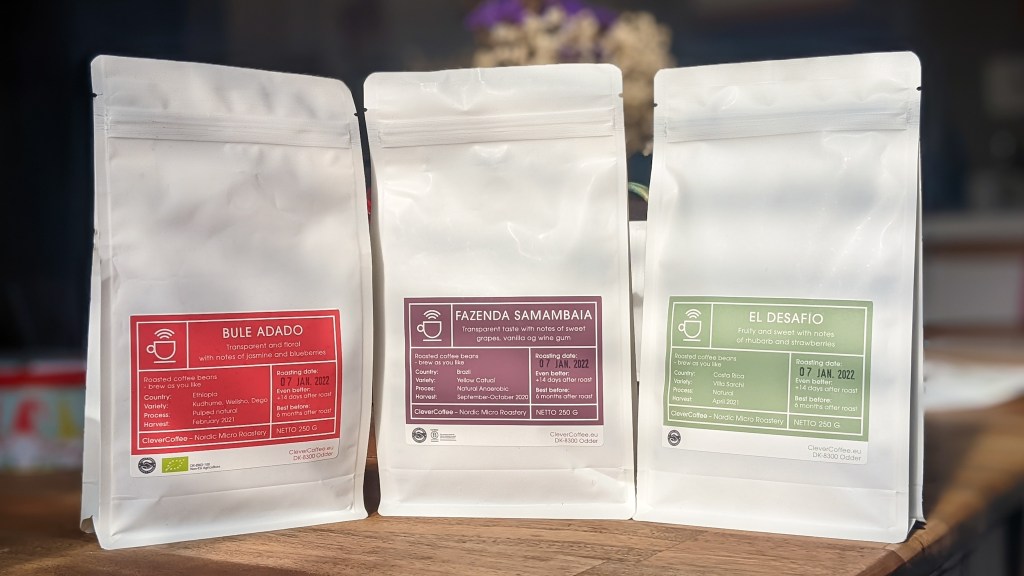
We have a new friend this month from a small town called Odder near Aarhus in Denmark. I found this roaster through a subscription that I am a part of which I mainly use to find new roasters. This is the first time it has worked! What amazed me about them was their Brazil. I am much more open-minded now but it wasn’t until a couple years ago that I really started to realize Brazilian coffees potential. If a roaster has a truly delicious Brazil, that means their other coffees are probably roasted extremely well as a Brazil is a difficult coffee to roast in a high-level specialty setting. I did not provide the Brazil from them this month to everyone as it is still a Brazil and would not fit everyone’s preference profile but I hope those who did, find the joy in it that I did. I am really happy to be bringing Clever over and sharing it with everyone, the brewing recipes were slightly different for these ultra-light hotties so read the brewing instructions carefully.

Colombia La Pradera – This is not the first coffee we have had from the La Pradera farm in northeast Colombia. The profile from this farm generally fits within what I consider the high quality Colombia profile, aka WORLD fuckin CLASS. La Pradera is owned by the Deza family, started by Hector in 1979. The farm has been passed down through the family and Oscar is the new Don. In order to give the look of a high-level farm, Oscar sought after certifications. One being Organic, which doesn’t really mean anything as all of the coffee in the subscription is technically organic just without the certification. But also, certified bird friendly! Basically this means using shade trees planted between coffee trees. Most specialty farms do have shade trees, as this better controls the sun exposure and helps with longevity of the trees. Also for the birds. This is a honey-processed Tabi grown at 1700-1900 MASL. The Tabi varietal is highly resistant to leaf-rust and can be tricky to yield a high quality cup. The flavor profile in this cup is unusually more vibrant when it is freshly brewed and super hot. I typically wait to get true tasting notes from a cooler cup but I hereby provide the rare recommendation to guzzle this stuff right down. I tasted cranberry and rosemary right away, followed by rhubarb and pear. I brewed the La Pradera Tabi with a 15.5:1 water to coffee ratio and ground it three clicks finer than my typical starting point for. With the finer grind, I poured two long pulses starting at 40 seconds, and the second at 1:40. The total brew time was 2:53. The point here was to use a fine grind and quick pours to maximize the brightness here, as a coarser slow pour here would have provided more of the sweeter compounds that honestly weren’t all that great.

Ethiopia Bule Adado – I knew this was going to be bonkers when I read the name. Adado is absolutely one of the best processing stations in Ethiopia. The bag says pulped natural, which really just means honey processed. In Ethiopia and Brazil they use the term pulped natural instead of honey, and it is actually a much more accurate term. I don’t know how many times I have had to tell customers that no actual honey was used in the processing. Adado station is a pooled lot from various smallholders in the region, and demand that none of the growers use pesticides in the growing. This obviously would be hard to prove but is an important ethical distinction. There are three noted varietals here – Welisho, Dego, Kudhume. The elevation ranges from 1700-2200 MASL, a range so wide it isn’t even worth knowing. This was the most obviously vibrant and exotic coffee I received from Clever. Each sip had me gasping for air; I would have believed it was a Gesha if someone told me. When hot, I got a lot of florality and orange blossom. It had a sort of Earl Grey/Bergamot flavor as well which had me start thinking it was a little bit Burundi-esque. I also wrote in my notes “Banana!” so I guess we can throw that in the pot. I brewed this with a 15.3:1 ratio and ground it six clicks coarser than my usual starting point. I poured two fairly quick pulses but spaced them out by 40 seconds, finishing my pout at 1:40 for a 3:00 brew time. This one had a super long draw down time which I think is required for these super light coffees to extract all the flavors out of them fibers.

Brazil Fazenda Samambaia – Alas, the one I keep talking about. This is a natural Anaerobic Yellow Catuai grown at 1200 MASL. Do not get all hype boy on me about the Anaerobic part here though, a lot of coffees in Brazil are anaerboic in the specialty world but they do not have the same pop as the other Anaerobics we see here. Not shitting on this coffee at all though. This varietal is so special in Brazil, most of the highest level specialty coffee I have enjoyed in the last few years (like only 3-4 lol) are yellow catuai. This yields a clean cup with soft reminders of the country this bean was grown in, but not overwhelmingly earthy or nutty. The producer is a new one for me, his name is Henrique Dias Cambraia. When he took over the farm from his father who dual-careered as a Coffee Farmer and a Medical Doctor, he wanted to transition the cash-cow commodity farm to a more sustainable model, producing consistentf varietals that will be delicious year after year. Long-lasting trees, picking ripe cherries, maintaining a strong staff by treating them well and creating great working conditions. The reason for loving this Brazil so much is because it did not taste as much like a Brazil. I would put it on par with one of my beloved Kafferaven Nicaragua lots actually. The big fruit notes and the dry earth played together so well. I could taste a small amount of ferment but it actually kind of worked with the fruit. I tasted chocolate covered strawberries right away, followed by cantaloupe and raisin. I brewed this one kinda weird… so there is NO BLOOM. I did two identical pulses starting at 0 seconds. Don’t ask me what led me to this – the voices of my ancestors told me to do it. I poured heavy, wide circles for these. Each pour was about 30 seconds, and I took a 20 second break between pours. The final brew time should be at least 2:25. I used a 15.8:1 ratio with a grind size two settings finer than usual. You can of course try any method you want for this one but with this method I got the most clarity.

Costa Rica El Desafio – This small lot comes from Cafe Rivense in the Chirripo region, near Chirripo National Park and Forest. This is a Natural process Villa Sarchi grown at 1550 MASL. I love the Villa Sarchi so much as it always is deeply complex and when roasted correctly, the flavors are wild. Cafe Rivense is owned by the Rojas family, started by the parents over 30 years ago and now run by the kids. Similar to the Brazil above, the kids took over and wanted to change the business model to a specialty market. They used techniques like new experimental varietals, reusing coffee mucilage waste as a natural fertilizer. El Desafio means “The Challenge” which is named for the struggle the family went through for trying to produce alternative-processed coffee. They have been experimenting with honey and naturals for many years now with many failed experiments. After failing so many times, this is the first natural the family has released and as a direct partner of Clever, they were able to purchase this first experiment. This was the one that stood out the most on the cupping table. I drew like a double-outlined star around it in the notebook. It has vibrant tropical flavors and tart cranberry notes. It was tricky to figure out how to brew but I knew the potential locked in those beans and kept at it. Once cooled it gets slightly funky but it also brings out more cherry. I brewed this one with a 16:1 ratio, and a grind setting one step closer than my typical starting point. I poured four pulses spaced out by 35 seconds finishing at around 2:30 for a 3:00 drop time.

December 2021: Kafferaven Per Nordby & April Coffee Roasters

April Kenya Kianimui AA – The coffee I am most excited about this month goes first on the list here. We tried the Peaberry version of this lot a few months ago and it was one of my favorite Kenyan coffees of the year. When Patrik notified me this one was tasting better than that one, I knew it would not only be a great experiment to compare the two but it would also serve the purpose of the subscription to use the absolute best coffees I can find in the world. The Kianimui Washing station brings together local smallholders in the Ngariama and produces coffee with utmost focus. In this cup I tasted wild blackberry, sparkling rose, some sort of spiced thai iced tea flavor, christhanenum, and blood orange or maybe nectarine. This coffee is astounding and well worth the $15+ I paid for it knowing I was going to lose money on it :/ but happy holidays! I brewed this with a 15.5:1 coffee to water ratio and ground it several steps coarser than typical starting point; Seven steps coarser on first brew but will probably go five or six coarser next time to tighten things up. I poured two pulses spaced out 45 seconds and my final pour finished at 1:50 for a total brew time of 2:50.

April Guatemala El Socorro Maracaturra – One of the newer partner farms of April’s comes El Socorro, owned by Producer Diego De La Cerda. This is yet another farm in Guatemala that stayed quiet in 2020 and then blasted forward in 2021 with wild varietals and processes. This coffee is a washed Maracaturra grown at 1800 MASL, staggering heights for Guatemala. As a reminder, Maracaturra is a hybrid of Maragogype (Big in Brazil) and Caturra (Big literally everywhere). The result is a larger bean matching the Maragogype but with flavor complexity the Caturra can have under the right growing conditions and processing. This was the first coffee I could taste clearly after the Covids quit fucking with my nose and it was an excellent choice. This coffee was beautiful and had such intricate flavors. The first taste was grape and butterscotch, followed by that fire raspberry toaster strudel (double icing). There was a tart cherry or pomegranate flavor that rule the whole cup. The body is excellent, super light, tea-like, and clean. I brewed this with a 16:1 water to coffee ratio and a grind just slightly coarser than normal. I poured four pulses spaced out by 35 seconds with a slightly wider pour about 1.5″ in diameter. I finished my fourth pour at 2:20 for a final brew time of 3:10.

El Socorro Farm Cherries – Only the ripest cherries shown all the way on right are picked

Kafferaven Nicaragua La Picona – Not my first time using a coffee from La Picona roasted by Kafferaven and it won’t be my last! I used a lot from here just a few months into the coffee subscription as they changed my view on what Nicaragua coffee can be. I have gone over La Picona before but I will talk about them again as a reminder. The farm La Picona is located in Dipilto in an area classified as a nature reserve. The nature reserve has excellent shade coverage from trees, fertile soil, and cool air setting it apart from most Nicaragua coffee grown in hot climates. The farm is owned by Samuel Zavala, a long time friend and partner of Kafferaven. The coffee I have from here year after year always puts a smile on my face. The coffee is grown at 1200-1400 MASL and the main crop here is Maracaturra, which is the varietal of this lot. This lot is a Natural Process, where the ripe cherries are soaked before laid out directly under the sun until fully dry and then moved to the shade for fermentation to slow down. This is a classic dynamic Kafferaven Nicaragua. The La Picona farm is the original Nicaragua that changed my outlook on the Nicaragua profile. This starts out with a tart cherry and ginger note alongside the deep complex earth note. But wait, we hate earthy notes? For some reason these coffees just flip my preferences upside down. If you got this coffee, I am trusting you to have an open mind and think about these flavors without bias. This is a coffee I could win espresso competitions with and then take it to my cranky Uncle’s house and make him a cup he would love. I brewed this with a 16.7:1 ratio and ground it at my usual starting point. I poured four pulses spaced out by 30 seconds, finishing my last pour at 2:35 for a 3:10 drop time.

Kafferaven Ethiopia Bensa “Julkaffe” – The Julkaffe in the Nordic countries is a coffee chosen to put a smile on your face around the holidays, translating directly to “Christmas Coffee”. The funny part about it is I never have had a clue why any of the coffees were chosen for the selection. They are always really good and one of the top coffees most of the roasters have at the time but it still feels like a random thing. Anyway, this is from Bensa Segara in Sidamo – a smaller region with many smallholder farmers. The washing station this coffee comes from is called Logita, recently purchased by a newer producer named Heleanna Georgalis. Heleanna bought this washing station in 2017 with the purpose of helping the local farmers with their growing practice and putting an emphasis on focus and quality in the processing. Heleanna has her own coffee farm nearby that has been in the family for generations. This lot is not from there. This is a washed Heirloom blend of local cultivars grown at 2100 MASL. In the cup I tasted a super herbaceous and citrusy profile. It was more on the Yuzu side because of the herbal notes rather than straight classic Ethiopia lemon. I also got a juicy papaya note that was playful next to the citrus. On the front end I tasted a sweeter brown sugary note that began the herbaceous trend to bridge in to the citrus. It is a lovely coffee. I brewed this one with a 16.2:1 water to coffee ratio and ground it at my usual Ethiopia grind setting, six clicks coarser than Colombia. This bean was obviously super dense and hard coming out of the bag so I knew I should brew it quickly and emphasize the acidity. I poured two pulses spaces out by 45 seconds, finishing at 1:40 and a drop time of 2:40.

Kafferaven Nicaragua El Arbol – El Arbol is a farm I have had mixed opinions on in the past based on a few different lots. Apparently they are a lot newer in the world which explains why they make so many attempts to use progressive techniques such as 1000 hour Fermentations and Carbonic Macerations. The farm is located in Dipilto as is the La Picona grown at 1150-1300 MASL. This farm is actually partly owned by Per Nordby and a few others in the coffee industry and is used to experiment. This lot is a standard Pacas, picked at ripe harvest and then processed in the Carbonic Maceration method where whole cherries are sealed in tanks flushed with CO2. Review the “How I Brew” post on my page to review this method. My one description for this one is “tricky to brew”. I had to dump out my first brew right away as I ground it at my usual starting point; I should have known for a massive sea shell bean and a weird process that there was nothing “usual” about it. I ended up going two clicks finer and still did not go fine enough. The last brew I made was turning the corner of letting out the explosions of flavor locked in these beans. Unfortunately, I ran out before I was able to achieve the full profile, but I got a light note of fruit roll-up and peach. In the brews I made, the profile was overwhelmingly: just straight chocolate and hazelnut which made for a nice cup but not the crazy complex profile I know this coffee should have. I recommend grinding this one 3-4 clicks finer than your starting point and using a 15.5:1 water to coffee ratio. Pour two slow pulses, one at 35 seconds and the second at 80 seconds. If the bed is dropping out right away then try wider circles before going finer. The brew time should be around 2:45.