November 2021: Manhattan and Sey Honduras freshies

Manhattan El Salvador Carlos Mendez – Mendez owns a farm called Los Cotuzos located in Ahuachapan. This is a fairly large farm with a decent production size. And considering the size, Mendez is super involved with growing each tree and the processing. This lot was actually commissioned by Manhattan to grow a massive seashell of a bean and then perform the double fermentation method. The cherries are placed directly into standard fermentation tanks for 24 hours, and then removed and placed in anaerobic tanks for another 24 hours. Since this is a natural, the cherries have been intact for the whole 48 hours and once removed from anaerobic tanks, they are dried in the cool mountain air for 40 days. The cool weather here is important, as you will notice this hardly tastes like a natural. That is because the lower temp ferments it slowly, thus not allowing for funky fermentation flavors. This yields a delicate yet deeply complex fruity profile. I instantly tasted dark chocolate covered raspberries. The Pacamara profile here is filled with complexity and she a bit spicy. It could be more Mexican Hot Chocolate than dark chocolate. I have not had Rooibos tea in ages which is what Manhattan describes, so possibly Rooibos too. On the finish there is a long tart red fruit note that allows you to give a long rest between sips. The finish on this one is probably my favorite part. I brewed this with a 16:1 water to coffee ratio and ground it one click finer than my usual starting point. I poured three slow pulses spaced out by 40 seconds, finishing my third pour at 2:35 with a 3:00 drop time.

Manhattan Kenya Karatina – For me, a simple washed Nyeri is still one of the most excited coffees to receive, going on possibly 10 years now. This is a pure SL28 varietal brought to us by the Karatina factory on the south end of Mt. Kenya National Park. Most of the lots produced by Karatina factory are blends of small-holder farmers and could be up to 1,450 local farmers. The Ragati River that runs through Mt. Kenya National Park is the main water source here used for washing each bean free of mucilage. The farmer cooperative gives farmers back credit for school fees, some gardening supplies, and for emergencies. The goal here is to provide the local farmers with resources and education to help Kenya climb back up to the top producer in the world. This has been a big push by Kenyan government in recent years to fund farmers, as they know they have one of the best terroirs and as a baseline can grow some of the tastiest coffees. They just have to catch up with other nations with better access to water and education. This is one of the more delicate and soft Kenyan coffees I have had. I tasted an initial floral note which was nice, but then I was surprised to get hit with big Fruit Punch notes. Like Hawaiian Punch not Gatorade Fruit Punch flavor. Hella sugars and dynamic fruit notes. As it cooled I got more sweet citrus and jasmine notes like a calamansi or kumquat. I used a 15.5:1 ratio and ground it four clicks coarser than my usual starting point. I poured two long, drawn out pulses; each about 40 seconds each finishing my second pour at 1:15 with a 2:30 drop time. Any longer on the brew time gives this coffee an undesirable papery taste.

Sey Honduras Olvin Moreno – What else do we need to say, Olvin is a Moreno. The whole family has coffee production in their blood. Olvin is one of the six Moreno brothers who inherited a small lot from the godfather of Santa Barbara, Daniel Moreno. This lot is 100% Pacas grown at Olvin’s small farm at 1700 MASL in Santa Barbara. This is processed in a fairly standard method for the region; floated for defect detection, dry fermented for 24 hours, and then dried on raised beds for 16 days. This is a nearly perfect tasting Honduras. The caramelized sugars and the berry notes play so well together to create a well rounded, sweet cup with deep complexity. I tasted grape, dried fruit, and brown sugar. I brewed this with a 16.2:1 ratio, and ground it four clicks coarser than my typical starting point. Both this bean and the Bitalina Lopez are super dense and grown at high elevations forcing me to go much coarser. I poured four pulses spaced out by 35 seconds finishing my last pour at 2:30 for a 3:20 brew time.

Sey Honduras Bitalina Lopez – This is also a stellar return from SEY. The farm Finca Bitalina by Bitalina Lopez is small but fantastic. The focus on each tree is intense and careful. I do not recall the last lot I had from Bitalina but it was either Bourbon or Pacas, this one being a blend of each. Bitalina has a super small growing garden of .3 Hectares in Santa Barbara located at 1750 MASL. Most of the cherries here are processed the same for consistency; floated for ripeness, dry fermented for 22 hours, and then manually washed SIX times before drying on raised beds for 2 weeks. The coffees here are always super clean, sweet, and berry forward with amazing complexity. This is a full bodied cup with cacao, herbs, kiwi, and possibly dragon fruit. There is a ton of complexity to be unlocked in here, but I only had a 16 gram sample of this so this was my only shot. I brewed this the exact same as Olvin Moreno as they are from the same region and nearly the same elevation. So 16.2:1, four clicks coarser than usual, and four pulses at 35 seconds each finishing at 2:30 for a 3:20 brew time.

October 2021 Coffee: Kaffibrugghúsið Sweeties and stunningly unique from Little Wolf

Kaffibrugghúsið Guatemala Los Arroyos – It has been a little while since we got to drink these Icelandic sweethearts, normally the time between using them is quite long due to the high shipping costs and how long it actually takes to get here (note the coffee was roasted 2-3 weeks ago). Here we are again, amazed over the sweet caramelized profiles of the Kaffibrugghúsið roasted coffee. Los Arroyos is a 50 hectare farm at 1600 MASL owned and operated by Felipe Venenciano Martinez Lopez and his three sons. Los Arroyos is part of a collective of farms that works exclusively with Ally, the importer this was brought to Europe by. Mostly only washed coffees are produced here, and all processing is done on site. The coffee is processed at higher elevations than typical for the region to slow down fermentation to create greater complexity, and then dried at a lower elevation to quickly dry. I tasted sweet mango nectar, grapefruit, and brown sugary chocolate hazelnut notes. There was also a strange sensation while drinking this one. It was like if you could capture the flavor of incense burning and put it in the cup, which is difficult to explain. Maybe someone will understand when tasting it. I brewed this with a 16.7:1 water to coffee ratio and ground it right at my typical starting point. It is a rather low density bean, so with this grind I poured slow wider circles rather than grinding super fine. I poured these slower circles spaced out by 30 seconds and four pulses. My drop time was 3:10.

Kaffibrugghúsið Ethiopia Acacia – This is actually my first washed Ethiopian from this roaster, which I was a little nervous about considering the typical profile of their coffees. I love them for the natural sweetness in the American coffees, but did not know how African Acidity would work. This is an intensely flavorful and acidic washed Ethiopia Heirloom also coming from Ally. The name Acacia comes from Ethiopia’s national tree, not for any real reason other than it needed a name LOL. This lot is produced by local smallholders in the Guji region that carefully pick ripe cherries from their trees, and then depulp and wash the cherries by hand in concrete canals at the local washing station. Wooden paddles are used to move the cherries around during fermentation to remove the mucilage and make sure the seed is clean. When this coffee is freshly brewed and hot, it was A Belgian Quad Ale. So basically malty spice with excellent sweetness. It then changed to a more classic Ethiopia flavor profile of lavender, peach, and tart berries. On the less boring side, it has a vanilla-cinnamon pear pie vibe. I am making this interesting with the brew on this one. I would overall recommend the same grind setting, six clicks coarser than standard grind setting as this is a washed Ethiopia. I poured two pulses spaced out by 40 seconds finishing my last pour 1:45. Now, I used ratios between 16.2:1 and 17:1. At 16.2 you will get more lemon acidity and tartness. At 17 you will get more of the lavender and prickly pear notes. I recommend using both ratios as I would consider both to be “dialed in”, however I love when I can alter the profile.

Little Wolf Honduras La Bendicion – This is a modestly sized, 2nd generation farm located in the Ocotepeque region. The farmer is Edgar Giron who has operated the farm for decades. The farm was mostly used for produce and livestock until about 2007. 2007 was also a year that specialty coffee roasters were gaining traction in cities all across the world. Producers like Giron notice this. Better coffee can be produced if there is a market for it, and there will be new producers standing out making fantastic new coffee if we continue demanding the high quality coffee we are growing so used to. Giron has continued growing a diverse selection of produce and using some as shade trees for the coffee plants. The main varietal in this lot is the IHCAFE 90, a mainly Honduran hybrid varietal that is high yielding and rust-resistant, an important factor in lower elevations Honduras producers are required to address in growing practices. I did not get a lot of red fruit or cherry notes which is what was described to me. I do agree that it is very sweet, and I would say pairing this one with the Kaffibrugghusid Guatemala would be great coffees for people that hate acidic coffees, but also interesting because both profiles are indicative of their respective country of origin. This Honduras is super smooth and silky and it took me three brews to find the holy grail of extraction. I tasted mostly notes like white grape and lemongrass which are fairly mild tasting notes generally. The coffee has a lot of complexity going in the background and is super sweet. I brewed this coffee with a 16.2:1 ratio, ground it one click coarser than my typical starting point, and poured four pulses spaced out by 35 seconds. My final pour finished at 2:35 for a 3:15 drop time.

Little Wolf Nicaragua La Bendicion – This La Bendicion farm is located in the Diplito mountain ranges, specifically Nueva Segovia located in the northwest of Nicaragua along the Honduran border. The famer is Luis Alberto Ballabarez. Luis is known for Little Wolf Nicaragua La Bendicion – This La Bendicion farm is located in the Diplito mountain ranges, specifically Nueva Segovia located in the northwest of Nicaragua along the Honduran border. The farmer is Luis Alberto Ballabarez. Luis is known for attention to detail. Detail at every stage of the process starting with cherry picking schedules, to drying times that vary depending on the process. This particular coffee is a natural processed version of the Kenyan varietal SL34. I am going to start looking for more coffees from this farmer as I am obsessed with the quality coming from Nicaragua in the last couple years, and Luis is at the top. I know another roaster that I would not use for this that had a Pacamara from Luis and I would love for a trusted roaster to get this. The farm is ideal for coffee growing conditions, sitting at 1600-1800 MASL with loose, sandy soil rich from the biodiversity of the farm. The cup was super pleasant but also rich with complexity. I tasted plum, blackberry or possibly gooseberry. There was a sour red fruit note. I brewed this with a 16.3:1 ratio, and ground it two clicks coarser than my standard starting grind setting. I poured three pulses spaced out by 40 seconds, finishing my last pour at 2:15 for a 3:05 drop time.

September Coffee: Vivid Coffee Roasters – – Kaffa

Kaffa El Pino – I sincerely wish I could have gotten this one to more people as it was the surprise this month. I don’t know why it was a surprise, as it is the #2 Acevedo cup winner. Maybe I’m just a bad person with bad coffee intentions? El Pino is the farm of famous producer Maria Asecencio. This lot is a classic washed Colombia varietal. It was wet fermented (washed) for just 12 hours and then removed and dry fermented (natural, kind of) for 36 hours. This produced a CLEAN CLEAN cup with acidity and stone fruit. Asecensio included the following note for all drinkers of her coffee: “I’d like to tell the consumers that my life has not been easy. I got where I am with discipline, dedication and work. I have obtained my things and I have a wonderful husband who supports me in my daily ventures and I am very committed to the quality of coffee. My pride is to get to be differentiated in the national and international market. I hope you like my coffee since it is processed in a clean and safe way and with great effort.” This cup is jammy, clean, full of blackberry, vanilla, finish of geranium flower and/or wormwood (Yes i’m saying it is a little Malort-y). I brewed this with a 16:1 ratio and ground it right on the click of my usual Colombia grind setting. I poured four pulses spaced out by 30 seconds, finishing my last pour at 2:20 for a 2:55 drop time.

Kaffa Kenya Berco – One of the greatest benefits of working with European roasters is the connection to producers in African countries. I am not sure how they build the relationships so much faster than U.S. roasters, could possibly just be proximity in geography. Berco is the name of Theophilas Mwangi’s farm in Nyeri, Kenya. Berco has the luxury of rich, volcanic soil perfect for growing coffee. Typically the lots are grown at 1750-1800 MASL and Mwangi exclusively grows SL28 and SL34 trees. No Batian bullshit. This is a glorious Kenya with big sweetness and more reserved acidity than typical. I tasted Scuppernong, Grapefruit, raspberry, with a lingering molasses finish. The sweetness was rounded out and danced alongside the bright fruit notes. I brewed this with a 15.5:1 ratio and ground it four clicks coarser than usual starting point. I poured two pulses slowly with wide circles to extend the brew time slightly, finishing at 1:50. My drop time was 2:40.

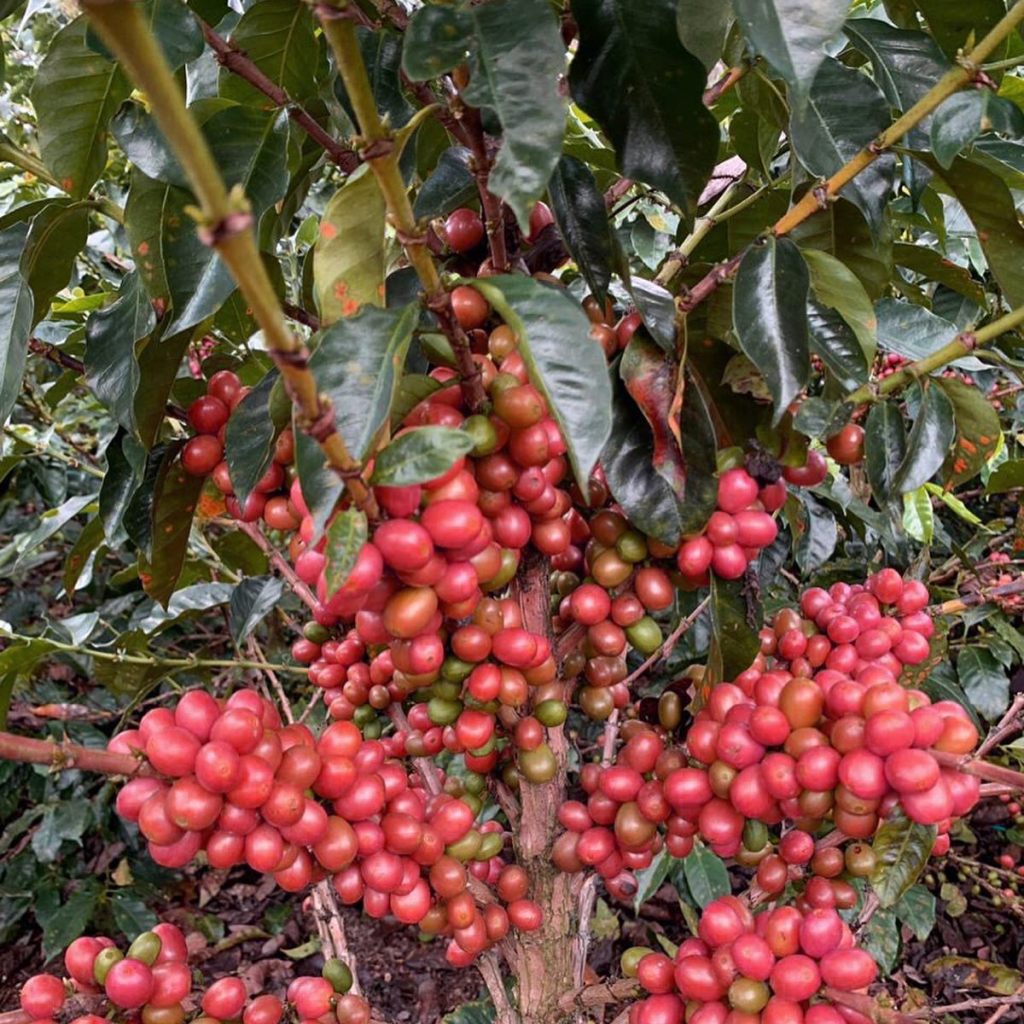
Vivid Colombia Pink Bourbon – I sure hope everyone has been enjoying the Pink Bourbon as much as I have, because it is basically a 100% confirmed subscription coffee when a roaster has one. This one comes to us from Gabriel Castano, a farmer from Huila. Huila has always been associated with quality, however, recently the clean profiles always associated with the region have gone from just “nice” coffee to exotic and exciting. Gabriel Castano stumbled on the Pink Bourbon tree early on in the history of the varietal. It tasted fantastic, as PB does. Gabriel decided to plant as much PB as possible. The mutation of Bourbon was originally loved by farmers as it was resistant to rust and did not require as much fertilizer but results have been inconsistent. Gabriel is one of the farmers that belongs to a cooperative in Huila that Vivid has committed to working with year after year and ordered this lot directly. This lot specifically was fermented for 90 hours (24-36 hours is standard) and this extension ramped up the tropical fruit notes to beautiful levels. I tasted Cranberry, Pink Lemonade, and Cabernet. I brewed this coffee with a 15.3:1 ratio and ground it at my typical starting point. I poured three pulses staged by 35 seconds, with a drop time of 2:45.

Ripe Pink Bourbon cherries at Gabriel Castano’s farm.

Ethiopia Raro – This one stood out to me on the cupping table because of the intense red fruit. It was sitting next to another washed Ethiopia that had a classic profile that was beautiful. This one felt more exotic and out of the norm for a washed Ethiopia. Raro is a washing station located on Uraga, my favorite region in Ethiopia. Raro is comprised of 543 smallholding farmers, so any traceability on producer or varietals is typically impossible. We do know that all coffee is grown locally meaning staggering elevations of 2200 MASL. This is a standard Uraga washing process, fermented for around 36 hours and dried on African Beds for Two weeks. Tasting the Raro next to the other Ethiopia was interesting because while the Raro does have the classic notes of lemon, lavender, and jasmine, I was not even thinking about this as all I could taste was the extra. The extra consisted of wild strawberry and raspberry. I sincerely wish I would have ordered more for myself after the original sample. I would also recommend using this for espresso and/or cold brew. I brewed this with 15.7:1 ratio and ground it 5-6 clicks coarser than the typical starting point. I poured two pulses, one from 30-60 seconds, and the second from 75-110 seconds. My drop time was 2:25.

P.S. – I had the chance to visit Vivid last month in Burlington at the new shop and got to see the new beautiful black and gold roaster. Hopefully next time around we can try coffee from it once it is hooked up.

August 2021: Junto Special Colombia Varietal and April looks to Alejo Castrok’s new project in Costa Rica

Junto Guatemala Finca Medina – It was just one month ago, I was so excited that I was using an alternatively processed Guatemala because I hadn’t seen much progress from the Country. I am once again here to tell you I am feeling like the luckiest boy in the world because of this yellow honey from Antigua. Finca Medina is a Coffee Estate with two farms, this lot is from the farm that came first, which is why the lot is called Finca Medina. This is a Bourbon-Marsellesa (Marsellesa is a hybrid of Caturra and Sarchi) grown at 1700 MASL in the mile-high city of Antigua. I tasted cotton candy, butterscotch, and orange candy. Similar to the Guatemala last month, I had to grind this coffee surprisingly coarse. 4 clicks coarser than my usual starting point; I believe it has to do with how dense this bean is. I brewed this coffee with a 16.3:1 ratio and poured three pulses spaced out by 35 seconds for a 2:50 drop time.

Junto Colombia Santiago Caro Chiroso – So I almost passed on this absolute baddie due to the high price, but Junto is a wonderful business with great people and I was able to use it this month thanks to their generosity. This is grown at 1930 MASL at the Santiago farm “Finca La Falda” in the Antioquia region by producer Santiago Caro. Santiago comes from a long line of coffee producers. His father Jose is the pioneer of this varietal called “Chiroso” and the Caro’s have won many best of Antioquia competitions with this varietal. The actual Varietal has also won multiple Cup Of Excellence competitions by other producers. Chiroso is still a new varietal but is becoming recognized by producers as a possible Gesha of Colombia. I tasted lavender, elderberry, lemon, pastry dough, and this coffee had a sparkling acidic body. I ground this coffee a few clicks coarser than usual for a washed Colombia, and brewed it with a 16.5:1 ratio. I poured three pulses spaced out by 35 seconds and my drop time was 3:00.

Caro’s Coffee Estate in Antioquia

April Kenya Kainamui PB – The April roasted Kenyan coffee is generally what I would refer to as a delicacy. When April-founder Patrik Rolf casually suggested this and mentioned it was a Peaberry, I knew it would be perfect. It is. This is from the Kainimui factory, grown at 1800-1900 MASL. This is only SL28 and SL34 and as Peaberry isn’t always a bountiful harvest, April had to purchase the entire lot to make this coffee work for their lineup. I tasted blackberry, grapefruit, lemon, and honey. I ground this coffee super coarse and poured several small pulses. While this brings the acidity down a bit, the berry fruit and sweetness in this bean is unreal. I brewed it with a 15.8:1 ratio with 6 pulses. Also, my bloom was only 20 seconds because it dried out so fast, there was hardly any gas activity in the bloom. My pours were spaced out by 30 seconds for a 3:10 drop time.

April Costa Rica Hacienda Colima – This is an exciting new coffee for me as it is from Alejo Castrok’s new farm. Castrok owns the famous Volcan Azul estate so I have high hopes for the new projects to come from this farm. This is a Natural processed 1500 MASL Caturra grown under Castrok’s intense quality practices. Right away this funky natural tasted like an intensely fruited Cabernet. I also tasted grape juice and cardamom. This is a super complex natural. The days of single note naturals are over! I brewed this with a 16.5:1 ratio and ground it slightly coarser than usual. Just one click coarser than my typical starting point. I poured three pulses spaced out by 35 seconds, and my drop time was 2:50.

The legend Alejo Castrok at new farm “Hacienda Colima” in Costa Rica

July 2021 Coffee: The Barn fruit bombs and Kafferaven… also fruit bombs.

The Barn Ethiopia Bombe – Ok so I know this is almost cliché since this is an Anaerobic Ethiopia but holy shit everyone this one is a winner. The anaerobic process was MADE for Ethiopian coffees and I’ll try to include more of them as they are freakishly good. The word Bombe basically comes from the village the washing station is located in. The washing station is owned by Dukale Wakayo, who owns multiple washing stations in Guji, Gedeo, and Sidamo. This network of washing stations also works with a network of producers and smallholders that work together to create more traceability and quality control in the growing process. Having said that, the traceability on this lot is low. Or there are just so many varietals blended they are not worth mentioning. I knew from the instant I ground this coffee that it was going to be a winner. The control of the natural processing using the Anaerobic method gave way for much less fermentation flavor and more sweetness. I tasted flavors of rock sugar, cherry Fun Dip, and strawberry. I ground this one a few clicks coarser than normal, and used a 16.5:1 ratio. I poured three pulses spaced out by 35 seconds, and finished my last pour 2:05. My drop time was 2:45.

Bombe Village, Sidama

The Barn Guatemala La Nueva Montana – I was JUST talking to someone about how Guatemala has not made the same strides as other neighboring countries in the last few years. Four or five years ago, I would have preferred Guatemala to Honduras or Colombia. However as mentioned, other countries are making huge progressive strides in processing, genetics, and picking. So I am happy to see this coffee come from a small farm with high quality picking and advanced processing techniques. If Guatemala starts doing better with their producing, they surely will be the coffee BAE. This lot is grown by producer Antonio Gonzalez just outside of the capital. Antonio takes climate resources seriously and therefore tends to produce less washed coffees due to excessive water needs. This means most coffees are honey-processed or natural. However, you can’t just not produce washed coffee and expect it to be ok. The attention to detail on these fermented cherries gives way to a clean profile with structured flavors. The cherries are taken down from the mountain and placed in sealed bags for a short 14 hour overnight fermentation; and then depulped the next day before drying. This short fermentation time hardly counts as a natural process in my book, but I would prefer a clean and bright natural to a funk bomb. This coffee basically tasted like a snickers on my first brew. You can google the ingredients to that if you want but I don’t see a point in being dramatic here. I love a snickers. I also got some delicate fruit notes on the second brew such as concord grape and blueberries. I ground this coffee surprisingly coarse for being from Central America; like three clicks coarser than I would have expected. It kind of goes against everything I know based on this being a natural process from Guatemala but that is part of the fun! I used a 16.2:1 water to coffee ratio and poured three pulses, finishing at 2:10. My drop time was 2:55.

Kafferaven Rwanda Rushashi – The choice to pick this coffee for this month was a no-brainer. A kilo of this sweetie got me through the month of April last year when nothing was right in the world except for this juice bomb. On paper, this coffee really is nothing special – a Natural Process grown between 1700-2000 MASL at a Rwandan co-op. However, what sets it apart is the care given to the coffee. The co-op is operated by mostly women who take the work extremely seriously. They know the world wants better coffee and they know that Rwanda has the potential to produce some of the tastiest coffee in the world. While I cannot speak to the exact details of what makes the work they do progressive and unique, it is obvious in the coffee. Right away, I tasted honey Ceylon Tea, which is amazing as a first tasting note for a natural. This follows with a fresh peach and dried date note. This coffee is once again SO dynamic and juicy. I ground this coffee slightly coarser than usual starting point and used a 16:1 water to coffee ratio. I poured two pulses spaced out by 45 seconds, finishing around 1:45. My final brew time was 2:25. The faster brew time helps keep the cup clean and attempts to hide defects that can occur in a longer brew time with a coarse grind.

Kafferaven Burundi Mutana Hill – This high elevation Kayanza-grown lot comes from the Mutana Hill collective where 858 (Kafferaven’s prediction) smallholders produce their coffee. The elevation here ranges from 2000-2200 MASL, which for Burundi is considered quite high. Mostly Bourbon is grown here as with all of Burundi. Most of the farmer’s lots are pooled together and taken to an offsite washing station. This collective has been working with Kafferaven for only one year. I assume this relationship was built while Per was in Kenya (and was stuck for a few months during the beginning of the pandemic). The views Per described sounded insane because of the mountainous terrain and I want to go so bad and do coffee research. The flavors in this one were all over the place. I first tasted bubblegum, then tobacco. On the second brew it turned in-to a total classic washed Burundi. Orange zest, date, ginseng, and lime. The flavors that led me to first love coffee from Burundi. I ended up going way coarser than expected for this coffee. I started two clicks coarser and it still was too astringent, which is why I may have gotten tobacco notes. So I ended up going four clicks coarser. My ratio was 16.3:1, and surprisingly this brought our more citrus and acidity. I say surprisingly because typically a faster brew time does this. I am still going to attempt that faster method to see what I can get out of it. For this method I poured standard four pulses spaced out by 30 seconds with a 3:10 drop time. Super clean and structured coffee.

Raised Bed for Drying Green Coffee at Mutana Hill, Kayanza

June Coffee: New roaster from Rotterdam! Manhattan Coffee Roasters and SEY <3

Manhattan Colombia Diego Bermudez – So I did not realize this until I started researching Diego Bermudez, but he is the owner of El Paraiso in Cauca, Colombia. This is the farm of one of the most outstanding coffees I have ever had – it was a tropical anaerobic. This coffee is what is known as a “thermal shock” anaerobic. The thermal shock is basically just the use of warm and cold water added to the tank to shock the beans. The anaerobic process here is (or should be) world famous. The focus on pH, temperature, and time is unparalleled. This is why the anaerobics from El Paraiso taste so perfect. Diego has been working on these processes for years and is obviously having great results. This coffee tastes fairly simple at first sip, and then opens up with all these acid compounds waiting in the fibers of the bean to explode out. The sweetness is amazing and could be shared with anyone, literally an unhateable coffee. I brewed this one with a 16.8:1 water to coffee ratio and a grind setting slightly coarser than a typical starting grind. I poured four pulses spaced out by 35 seconds, with my last pour at finishing at 2:30, and a drop time of 3:15. This coarser grind, longer ratio, and slow pour brings out all the complex sweetness hiding in this beauty.

Manhattan Rwanda Kinini – This is a great subscription coffee – Co-owner of Manhattan Esther visited the Kinini washing station a few years ago and was so impressed with the work being done and the trees at the Rebero farm (where this lot was grown). So he began a relationship where Manhattan receives exclusive lots in exchange for keeping up with contracts each year to bring Kinini coffee to the roastery. Kinini is owned by Malcolm and Jacquie who invest profits back into the community – building roads and schools and paying good wages and offerings bonuses for quality picking and work in the field which encourages women in the community to work in coffee and make a good living doing it. The schools that are part of this community now rank in the top 10 in the country for academics. By buying this we can feel good about where our money is going 🙂 The reason I initially state this is a great subscription coffee is the flavors – super bright and juicy like I love my Rwandan coffee to be. I tasted orange, champagne, and starburst. I brewed this one with a 16.5:1 ratio and ground it at a standard starting v60 grind size. I poured two pulses, one at 35 seconds and then at 80 seconds. My final brew time was 2:40. This faster brew with a finer grind brought out the big acidity and juice.

Sey Ethiopia Kadir Jabril – This Ethiopian offering is a beautiful example of what a Washed Ethiopian Heirloom can be. It comes from Uraga, Guji, a region I hope we all have come to recognize. Uraga is known for its staggering elevations and intense mountainous terrain. Kadir Jabril is the owner of the Washing station, Wate Gogugu, where cherries are brought in by small-holders that grow the coffee in gardens, not from massive plantations. The small-holders rarely have more than 2 hectares of land and tend to the trees carefully. The varietals in this lot are unknown, and from previous write-ups on Ethiopian varietals, you know I am looking forward to a time when we can know more about the intense diversity in varieties. The day I can talk about my favorite Ethiopian landrace varietals will be a happy day. Upon the first sip I tasted fruit loops, hibiscus, peach tea, and hope for my future. Brewing method was 15.5:1 water to coffee ratio, with a coarse grind. My setting was 6 clicks coarser than my usual starting grind size. After my bloom, I poured two slow pulses. First from 35 seconds to 70 seconds, then from 80 seconds to 115 seconds. My final brew time was 2:35.

Sey Colombia Jamir Useche La Luna – This is maybe one of the last epic Acevedo, Colombia micro-lots we are going to see from SEY this year, so had to sneak them in the lineup before we missed one! This is a 100% isolated Pacamara coffee on the La Luna farm. La Luna is operated by Jamir, his wife Ana, and their daughter Luna. Jamir split the family plot of land with four siblings in 2012 and all of them are growing coffee. This is not the first La Luna I have had personally, which is why I knew it would be an excellent coffee to ring in the Colombia micro-lot season. SEY is extremely proud to work with this family on this small plot of land in Acevedo as it is young, new producers with sustainability on the mind and a love for progress in coffee processing. In the cup I tasted more florals than any other washed Colombia. I tasted lychee, coke, mango, and green apple. For a Pacamara, the bean was much smaller than I expected – typically these are big low density seashell beans but this was not at all. I actually struggled brewing it because when I see Pacamara my mind tells me to grind it fine due to low density. I had to keep going coarser on this one as it was super bitter and astringent even at my normal starting grind size! I used a 16.4:1 water to coffee ratio with a grind setting 3 clicks coarser than typical Colombia. My bloom was 30 seconds, and then I poured three pulses spaced out by 40 seconds. My final brew time was 2:50

Manhattan Panama Jansen Green Tip Geisha – I normally do not include the special order coffees in this write-up for the sake of FOMO with subscribers not receiving it, however a lot of people ordered it and I don’t want to respond to everyone privately so here it is!! This is a fully washed Green Tip Geisha from the Jansen family in Volcan region of Panama. The Jansen family is decades old in the coffee world and have been honing in thier growing/producing/processing skills nonstop. Including removal of all natural mutations of the Green Tip that formed during planting, ensuring this lot would always be 100% Green Tip Geisha. I was told by Manhattan that they are working toward a relationship with Jansens and hope to have coffee from then year-round. I look forward to serving non-Geisha Panamanian coffee as the quality is staggering and the price is much more reasonable than 100% Geisha lots. I tasted jasmine of course, with red cherry, vanilla, and lime with a silky body. I brewed this coffee with a 15:1 ratio and ground it a couple clicks coarser than usual. I poured a standard three pulses spaced out by 40 seconds and the dropout time was 2:55.

May Coffee: Little Wolf and Kaffa

Little Wolf Colombia Terra Nova – This sweet lil ray of sunshine comes from the larger co-op and farm “El Mirador” in Huila. Terra Nova is a smaller lot of coffee trees managed by El Mirador owner’s son, Andres Torres. While Jairo Torres owns El Mirador, as a family business his children do manage some chunks off of it. The entire farm sits fairly consistently at 1600-1700 MASL, and the Terra Nova plot takes up about 3 hectares. This is a fairly large plot for being a smaller plot in a massive coffee farm. My favorite part when reading up on Andres, is that each day when the pickers come back from the fields, he manually checks each sack of cherries for defects. Granted, there is so many cherries as part of a harvest so I am not sure how thorough this is, but I love the engagement. This is a typical washing process with a 12 hour wet fermentation, followed by 24 hour dry fermentation. The farm has a channel system that floats the cherries down, and can easily check for defects by which cherries float. In this delicate cup I tasted pear, apple cider, and lemongrass on the back end. I brewed this coffee with a 16.3:1 water to coffee ratio, and ground it 2 clicks coarser on my grinder than I usually would with a washed Colombia Caturra. I poured three pulses spaced out by 35 seconds, ending my last pour at 2:10. My drop time was 3:00.

Little Wolf Kenya Karindundu – This next selection is a terrific display of the terroir offered in Nyeri, Kenya. Karindundu is essentially a factory or washing station, where local farmers and smallholders bring the crop. Generally the lots are mixed together either at the station or by various smallholders before they deliver cherries. Therefore, the clarity in to the offerings is not going to by crystal clear but the flavors we get from the coffee show us the lack of transparency is worth it. It also reminds us to support roasters that are actually doing work to create transparency and higher quality picking and processing in Kenya. We do know that generally all trees in this region are planted at 1700-1800 MASL, and that if I am not sure what to pick for monthly coffees, I can go for any Kenya from a trusted roaster and it will be a stunner. No exception here. Classic Kenya profile here – cherry, raspberry, blood orange. I brewed this initially with a 16:1 ratio. However, if you are doing v60 or aeropress I would inch down to a 15.6 or 15.7, and if a flat bed brewer or immersion I would go to around 16.5:1. UPDATE: The 15.6:1 ratio was magic on V60. I ground this a few clicks coarser than typical grind setting as it is an AA size, meaning it is a dense bean. I poured two quick pulses, finishing my final pour at 1:40 for a final brew time of 2:35.

Kaffa Ethiopia Siko – Siko is a processing station located in the Uraga region of Guji. Like I tend to always say when we have Uraga, this coffee is grown at a HIGH elevation at ~2150 MASL. It’s worth noting that we excitingly know what varietals this lot is made of – Dega and Kurume. Typically, we just see the varietal of Ethiopians described as “Heirloom” meaning specific varietals are unknown. I think I should maybe start writing some of these down… I will never remember, but also maybe I have never had the same varietals more than once. Ethiopia is just incredible like that. An interesting piece I learned from reading about Siko, is that in the entire country there is usually wild coffee growing amongst the more intentional coffee trees. I wonder if all of the wild varietals that naturally occur in Ethiopia have truly been tracked and if there is more research to be done. Next career path? Anyway, I kind of forgot that I made this coffee to really dive in to and was doing some mundane bs for my day job and I shouted on the first sip. The cat was pissed. It completely caught me by surprise. This is not really what I would call a classic washed Ethiopia, but tastes more like a lot of the honey processed Ethiopian’s I have tried. Notes of brown sugar and papaya hit me right away, followed by lemon zest and mango. I brewed this with a 16:1 ratio and ground it 5 clicks coarser than a typical starting point. I poured two pulses, one at 30 seconds, and the second at 75 seconds, finishing my second pour at 1:45. My drop time was 2:40.

Kaffa Colombia La Marleny – This is the one that led me to pursue Kaffa this month. These small lots in Kaffa’s “limited” category are always the most flavorful coffees and even if on paper seem simple, the flavors from terroir and processing are on point and I could drink them for life. La Marleny is the name of the farm operated by Wilson Aranda, a 4th generation coffee farmer located in Acevedo, Colombia. Acevedo is continuously one of my favorite regions and some of the other roasters we use have taught me to think this way. Apparently, since it is located in a valley between mountains, the cooler climate allows for more experimental yet traditional fermentation to take place. Basically, a typical washing process can be extended out to 40 hours during initial fermentation and drying longer without over fermenting. Make sense? No?? Anyway, this varietal is my fave. Y’all know by now… Pink Bourbon. This one had a little bit less acidity than I had hoped, but I tasted some new flavors that are super uncommon and original. I tasted like marshmallow flavor with with some sort of green tea/matcha flavor and then some sort of lemongrass or maybe coconut. I’m just giving flavors I am familiar with but truthfully I am not sure what I tasted. Please tell me what I am tasting cause I don’t know. I brewed this with a 16.8:1 ratio and ground it a couple clicks coarser than typical washed Colombia. I poured four pulses spaced out by 35 seconds, and kept my circles wide to slow down the extraction (this widens the dip in the bed and increases volume of solids the water must pass through and yes this does work don’t come at me). My final brew time was 2:55 but I look forward to brewing this more in the future to see how it changes in the coming weeks.

Wilson Andredy Aranda of La Marleny

April Coffee: Well, April Coffee Roasters (and two beautiful Honduran Coffees from Vivid)

I think the time has come to stop writing an introductory excerpt about my long, arduous journey to finding the roasters I’m using each month. Beginning to feel like a foodie blog. No kale risotto here. Even though this is an intro. Whatever. Here are the coffees this month:

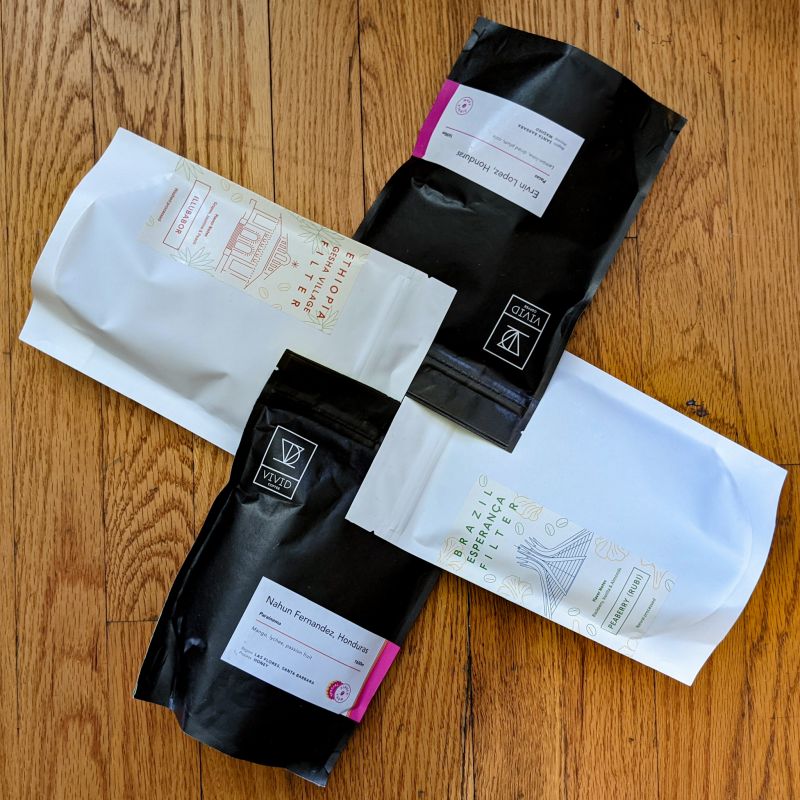
  1. April Brazil Esperança – The first Brazilian coffee to grace our presence in the history of Stimulus! This is a farm that April works with directly and also was the first Brazilian coffee that I ever served at Purple Llama. Throughout my entire specialty coffee career, coffee from Brazil was basically frowned upon. Now in the year 2021, Brazil is an origin I could not be more excited about. The potential in this country from decades of being the biggest producer of coffee in the world is coming together with the specialty coffee movement in a great way. Farmers are making progressive moves with their land and processing in new ways. What drove me to this coffee specifically for this month was the fact that it is a peaberry Rubi. I have not had a peaberry from Brazil ever and Rubi is a hybrid varietal grown only in Brazil. Also, a varietal I have not experienced. This coffee tastes like no other Brazil I have ever had. Even the “Good Brazils” still have some of that nutty, peanut note. This coffee is super clean and fruity. No earthy notes either. I tasted hazelnut, cardamom, red grape, and strawberry preserve. This was still a very “April” coffee so these flavors are pretty delicate, yet come together to create a super smooth and crushable cup. I brewed this coffee with a 15.5:1 ratio, with a grind size slightly coarser than a standard washed Colombia grind setting. I poured three pulses following my bloom, each spaced out by 35 seconds. I finished pouring at 2:05 and my drop time was 2:55.
  2. April Ethiopia Gesha Village (Washed Illubador) – Sorry to get your hopes up, this in not in fact a Gesha coffee. It is however from the Gesha Village Coffee Estate in western Ethiopia. The story behind Gesha Village is beautiful and I encourage everyone to read more about it. April typically buys several lots from Gesha Village each harvest and I always try to get my hands on as much of it as I can. The classic Gesha notes of jasmine and big sweentess paired with the native coffee terroir gives birth to great coffees. Again, this coffee is not a Gesha varietal though. The varietal is Illubador, a varietal I don’t know a ton about. However, from perusing the webs I am pretty sure it is a wild-grown varietal from the region that the people from Gesha Village decided to grow. It is a Gesha-like varietal found in the surrounding Gori Gesha forest around the estate. This coffee is stunning. First sip hit me with a caramel butterscotch berry blast. Following said blast, I got hit with rose, cabernet, honeysuckle, and meyer lemon. I brewed this coffee with a 15:1 ratio, with a COARSE COARSE COARSE grind setting. I can’t really give a good descriptor for how coarse because of just how coarse it was, but on a normal Baratza I would go 5-6 clicks coarser than usual, and 3 clicks coarser on something like a Porlex (much bigger steps). I slowly poured two pulses as to not agitate the fines too much causing the flow to stop up, finishing my second pour 2:10. My final brew time was 2:50. This is a truly delicate and intricate coffee so I probably won’t experiment too much with coarser grind/more pulses, but instead will enjoy how it develops in the coming days/weeks.
  3. Vivid Honduras Nahun Fernandez – I am amazed at how closely Vivid has been working with Honduras in the past year. Vivid’s owner Ian has visited multiple farms in Honduras and has established relationships with producers I wouldn’t have ever heard of otherwise, and that kind of work is what keeps me interested in coffee. This coffee is a honey-processed Parainema, another newer varietal for me. According to Ian, it typically is grown in Honduras for a more citrusy profile. With the honey process, it creates a sweet, fruit-forward cup. Nahun Fernandez’s farm and processing station are shared with his brothers and father, where they are able to pool their knowledge together to produce exceptional coffees. Nahun began working with a huge Australian (and now global) roaster called Proud Mary a couple years ago, which has helped him become even better as innovative processing techniques and new varietals. I look forward to trying more coffees from here, especially roasted by Vivid. The first sip blew my mind. All the flavor hit me in waves, with the final wave (what one might call aftertaste) was the best one. It was like a mango lassi. This coffee overall had big flavor. I tasted boysenberry syrup, orange, black cherry, and as mentioned, mango lassi. I brewed this coffee with a 16:1 ratio and since this is a honey processed big bean, I knew it would drop out quick. I ground it a couple clicks finer than usual, and poured four pulses spaced out by 30 seconds. I finished my fourth pour at 2:30, and the drop time was 3:00. I will also experiment with a 16.5:1 ratio and trying to extend the total brew time to see what other flavor lies in this bean.
  4. Vivid Honduras Ervin Lopez – I am BEYOND thrilled to share this one with everyone. Last year when I first tried this coffee, it was on a cupping table with a couple other roasters that I actually knew (Vivid was unbeknownst to me at the time) and this coffee was the best one. It made the decision of choosing Vivid and this specific coffee so easy. The lemon acidity that punched through the cup was like nothing I had ever had from Honduras. It still had that complex sweetness that I love from the Santa Barbara region. Ervin Lopez has a very small lot to plant trees on – less than half of a hectare, which is filled with exclusively Pacas. This plot was given to him by his father, and now he produces, picks, harvests, and processes all the coffee on site with his wife. As far as google shows, Vivid is the only roaster that uses his coffee. Just like last year, Ervin Lopez’s coffee is great. I tasted less lemon, but more sweetness. I got a lot of lime, red tea, and molasses. This is at the same time a crowd pleaser, and also a delightful, intricate beauty. I brewed this coffee with a 16.3:1 ratio and ground it barely finer than a standard starting grind size. I poured three pulses spaced out by 40 seconds, finishing at 2:10. My drop time was 2:50.

March Coffee: Kaffibrugghusid and Junto HEAT

Not sure which roaster to geek out over more this month. This month Junto came through so hard with their offerings that I was able to choose three distinct coffees; a couple of you might even have more than three different Junto coffees depending on if you partook in the special add-on coffees from Colombia. But also I got coffee from Sonja Bjork Grant and Njall Bjorgvinsson, the owners of Kaffibrugghusid located in Iceland; they are two champions of furthering specialty coffee across the globe and also World Barista champions themselves. Anyone that has been to Iceland would agree that it is possibly the coolest lil blob of land in the world. They drink more coffee than anyone, and they drink the good shit. I was able to meet Njall approximately 2 seconds before Covid took over the world and the knowledge was just so deep, I felt like a coffee child again. The coffees are also roasted wonderfully. They put an emphasis on balanced sweetness, however in the background there is wild acidity that makes these coffees stand up against any other roaster in the world. I have already shared my love to Junto in my May feature post, so if you want to know more about them please find that post farther back in the Stimmy archives.

Junto Rwanda Ngoma Cyeshero Hill – This coffee is technically in Junto\’s \”Black Label\” series of coffee meaning it is going to be more experimental and usually much more expensive. Lucky us, it was barely below the maximum price threshold to be included in the subscription. This is a 1500-1800 MASL Red Bourbon from a farm owned by Baho Coffee exporters. The Cyeshero Hill area is a new project taken on to practice separating lots in to many smaller separate lots in an effort to support producers and increase traceability. Cyeshero Hill also has an emphasis on experimental processing. This coffee specifically is what the owner Emmanuel Rusatira describes as \”Intango Natural\”. The Intango comes from an ancient Rwandan tradition where fruit is packed in to clay jars to ferment (Intango means a clay vessel to ferment in). These vessels are sealed after packing the coffee cherries in, and as the bag says; it ferments for 100 hours. The result is a bright and interesting coffee that takes on flavors from the porous clay during the fermentation. I tasted orange cream soda and persimmon right up front, and lime with a sparkling body. This coffee had excellent brightness. I brewed this with a 15.8:1 ratio using a grind setting I would typically use for a Central American (finer than expected for an African Coffee.) I slowly poured two pulses for this one. My first pour went from 40 seconds to 70 seconds, then waited 15 more seconds and poured my second pulse from 85 seconds to 115 seconds. My drop time was 2:40.

Junto Colombia Karen Montero – I love a classic, delicious washed Colombia. That is exactly what this one is. This is a Castillo/Caturra/V. Colombia mix from the Cauca region. This mix is quite common for Cauca, a key coffee producing region in Colombia know for both specialty and commodity. I typically enjoy most coffees from here, meaning I will drink them but nothing to write home about. However if I find one like this with a lil acidity, lil fruit, mmm. I could not find a ton of information online about Karen Montero, but know she has had coffees in the Cup of Excellence a few times. She also is part of Coffee for Peace, an alliance of coffee producers, marketers, and other various coffee trades in Colombia to increase traceability in dangerous areas of Colombia. The cup has a sticky sweet bourbon marmalade note, and a delicate yet sweet body, and a long sweet caramel finish. On the v60 I brewed this with a 16.3:1 ratio with a pretty standard normal Colombia grind setting, because this is a super normal Colombian coffee. I poured three pulses spaced out by 35 seconds. The drop time was 2:45. However on the Wilfa Auto-dripper, I ground it pretty fine and used an 18.2:1 ratio to brew a super delicate and delicious cup. I look forward to experimenting with this one more as I love the delicate sweetness.

Junto Nicaragua Finca Lo Prometido & Finca La Bendicion Java – This complicated yet down to earth bean comes from producer Luis Alberto Balladarez. Balladarez owns both Lo Prometido and La Bendicion listed on the bag. He grew the Java varietal on both farms and upon tasting each harvest decided to blend them to create this lot. Java is an interesting varietal that still confused me. I know it is really hard to grow which is why all of the lots are so small, and it can be really tricky to brew. Once you figure out the brew the finished product is always so so sweet and exotic tasting. This version is natural processed and grown at 1300-1650 MASL. Upon first sipping it, I thought I was tasting a note I sometimes find in Nicaragua coffees that I can\’t stand. Something like peanut or almond. However it was more sweet and turned in to a sugary pastry flavor. I tasted pistachio ice cream, cola, and English style ale in the cup. Each sip leaves a long lingering maple finish. This would be an amazing espresso if you have that capability. I brewed this with a 16:1 ratio and ground it a couple clicks finer than a typical Colombian coffee. I poured three pulses spaced out by 35 seconds with a drop time of 3:05.

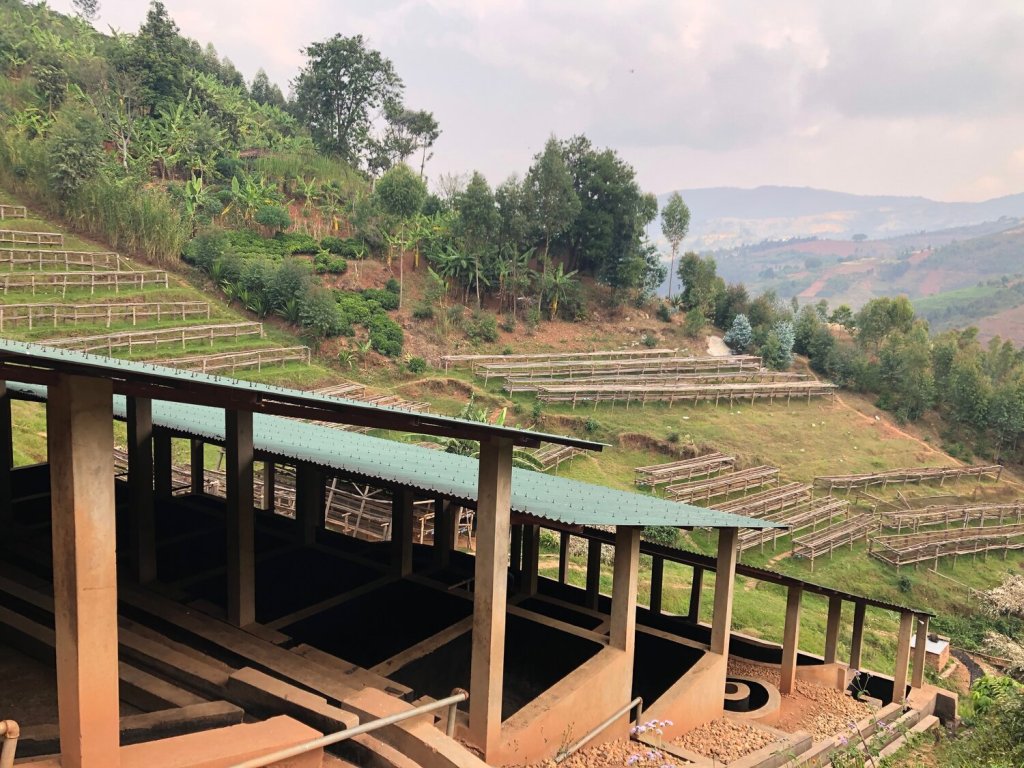
Kaffibrugghusid Congo Bahavu – This is a washed Bourbon/Catimore mix grown at elevations between 1450 and 2000 MASL. The coffee is grown from various small holders on the island called Idjwi in the middle of Lake Kivu, bordering Rwanda to the east. Idjwi Island has about 250,000 people on it (70% of the total population of Iceland lol) and 2,500 of them are coffee farmers. All of the coffee on the island is considered “shade-grown” which just means taller trees are surrounding the coffee trees to avoid sun scorching. Also, all of the mills are hydro-powered and the island is powered by solar panels. In this coffee I tasted geranium and Sprite up front with a super flavorful finish of licorice, strawberry, and herbs. I brewed this with a 16.5:1 ratio and slightly finer than I would grind a typical Congo, closer to a Colombia grind setting. I poured three pulses spaced out by 40 seconds after a 30 second bloom, finishing my last pour at 170 seconds. The total brew time was 2:55.

“African Beds” at Bahavu

Kaffibrugghusid Colombia Los Deseos – This washed Huila is 100% Caturra and is far from a basic washed Colombia… Los Deseos is a farm at 1750 MASL owned by a group of farmers from the Andes mountains that have lost their land due to violence and conflict in the region. They pool together their resources and knowledge to create excellent farming conditions for coffee to grow. I love the idea of this project because growing and learning together will always be the best way to strengthen skills and become better at whatever you do. In the cup I tasted honey, rose, pear, nougat, with a creamy mouthfeel. This coffee was delightful. A super bright and sweet Huila that is un-hateable. I went a little different with the brewing on this one. I used a 16.8:1 ratio and ground it a couple clicks coarser than usual. I poured five pulses spaced out by 30 seconds with a drop time of 3:25.

The gorgeous Los Deseos farm in San Augustin Mountains

That is a wrap for this month. I loved all five of the coffees this month so much and hope everyone enjoys what they got. As always let me know if there was anything you especially liked or disliked so I can get everyone their favorites! If you need help brewing either of the special add-on coffees shoot me a message and I\’ll let you know how I brewed them.

Thank you for reading,

– Dylan Connell

February Coffee: Ecuador Francisco Vintimilla and Burundi Gaharo Hill

Ecuador Francisco Vintimilla (Putuchio) – Sey Ecuadors are what keep me motivated to continue investing my time in coffee. The flavors and complexity from terroir, advanced picking skills, and processing are like nowhere else in the world. However, they are usually a LOT more expensive than any other coffee so y\’all better appreciate this stuff. Francisco Vintimilla is new to the specialty coffee world, with his oldest trees on the farm planted 5 years ago, and I look forward to seeing how the growing progresses in the years to come. The varietal is Mejorado which is Bourbon cross-bred with unknown Ethiopia Heirloom varietals. This is a classic washing process – floated, depulped, 24 hour fermentation and dried in a greenhouse. I know a lot of subscribers here love funky processing but trust me, with a coffee like this we want it to be washed to taste all the natural flavors produced from local conditions. I taste bright candied fruit up front, then pastry dough, persimmon, and caramelized sugar (might just be more pastry dough). This coffee is the epitome of tea-like, so make sure you wash that mouth out before you get to drinking. I brewed this coffee with a 16.3:1 ratio with a slightly coarser grind than usual. If you received the Lugmapata from Little Wolf last month, probably around that grind setting. I poured a 30 second bloom, and then poured three pulses in 30 second increments at 30 s, 60 s, and 90 s. The total brew time was 2:50. 

Burundi Gaharo Hill – Gaharo Hill is home to the original Long Miles project, a project I have been following for several years as it started from two people and has grown across numerous districts in Burundi. This lot specifically is made up of 7 different lots from local farmers, so the exact varietals are tricky to guess; however, most likely it\’s Red Bourbon and Mibirizi (variant of Bourbon local to Rwanda/Burundi). The exact percentages are not known so without varietal nerding out too hard, lets just fuckin drink it! In this cup I tasted caramel brownie, dried fig, chardonnay, and lime. Classic Burundi profile, but with that crispy Sey clarity. I brewed this coffee slightly finer than typical v60 grind with a 15.7:1 ratio. The coffee bloomed for 35 seconds, then I poured two pulses spaced 40 seconds apart, finishing my last pour at 100 s. The total brew time was 2:45.