The cutest little bag of coffee in the game: Little Wolf Coffee from Ipswich, Massachusetts

Those close to me have surely heard me rant about the phenomenon of small micro-roasters that have popped up across the lower Midwest and the southern United States in the last few years. They have outstanding packaging that makes me say, \”Well there is just no way that the coffee is NOT going to be good… I mean look at the subtle off-white lettering\” etc. and so on. Somewhat annoyingly, the owners of those tend to be people with little to no experience in specialty coffee, but do know that a beautiful bag of coffee sells itself. I am super upset about it obviously. Anyway, Little Wolf is not one of those companies, despite how adorable the packaging is. The owners Chris and Melissa are fantastic business owners and coffee experts. In my opinion, they are possibly one of the top 5 roasters in the U.S. The coffee they roast is clean, complex, and sourced with focus. Their dedication has earned them dozens of awards and on the shelves of the top multi-roaster cafes in the country. I am excited to share these coffees with you in this absolutely fucked yet hopeful month of January 2021. 

1. Ecuador Lugmapata

Finca Lugmapata is everything to me. This is a farm owned by Enrique Moreno, the producer that convinced me that the most excited coffee producing country in the world is Ecuador. Other countries use rare or transplanted varietals, however other countries do not have the terroir of Ecuador. This specific lot is 100% Bourbon Sidra, one of my favorite varietals of coffee grown in one of my favorite coffee producing nations. Normally Sidra is much more expensive, so it is a miracle I was able to bring it to everyone. This coffee was everything I wanted it to be. Clean, fruity, floral, perfect. I tasted honeysuckle, mango, kiwi, and dulce de leche on the finish. I\’m surely going to use the rest of this coffee as an espresso because of the complexity, and I recommend anyone with that option should take advantage of it. I brewed this coffee with a 16.5:1 ratio and a slightly coarser grind with two pulses. My second pulse finished around 1:45 for a 2:35 total brew time. 

2. Colombia Las Perlitas:

This Colombian coffee was grown in Huila, a region celebrated by specialty coffee for it\’s progress in creating clean coffees that do not need to be thrown in to a blend. Las Perlitas is a co-op, meaning local smallholder farmers bring leftover coffees on site to sell, that will be mixed. This one specifically, reminds of a classic coffee shop house blend (of  green coffee varietals, not roasted coffees from different countries). Caturra is the base making up the majority, Pink Bourbon for sparkling acidity, and lastly a small amount of Gesha to add a little… exotic. I tasted plum, raspberry, sparking lavender tea, and honey; one of the jammiest Colombian coffees. It was easy to brew and I am predicting a lot of different methods will make this coffee shine. Personally, I used a 16:1 ratio and used my go-to starting v60 grind setting with three total pulses. I finished my last pour at 1:55 with a 2:50 total brew time. I might try two pulses with a finer grind next time to get more brightness out of the cup. 

3. Ethiopia Demeka Becha

The Demeka Becha site is located in the Sidama region of Ethiopia, owned by a man named Ayela Tulu. This is a project created to modernize the way Ethiopia does coffee production. Tulu is said to be inspired by the global specialty coffee community, and the way it is able to connect throughout different cultures and nations. This coffee ended up being a tad more sweet than bright, which is unusual for Ethiopian coffees. However, it is honey processed, which leads me to expect a balance between sweetness and brightness. I tasted ripe peach, jasmine, and a nutty praline-like sweetness. I initially used a 15:1 ratio as it looked like a lighter than light Ethiopia but the cup was earthy and heavy, so I extended my next brew to 16.5:1. This brought out more fruit and cleaned the cup up. I ground this one a couple clicks coarser than usual and poured two pulses. I finished my second pulse at 1:45 for a total brew time of 2:30. 

4. Peru Oropel

At this point I\’m realizing I might as well have called January the Andes mountain edition (minus the Demeka Becha of course). I don\’t think I have ever had a Peruvian coffee that fits the words \”exotic\” or \”intricate\”, however they are so damn good. I actually wrote a super embarrassing blog post several years ago about my love for Peruvian coffees you can find HERE. Oropel is a 2190 MASL Typica/Pache varietal. The \”Oropel\” part of this comes from the Santiago de Oropel community this coffee belongs to. The farmer is Vilcopoma Camargo Hugo. Hugo  is one of those producers that inspires all of us to be better – better at what we do, and better for our communities. I even hear he is planting Gesha, unheard of in Peru. This coffee was amazingly sweet. It initially tasted like a warm caramelly hot chocolate. In the finish I tasted a dried fruit/raisin note that lingered long after the last sip. It also has the SILKIEST body of any coffee in recent memory. It is a fairly simple coffee but something I could drink every day, and will probably be the best coffee to brew in a larger format. I brewed this with a 16.2:1 ratio, and ground it slightly finer than usual starting grind setting. I poured three total pulses with my last pour finishing at 2:10 for a 3:00 total brew time. 

I hope everyone had a great holiday, and just wanted everyone to know how much I appreciate the support and wisdom received throughout the process of starting this group. Since I started the subscription in May, I have not yet repeated a roaster in the rotation. I will begin reusing the valued roaster partners I have grown to love and developed relationships with. I really feel it is important to maintain strong relationships with the roasting partners. The value of roasters knowing what I/you will like and knowing their skillsets benefit all parties. However, because the Coffee Club has grown so much, from now on I will be ditching the single roaster showcase model and everyone receiving more than one coffee per month should be expecting coffee from two different roasters.
December Julekaffe from Langøra Kaffebrenneri

I have actually known who would get the coveted \”December Coffee\” for months because of course, it had to be the roaster in the North Pole. This roaster holds off on releasing over half of their in-stock coffee until late November just to have the absolute best \”Julekaffe\” lineup in the game. The roaster being Langøra Kaffebrenneri from Stjordal, Norway. Mostly every roastery/brewery/distiller etc. in Scandinavia or even Northern Europe takes the Holiday special very seriously, but Langøra takes the cake for releasing the most outstanding products in the Julekaffe business. I was able to distribute four unique coffees that all were part of the holiday release. They also have the coolest front page video on their website

1. Honduras Capucas

Celaque National Park where Capucas Co-op is located

The first coffee comes to us from the Las Capucas region in the western corner of Honduras. This mix of Caturra and Catuai comes from various smallholder microlots and processed at the Capucas Co-op. It is processed as a Berry-dried Anaerobic, which from my previous post on advanced processing we now know means that the entire cherry was thrown in to sealed fermentation tanks. This fermentation lasted 72 hours. This is one of the more simple anaerobic coffees I have had, although it does pack some funky flavors. Which really just means I didn\’t get slapped in the face with tropical fruits and sweetness. However, the profile is lovely with flavors of Papaya, Cola, Clove, Strawberry. Embarrassingly, it took me almost three tries to brew this coffee right. Turns out I was grinding way too fine which was producing bitterness and I needed to use a lower ratio of water to coffee than anticipated.  I brewed this coffee with a 15.5:1 ratio with a coarser grind setting. I did a setting 2 clicks coarser than a standard setting and poured 3 pulses separate by 35 seconds. My third pour finished at 1:45 and my final brew time was 2:35. 

2. Ethiopia Gedeb Worka

I would not have guessed this coffee to be natural processed. It has such a clean profile with clarified fruit and delicate florals that played tricks on my brain. I have had many coffees in my life from the Worka Co-op in Yirgacheffe, so I initially shook this one off as maybe not being as interesting or traceable with a story as I like to share with everyone. However, delicious flavors will overcome any other selection criteria. I initially tasted a rush of honey, jasmine, and stone fruit. However, I did not receive enough coffee to dial this in. As a few of you know, I did not receive the entire order and I did not get my bag of this coffee and was not able to dial it in. Please check back in a few days for my brewing recommendations. To start I would recommend grinding 2-3 clicks coarser than normal starting point with a 16:1 coffee to water ratio.

3. Mexico Marisela Esperon

This super cool can of beans comes from producer Marisela Esperon from Oaxaca, Mexico. The Esperon family has been producing coffee in the region for decades. While many other neighboring farms and producers have abandoned coffee production due to low income, the Esperon family has invested in their craft and specialty production. They mostly grow Typica and Bourbon varietals like the one in this can, and generally use a controlled Natural Process to produce their award-winning coffee.When hot, I got a mouth full of caramel sweetness with exotic/tropical flavors to follow. Once cooled, it was less sweet but more tart. Everlasting Gobstopper tart. This is the best coffee I have had from Mexico. Strange that we are so close to Mexico yet this beautiful cup was sent to Northern Norway to be roasted and then shipped back here. I brewed this coffee with a 16:1 ratio and ground it a little bit coarser than usual. To offset the coarser grind I poured wider circles in order to push the super finely ground coffee to the bottom of the brewer and slow down the brew. I poured three pulses at 35 second increments with my last pour ending at 1:50. The drop time was 2:45. 

4. Guatemala La Libertad

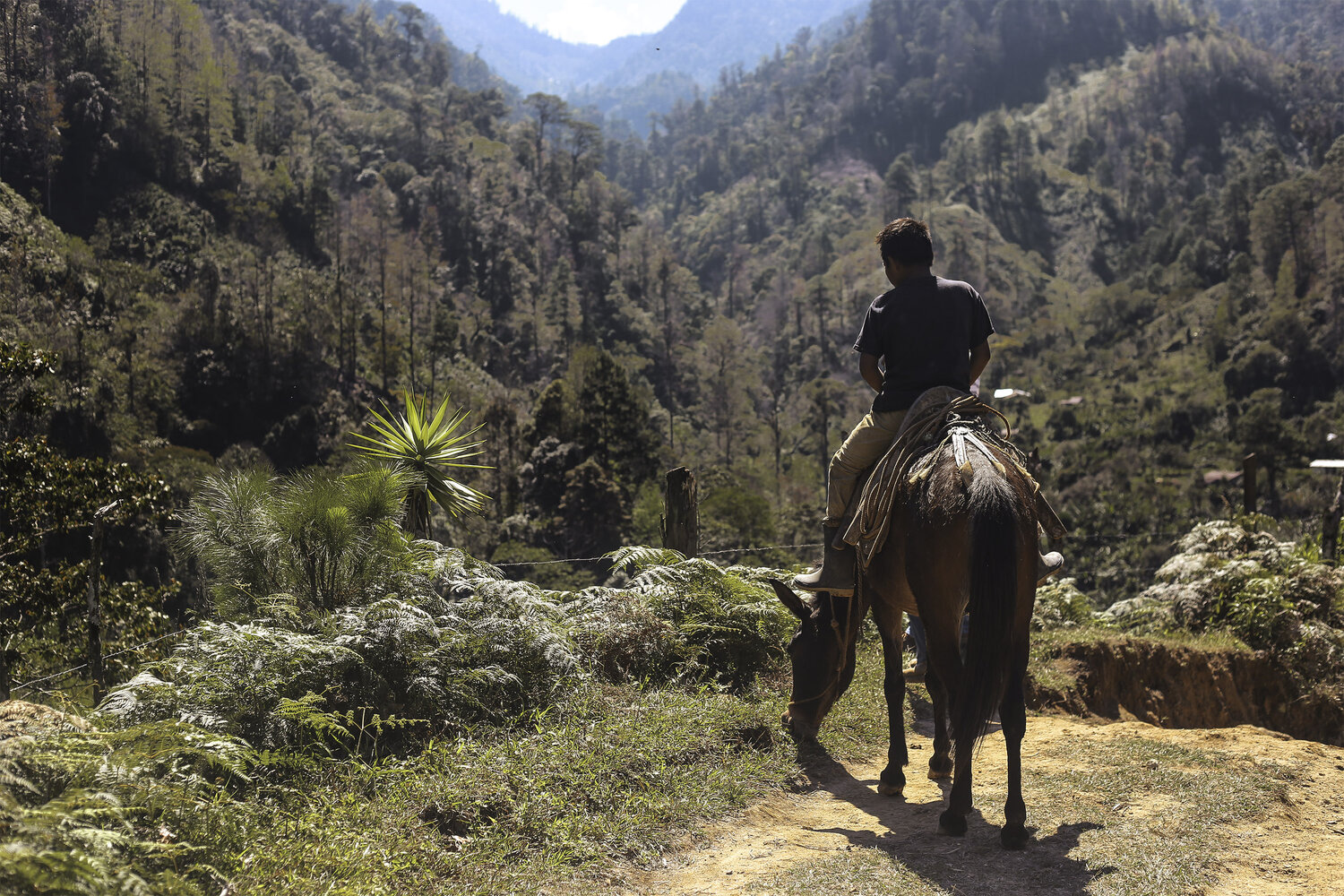
This classic Guatemala profile comes from high in the mountains of Huehuetenango, the region in northwest Guatemala that seems to produce the best coffee year after year. La Libertad is the name of the town this coffee was processed in. This coffee was processed at a mill shared by many smallholder farmers that bring their highest quality ripe cherries to be blended with other farmers to create a sustainable life for their families. I refer to this coffee as a \”crowd-pleaser\” profile. Sweet and simple if you want it to be, however if you fancy to go digging there is much to discover. Notes of rich cacao, brulee, and wild cherry. I brewed this coffee with a 16:1 ratio using a slightly finer grind than usual. I followed a 30 second interval pulse schedule, pouring at 40 s, 70 s, and 100 s with a final brew time of 2:50. 

That wraps up the coffee selection this month. If you would like help brewing the two add-on April coffees this month, please reach out to me directly as I will not include the fancy stuff on my write-up for the main subscription. Have a great holiday everyone and see you when we get to say 2021! 

Innovative Processing Discussion – Anaerobic, Honey, Carbonic Maceration

The words Anaerobic and Carbonic Maceration did not exist in the specialty coffee industry until about five years ago. In my world, they did not exist until this past year. My own \”pandemic special\” if you will. It took me a long time to understand the difference in processing of these coffees and what it means for flavor development. I am in no way teaching this information from personal experience. Rather, I am sharing what I\’ve learned based on educational materials provided by the very best green coffee importers and producers in hopes that this information can also be a helpful resource to understand the story behind each coffee we drink.

ANAEROBIC

I have tossed the term anaerobic around in a pretty nonchalant way in this subscription without really explaining the meaning and impact this has on the future of specialty coffee. Basically there is an added step to the typical Washed/Natural/Honey process to yield an Anaerobic process – sealing the coffee in a tank to cut off oxygen. 

In the \”Washed Anaerobic\” process, the coffee cherries are depulped of all cherry and mucilage in the normal washing process. The coffee would then be sent to fermentation tanks in an open environment for 18-36 hours (generally), and then \”washed\” with turbulent water to remove all mucilage. The difference in Anaerobic would be the post-depulp stage. Rather than having an open fermentation tank like with a normal washed processing, the tanks (plastic, stainless steel, etc.) are hermetically sealed to prevent air from coming in. Next is where it gets interesting – the depulped mucilage is gathered, packed together, and then spread across the coffee seeds till evenly coated. Once sealed, the oxygen in the tank is diminished by the Carbon Dioxide production. 

The time spent in sealed fermentation tanks is completely up to the producer and what they are trying to do. I have seen some for 18 hours and some for 400 hours at colder temperatures. The reason these coffees are so vibrant and delicious is from the flavors of the cherry being directly injected in the coffee seed due to cherry skin-contact during this oxygen-free environment. The control of pH, sugars, temperature, and yeast production is easily observed because of the smaller batch sizes. This extra effort is why we typically find these coffees to be a little more expensive. 

Alternatively, there is a \”honey style\” of anaerobic processing. The small difference here is that the coffee seeds are sent in to the tanks without depulping all of the mucilage. Since I brought it up, I figure I should explain why this is honey style, by giving a brief overview of honey processing. 

HONEY

Honey processing includes four different colors: White, Yellow, Red, and Black. Each color in this order corresponds to a different level of seed-in-cherry fermentation. These coffees when done correctly have an excellent marriage of sweetness, clarity, and fruit. 

The different colors mean something different as far as standards go in every country of origin. In general, white honey means mostly all mucilage is removed during depulping stage, yellow has slightly less mucilage removed, and so on. Additionally, black and red honeys have an extended fermentation time to create even more fruity flavors in the coffee. Black honeys are fermented the longest, and therefore require the most monitoring to prevent over-fermentation. 

To answer the obvious question; no. There is no actual honey involved. The use of the word honey refers to the stickiness of the seed following fermentation with the mucilage remaining on the seed. The stickiness level of the seed is developed through the most important stage of honey processing – the drying. If honey processed seeds are dried too quickly, the seed won\’t have enough time to absorb the mucilage flavors. If they are dried too slowly, the coffee bean risks over-fermentation. 

To find the balance in fermentation, the raking of the seeds on raised beds in the open air is extremely important. This control of the drying rate is what makes this an innovative process. The desirable flavors of natural process coffees are present, while minimizing the risks of over-fermentation. 

CARBONIC MACERATION (CM)

CM is a highly controlled, intricate version of Anaerobic processing. The process was developed by a famous coffee person named Sasa Sestic from Australia. Sestic worked closely with wine-makers who utilize this technique regularly, and particularly with a Colombian producer named Camilo Merizalde. 

When I first asked what this process meant, I thought it was just a pretentious way of saying it is Anaerobic. Turns out, it is in fact a nerdier version of Anaerobic. All the steps are followed after the depulping stage (or lack thereof in the case of a natural Anaerobic) and tank sealing. However, instead of the fermentation process letting the Carbon Dioxide consume the Oxygen in the tank, the tank is flushed with Carbon Dioxide at the very beginning, allowing the producer to completely control the amount of yeast, bacteria, fermentation, pressure, and temperature in the tank. 

The result is an intensely fruity yet clean brew. The coffee tastes pristine. However they are not cheap due to the cost of materials, labor, and the experience in coffee processing required for the proper fermentation. I hope to share a CM coffee with the subscription soon, as I would love for everyone to taste what I consider the most progressive processing technique the world has to offer right now. 

Thank you to everyone for reading/skimming this information. The test is next Tuesday. 

Just kidding, but I do hope if people were confused on what these processes mean, they can find clarity in my explanation. As mentioned above, this information is not entirely derived from my own personal knowledge, so here is a list of sources I used to gather this information:

https://blog.genuineorigin.com/2018/07/31/anaerobic-process-new-flavors-innovation/

https://projectorigin.com.au/cm-selections/

https://www.lacabra.dk/products/los-pirineos-semi-carbonic-maceration-petites

https://www.cafeimports.com/australia/blog/honey-process/

November Coffee: The Barn Brings the Funk

This month I bring back an old favorite; a roaster I sought out for years during college and finally was able to visit in 2016. My favorite part of the roaster was a memo sitting at the sugar/lids/straw station about their high quality sustainably-sourced raw cane sugar and how you should not use it because their coffee has natural sweet flavors that do need not be altered by additives. I was validated knowing that the pretentious coffee attitude I possessed was a global phenomena and I could find myself comforted halfway across the globe. That all being said, the roaster I am talking about is of course, The Barn! 

The Barn was the first international roaster brought to Chicago in 2017 and was greeted with open arms. On the order form, many of you stated they would love to see The Barn featured in the subscription. With the current coffee lineup The Barn is working with, I felt it was a great time to showcase the coffee they are capable of producing. 

1. Costa Rica Juanachute

Juanachute, Terrazu, Costa Rica

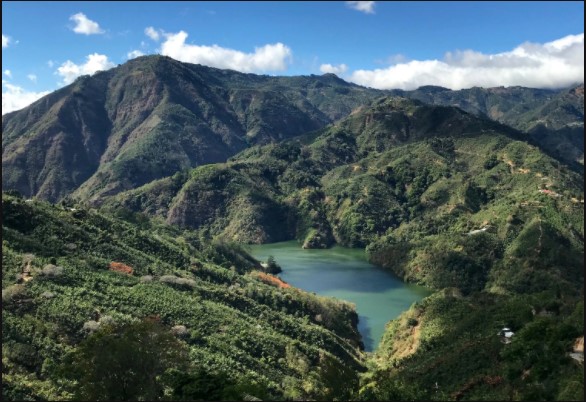
From the Terrazu region of Costa Rica comes the farm called Juanachute. Juanachute is technically classified as a \”micro-mill\” which is really just a classification of how much coffee is processed on site. Typically this is standard for most of the coffee from single-producer farms in Central/South America we drink, however this farm and mill was one of the first of this kind in Costa Rica. Producing small lots, not meant to be blend binders and commodity coffee was simply not done in Costa Rica. As with the changing market, Luis \”Tacho\” Castro decided to create coffees with close attention to detail in both growing and processing. Additionally, Tacho was curious to experiment. Curiosity led him to be one of the earliest adapters of the Anaerobic technique. So early in fact, Tacho created his own fermentation tank to accomplish this. I wish I had a photo of the tank, but it is essentially a massive plastic tank with a one-way release valve to allow oxygen to escape but not enter. I do plan on writing a post about how Anaerobic and Carbonic Maceration work and how they differ when I have enough time, as I know we have had a ton of anaerobic coffees since the start of this. This all results in this stunning coffee grown at 1600 MASL in the beautiful mountainous region shown above. Upon grinding this coffee I got a little concerned… It smelled woodsy and smoky. Two aromas I would never look for in a coffee. That aroma stayed through the entire brewing process. Once the brew finished, I quickly discarded the filter and grabbed the carafe to smell, and to my pleasant surprise those fragrances disappeared! It turned in to a sweet, cinnamon forward cup. In the cup I tasted cinnamon, toffee, plum, spearmint, and a sort of salted caramel taste combined with bitter liqueur (Campari anyone?) that I could not quite articulate. I brewed this coffee using a 16:1 ratio and a pretty standard starting grind setting. After the bloom, I pulsed this coffee three times from 35-50 s, 65-80 s, and 95-110 s. My drop time was 2:30. I look forward to experimenting with this one to see what other flavors I can get out of it. 

2. Ethiopia Tabe Burka
I realized when selecting a roaster this month that I haven\’t bought a single Natural Ethiopia for the Coffee Club yet. For as many people that specified how much they love Natural Ethiopians and/or stated a specific Natural Ethiopia they remember enjoying, it is quite the oversight on my part! I typically am careful when selecting these coffees as many can come off as one-dimensional or aggressively fermenty. The reason so many coffees in Ethiopia are sun-dried (natural) instead of Washed is due to lack of access to clean water. This combined with low wages paid to the hardworking members of processing mills can lead to uncontrolled fermentation times and less attention to detail. However, a great Natural Ethiopia can erase your worries, and trap you in the world of specialty coffee. This coffee is from the Guji region of Uraga, and consists of cherries picked only in close proximity to the Tabe Burka washing station. This coffee will remind us of the ancient tradition that is Ethiopian Coffee. Upon my first sip of this coffee, a wave of relief rushed over me. The coffee had zero aspects of an over-fermented natural. What I taste instead is a brown sugar and sweet tart party in my mouth. While not something I would describe as complex, it is clean and crisp. The fruit notes are well articulated and last throughout the entire tasting experience. I brewed this coffee with a 16:1 ratio and a coarser grind setting. My drop time was 2:45 for a pretty small brew (12 gram dose). I would say 2:45 is a good drop time if you are making a larger brew, but for my cup I think it was a tad over extracted. This one is a crown pleaser, please share with whoever you can (from 6 feet away of course).
3. El Salvador Himalaya 
The Barn has been working with the Himalaya farm for some years now, and I have always seemed to let them slip through my fingers. Although I have not tried anything yet, I still associate this farm with various micro-lots, rare varietals, and experimental processing. This farm was started in 1880 and remains in the same family. Mauricio Salaverria comes from generations of coffee growers, and possesses the collective knowledge of those before him to grow excellent coffee. This specific coffee is a Natural Maragogype. Like I first did, I am sure you are now saying \”what the f$&% is a maragogype\”. It is a varietal that was mutated and produced first in Brazil, and is used to create a lot of interesting new hybrid varietals. The pure Maragogype is a massive sea-shell sounding bean. So before you ask, grind it finer than usual. The vision Mauricio holds for the farm is inspiring. Currently Himalaya covers 24 hectares and grows varietals like SL28, SL34, Maracaturra, Gesha. With the level of control over the processing, this natural coffee will show clean, exotic flavors. Right when my grinder started breaking these clunkers down, my kitchen filled with aromas of strawberry, spices, and tropical fruits. In the cup I taste ripe strawberry, lychee, caramel, and an overall 10/10 sweetness. Like stated above, I ground this a couple clicks finer than usual. I still poured my normal routine of three pulses at 35 second intervals and it dropped out at 2:40. I used a 16.5:1 ratio but am interested to see how it might changed if I use even more water. Say, a 17:1 ratio. Will it bring out more fruit? Or will it flatten the flavors out. Please try and tell me!

October Coffee: Kaffa – Oslo

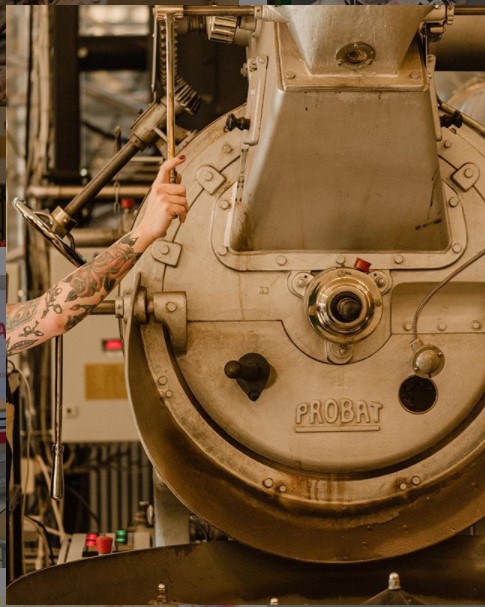
October is the best for a couple reasons: the trees turn and become a form of earth art vibrant with an autumn palette, the month ends with the most important holiday, and last but not least, it is prime coffee sipping weather. This month we are drinking coffees from Kaffa from Oslo, Norway. I am not sure how many of you are familiar with Kaffa, as they were not a common roaster in the shop and hardly anyone in the United States sells them. They are a large roaster and, unlike the other Nordic roasters we enjoy, they use an older roaster called a Probat. Some argue that the roaster the others use, called a Loring, produces cleaner coffees with greater consistency. But roasters like Kaffa that do not use this newer, more techy/advanced roaster make me question that argument because their coffees are always clean and pop with flavor. Regardless, lets get in to the offerings!

Probat roaster at Kaffa

1. Indonesia Waerebo Apen
I am so excited about this coffee! I have not had a great coffee with these clean flavors in years. To preface with a quick geography lesson: the Pacific Rim include but are not limited to Indonesia, Sulawesi, Sumatra, and Papua New Guinea. While I was with Sump Coffee we purchased coffee from Sulawesi for a couple years and they were fantastic. Recently, for some reason the coffees from Sulawesi dropped in quality and/or production so I wasn\’t able to find them anywhere. Furthermore, I\’ve been only able to find one or two good coffees from Sumatra and Papua New Guinea. Hence why this Indonesia coffee is basically the reason we are drinking Kaffa this month. The Waerebo Apen is a honey-processed yellow bourbon coffee from the Waerebo region, where one of the oldest communities in Indonesia is located. The coffee produced here helps the community run sustainable agriculture and helps coffee producers with innovation and growing micro-lots in the varying climates of this region. The flavors in this coffee are intoxicating. It is the most complex coffee I have had in a long time, with flavors of dried fruit, sour candy, chocolate, and honeycrisp apple. I brewed this coffee with a 16:1 ratio, and ground it at my normal starting point for a Colombian or Ecuadorian coffee. I used three pulses spaces 10 seconds apart, finishing my last pour at 1:50. My final brew time was 2:50. 
2. Ethiopia Yirgacheffe Chelbesa
The Ethiopian coffee season is coming to an end soon. In the coming weeks, we will see less and less fresh crop Ethiopia coming in and most Ethiopians remaining will be late-season or leftover. This delightful washed Ethiopian is from the Negusse Debela processing station, which receives coffees grown in \”semi-forest\” conditions. While we do know the main varietals grown in this region and processed at this washing station are Dega and Wolisho, we will never know for sure if that\’s it as transparency in Ethiopia is difficult. However, these natural varieties produce wild flavors not known elsewhere in the world…one of the reasons we will always love Ethiopian coffees. In this coffee I tasted explosive citrus and stone fruits. Bright tropicals hit right away, then turn to juicy peach and florals, with a spiced orange tea aftertaste. I brewed this with a 15.5:1 ratio and a coarse grind setting to achieve a faster brew. Personally, I used a smaller dose so I went for a 2:20 brew time with two pulses separated by 10 seconds, finishing my pour at 1:30. If you are making a larger batch, I would just recommend going much coarser than usual and adjusting your pour or grind setting to get this to taste better. If it tastes weak, you probably have gone too coarse or poured too fast. 
3. Uganda Mbale
For years, Uganda has primarily produced a lot of low quality green, which kept income and quality low.  This is changing. I chose this coffee because I think specialty coffee development in Uganda is extremely important to support their economic efforts. While most of the current coffees from Uganda are naturals, such as this one, I look forward to how the processing progresses in the years and would warmly welcome another country to my \”favorite origins\” list. This month\’s offering specifically is a natural semi-anaerobic coffee. While exciting on it\’s own, that is not even the best part. The varietals are SL28, SL34, and SL14, which are all typically Kenyan varietals. This lot comes from the Sironko processing yard located in the Mbale area in Eastern Uganda. In this coffee I tasted a hit of funk right away, but it is fleeting. The cup quickly transforms in to a delicate, yet sweet cup with a long sticky sweet aftertaste. I tasted fermented blueberry, graham crackers, lavender, with a coating yet silky body. I brewed this one with a 16:1 ratio and ground it a couple clicks finer than my usual starting point to give me a 3:00 brew time. I would do 3-4 pulses to achieve this brew time. 
Thank you again for allowing me to bring wonderful coffee in to your home and allowing me to continue supporting these roasters working so hard to create a better world for coffee to thrive in. 

September Coffee: Vivid Congo Hutwe and Other Friends

 VIVID AROMAS AND TASTE! 

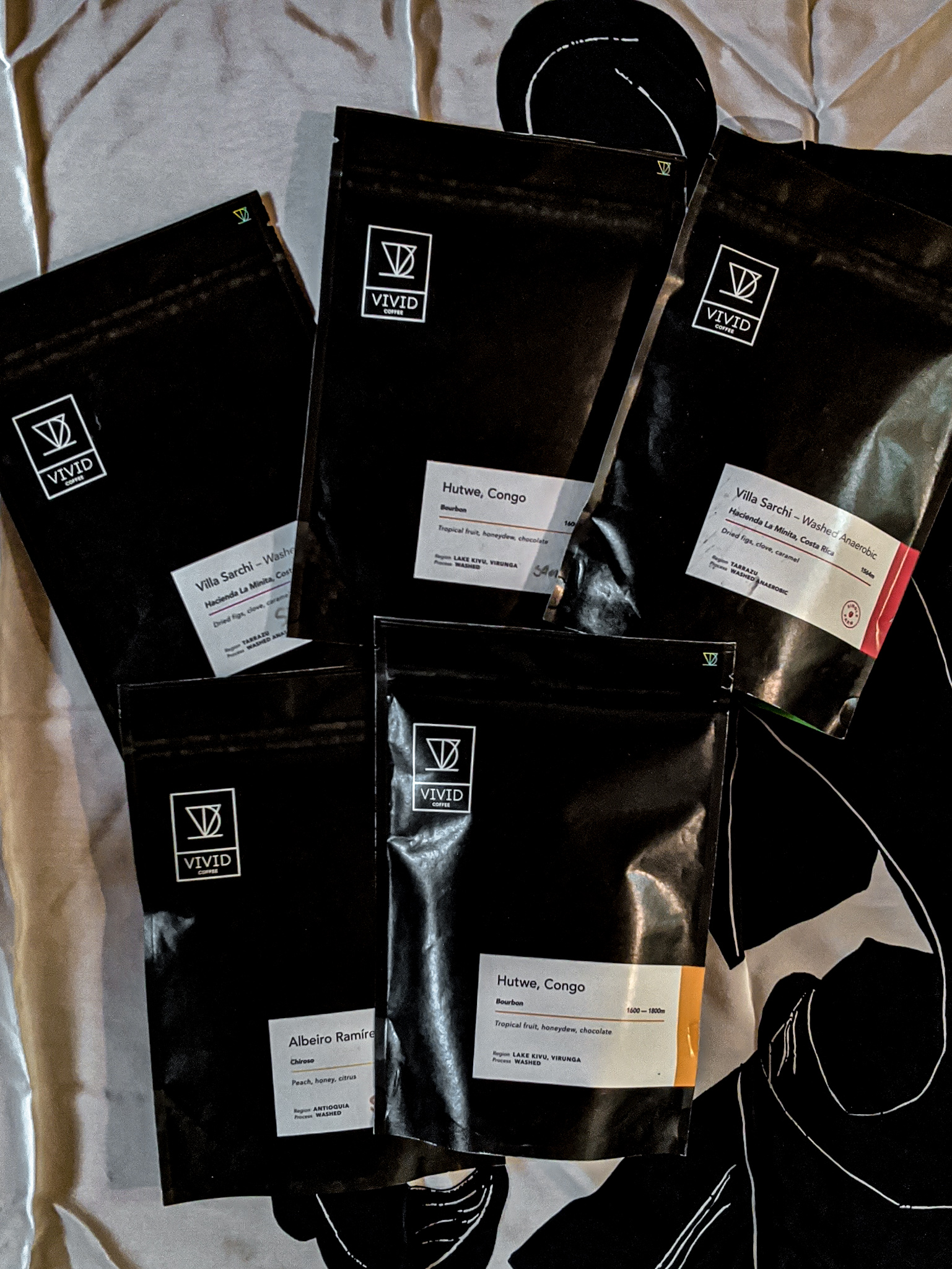
Vivid for me is basically a \”Missed Connections\” success story. They sent me samples at the beginning of 2020 in an attempt to be a part of the retail coffee rotation at the Llama. I didn\’t even know they were sent to me until a fellow Barista texted me to ask if they could take them home as they needed coffee and I nearly said yes, as I was stressed about something else at the time, but my coffee instincts took over as I made sure to try every coffee sent to me to be polite. The coffees were outstanding, which can be rare for a random sample pack showing up. I immediately contacted the roaster/owner, Ian Bailey. We had a couple great runs with Vivid at the shop and then boom… Covid hits. Now, because of a couple of random occurrences taking place I am able to share the delicious coffees with the Coffee Club. 

1. Congo Hutwe

    Typically when the roaster describes a coffee as \”lights out\” that means I buy. This exquisite representation of the years of build-up and booming quality standards in Congo is by all means \”lights out\”. The Hutwe washing station brings together cherries from many smallholder farmers ranging from 1500-1800 masl and consists of mostly Bourbon. Another variety known as Rumangabo is grown locally and is suspected to be mixed in with the Bourbon cherries. The Hutwe station is located near the eastern border of Congo, northwest of Burundi/Rwanda and just west of Uganda. The growing conditions here are great for Arabica with fertile volcanic soil, high altitude, and rainfall. The region however is extremely impoverished and for many years has lacked proper infrastructure for Coffee Production. This coffee is delicate. \”Tea-like\” as they say. I tasted notes of jasmine, caramel, and sour candy. I have a hunch it will make for a great espresso. I brewed this coffee on my v60 with a 15.5:1 coffee-to-water ratio, and ground it finer than typical African coffees because of the lower elevation. It was actually two clicks finer than the Kenyan coffee last month from Kafferaven. I poured two pulses following the bloom from 30-60 s, and then 75-105 s. The brew time ended up being 2:20. Next time I am probably going to pour wider circles to bring the fines down and extend the brew time to see if I can get more out of it. 

2. Colombia Albeiro Ramirez – Chiroso

    This coffee interested me because it is essentially a single-variety test of a new variety to me. The varietal is called Chiroso, which exists as a natural mutation to the more mainstream Caturra varietal. Producers in the Antioquia region discovered the cherries were different and that the resulting coffee tasted outstanding. The producer of this coffee, Albeiro Ramirez, has been experimenting with Chiroso and made sure to provide a sample to Vivid. Albeiro grows this coffee high up in the mountains bordering Medellin at 1900-2100 masl. This coffee has excellent sweetness with notes of vanilla, brown sugar, grapefruit, and a suggestion of peach. I brewed this coffee with a 16.5:1 ratio and used my longer brew time schedule. I ground it a couple clicks coarser, and poured four pulses. Each pulse was spaced 30 seconds apart following my 35 s bloom, so I poured each increment at 35 s, 65 s, 95 s, and 125 s. The final brew time was 2:50. 

3. Costa Rica Hacienda La Minita – Anaerobic Villa Sarchi

    When I asked Ian about the current lineup, knowing the Congo was in stock, he told me that he just received six Costa Rican microlots with all different varietals and processing methods to which I replied, \”Holy Shit.\”. I really contemplated switching up the entire format this month and repackaging all six of them in smaller quantities for people to try but honestly that sounded like an awful laborious task. So instead, I chose the most unique one. This is a washed anaerobic coffee from Tarrazu, grown on the flagship farm for La Minita. La Minita is actually a global coffee importer, and this farm in Costa Rica is a place where they can experiment with varietals and processing. The anaerobic part will speak for itself in this unique coffee, but the Villa Sarchi varietal is one of my absolute favorite varietals because of it\’s clean, crisp flavor profile. This is an intensely sweet and fruity cup, reminiscent of the best juice ever (mango nectar; don\’t fight me). I also detected a slight earthy tone in the cup but it could be the way I brewed it. This coffee is clean yet a thick, heavy body coats the palate. I brewed this coffee with a 16:1 ratio and I used a finer grind setting than a typical starting point. Finer than the Congo listed above by about two clicks on my Wilfa grinder. I poured three pulses following the bloom from 35-60 s, 70-95 s, and 105-130 s. The final brew time was 2:40. 

Thank you for exploring the world of coffee with me. Until next month,

-Dylan 

How to: Campsite Coffee and Freezing Surplus Beans

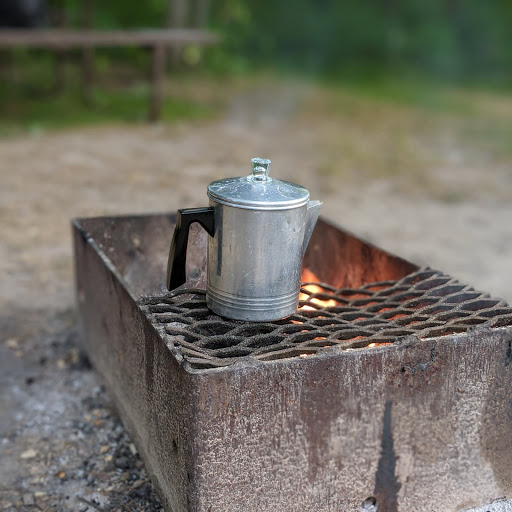
More than acceptable camping kettle

With Labor Day coming up, I know a lot of you may be camping. So I figured now was as good of time as ever to go over how I prefer to make coffee in the great outdoors. Just because you are away from electricity/your tools to control independent variables in brewing does not mean you must succumb to instant coffee! 
My method is semi-derived from April Coffee Roaster\’s Aeropress Method but with some modifications I preferred, better for brewing two cups for yourself and a camping partner while enjoying the brisk morning air next to the crackle of a fire. I included a photo of the kettle I use to show that I recommend NOT buying a nice stainless steel kettle to make coffee on an open fire. It is going to get covered with ash and soot, and the handle most likely melted if it has any plastic on it. This kettle was $5 from a thrift store.
  1. Give yourself at least a liter of purified water, or at least water that does not obviously smell like sulfur or having a greenish tint from the nearby swamp. 
  2. Bring water to a rolling boil for at least one minute to kill any bacteria. 
  3. Dose 25 grams of coffee in to your hand grinder. On a Porlex grinder I used the 12 setting (12 clicks from all the way closed)
  4. Rinse Aeropress with paper filter with hot water.
  5. Dose your coffee, pour in 140 grams of water, and then stir for 10 seconds. The timer should read about 20 seconds by now – quickly insert the plunger at a slight angle, and then in a small motion push the plunger back up-right. This allows the vacuum in the Aeropress to be created while losing minimal liquid from the brewer. 
  6. At 50 seconds, remove the plunger and stir for 20 seconds. Replace plunger using same method. 
  7. After 20 seconds of resting (time should read 1:30), begin pressing down on plunger for a total of 20 seconds at constant pressure until you hear the hissing sound. This means all available brewing liquid has been expunged. 
  8. Divide the \”concentrate\” between both cups. Each cup should have 55-60 grams of concentrate Aeropress coffee in it. 
  9. Dilute each cup with 120 grams of water. You can use hot or cold water for this dilution. Alternatively you can add 120 grams of ice instead of water to make a flash-chilled ice coffee. 

Next, I wanted to give a brief overview on the idea of freezing coffee beans as requested from a few members. For the first few years of my coffee career this was a huge no-no. I never really understood the science behind it but I was an amateur and trusted the \”professionals\”. Now I believe it is an extremely helpful tool to store coffee beans that I am excited about trying but that I will not be able to get to because of a surplus of open bags at the moment. 
First rule, never freeze a bag of already opened coffee. The vent on any bag is one-way, meaning it lets air/gases escape but does not let anything in. Once the bag is opened, you are allowing outside oxygen to mix with the oils that naturally occur from roasting. Once this is frozen and unfrozen, the humidity from the air will attack the beans by dulling the flavors and allow other food in the freezer to flavor the coffee beans. No raw chicken flavored coffee please. 
Next, do not re-freeze coffee ever. This has to do with the bean\’s temperature range rapidly fluctuating too often and can change the coffee\’s acidic compounds. 
I personally seal the actual bag of coffee inside another sealed plastic bag for extra protection just in case the bag is torn or a poor air-vent design. If you do or do not do this, it is important to freeze and un-freeze the coffee the same way. If you do double seal, take the entire double-sealed coffee bag out of freezer and let it thaw for at least 12 hours before opening. Coffee beans take a long time to change temperature and will brew completely wonky if still cold. 
I hope all of this material is helpful and do not hesitate to reach out with any questions or possible holes in my descriptions.
– Dylan

August Coffee: Kafferaven Per Nordby

Happy August everyone. This month we are trying coffees from Kafferaven Per Nordby from Gothenburg, Sweden. I love this roaster for many reasons – mostly involving the dedication to direct trade. All of Kafferaven\’s coffees are direct trade, coming from only a handful of countries to make sure the focus on producers is always there. With this business model, Per is able to guarantee the producers worked meticulously to produce superbly high quality coffees in a sustainable way, growing each year to make better coffees and create a healthier world. You might notice that all of the coffees were roasted earlier this month; this was something I intentionally made sure of to ensure the first cup of any of the coffees I chose this month were rested well enough. When I first started working with Kafferaven I noticed that unlike other roasters, the coffees NEED to rest for 10-14 days before drinking. So I saved you all the trouble and confusion of going through the gassy flavors that I initially went through in order to taste their full potential. Now let\’s talk about the coffees!
First up is the coffee that almost everyone received – Kenya Gachuiro. 
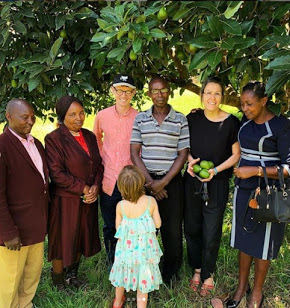
Per and his family with owners of Gachuiro factory
Earlier this year before the pandemic started, Per moved his family to Kenya for what was supposed to be six months, to build a stronger network of coffee producers with the wet mills and co-ops in Kenya. This trip had to be cut short due to travel restrictions. This coffee ended up being from one of the best washing stations Per met with and he became so impressed that he made sure to release this product first. Gachuiro is one out of four wet mills in Kiama cooperative located close to Karatina town in Nyeri. Gachuiro has 480 members, fairly evenly divided between male and female. Manager Ephraim and machine operator Leonard work close with the rest of the staff to ensure a high quality. Cherries are sorted and pulped the same day as picking. Fermentation takes 14-18 hours and water is circulated every 6 hours. Post-fermentation coffee is soaked 24 hours before being dried on tables for 10-14 days. Right away when I brought the cup to my nose I knew I was going to love it. So floral and sweet smelling. On first sip I tasted hibiscus, blackberry and other tart tropical fruits. I ground it slightly coarser than normal and used a 15:1 water to coffee ratio with just two pulses (30 s bloom, first pour from 30-50 s, second pour from 70-90 s) and a total brew time of 2:30. 
The second coffee is Costa Rica Yemersons. This coffee has been around for a bit longer, but the profile is so clean and sweet. This coffee is more of a crowd pleaser – something your dark roast loving uncle might like but also something I can enjoy every day. It is a honey processed Catuai from the Yemerson family, a family that has been producing coffee for generations. The current farm is 32 years old and was created with the marriage of Yemerson\’s parents, as Yermerson\’s grandfathers, don Victor and don Julio, both had farms that they merged into one. He tells us they are also the source of Yemerson\’s passion. Yemerson built his micro-mill in 2018, and this coffee is his second export. I brewed this one with a 16.5:1 ratio to help clean up the full body. I ground it slightly finer than I usually start with and used three pulses (25-30 s bloom, first pour from 30-40 s, second pour from 70-80 s, third pour from 110-120 s) and ended with a 2:45 brew time. This created a rich cup with a lot of caramel, brown sugar, banana, and a soft floral finish. 
Next, the Burundi Nyinya. Nyinya is a natural processed 100% Bourbon coffee from a group of growers in the northern province of Ngozi. More than 1533 farming families from 20 nearby coffee hills deliver their cherries to Nyinya. While women make up only one third of the producers who contributed to this coffee, they are without question the thread that holds coffee farming communities together in Burundi. They work incredibly hard; hand tilling the soil, growing, harvesting, sorting and hauling multiple crops, not just coffee. And they often do all of this with a baby on their back or a child at their hip. I brewed this coffee with a 16:1 ratio with a faster pour using two pulses (30 s bloom, first pour from 30-45s, second pour from 75-90s) and ended with a 2:40 brew time. The brew is wildly fruity, I don\’t even think I can articulate the flavors. The finish was all dark chocolate. I am sure as this one ages it will clean up. 
Lastly, is La Picona. Not many people received this coffee as I am nervous getting people into Nicaraguan coffees. It takes a fairly specific palate, although not an advanced one, to enjoy them. I exclusively buy Nicaraguan coffees from Kafferaven, as their Nicaraguans are some of the best I have ever had. Also, not many other roasters I work with buy green from there as the quality can be a gamble. Per works with several farmers in Nicaragua and while I don\’t always find I like all of them, I usually am impressed by something. The chocolatey, tobacco flavors mixed with fruity undertones just make me smile. This coffee specifically is grown by Samuel Zavala in the Dipilto region, close to Honduran border. Zavala is known for his obsession with the Maracaturra variety, a large hybrid varietal crossed between Maragogype and Caturra. La Picona happens to be a Natural processed Maracaturra. I found this coffee to have some funk when hot. Not gross earthy funk, but some obviously fermented flavors that would not be for everyone, which is why I purchased so few bags of this. However as it cools a sweet tart flavor comes out with a cinnamon finish so definitely let it relax after brewing. I used a 16.5:1 ratio and had to grind much finer than the typical brew because of the incredibly low bean density (notice how the beans sound like sea shells?). I used three pulses for this one but next time I brew it I\’ll experiment going coarser and using as many pulses as humanly possible to get more sweetness and cut down earthiness. To extract more funk I would suggest extending the brew time longer, and for more clean fruit I would go finer and brew it faster. 

Enjoy!

July Coffee: April Brings Ethiopia Varietal Transplanted to Ecuador

Another month of quarantine passes us by, another month of  interesting and fresh coffees for us to drink. I decided on April this month for a few reasons. First off, why not. April always has a full range of coffees that I would feel comfortable buying without trying or knowing anything about beforehand. Each green coffee is meticulously tasted and rated on quality before being purchased and they have an extremely progressive take on direct trade. Secondly, I choose them because of the actual coffees they have in inventory right now. Let\’s jump in.

  1. The Ethiopia Varietal Pillcocaja was the coffee I was most excited about so I made sure everyone in Stimulus Coffee Club was able to get a bag. This is the 5th or 6th lot from the Pillcocaja farm roasted by April, and those lucky enough to try the very first lot (Red Honey Typica) at Purple Llama back in March should understand the hype around these lots. This experiment of transplanting Ethiopian Varietals to South America is sort of new/modern and so far has been a beautiful experiment. While I was not familiar with this farm before April introduced me, the respect for them was instantaneous. In this coffee I tasted dark chocolate and raspberry. I was looking for the citrus notes that I was expecting to find but did not. I ground this coffee finer than usual and poured in three segments. I used 17 grams of coffee, then bloomed with 40 grams, then poured to 110 grams, then 180 grams, then finally to 270 grams. This was a 16:1 ratio and a 2:50 brew time. I would recommend starting at a lower ratio like 15.5:1, as my cup had lost some of the bounce I was expecting. UPDATE: I made this coffee again after letting it rest, I ground it much finer than first try and used a 16.5:1 ratio. This brought out so much more sweetness, florality, and cleaned up the cup. I am now a huge fan. 
  2. Next, the Kenya Kamwangi. I know some of you are obsessed with Kenyan coffees and I knew this one would be excellent. Similar to last month\’s Kenyan Coffee from SEY, this coffee was grown in the Kirinyaga region as well. The Kamwangi is especially known for less traditional Kenyan coffee flavors typically, with more rhubarb and tartness than the typical honey/grapefruit. While I do love the classic Kenya profile, I love uniqueness and flavor variability more. I used a 15.5:1 ratio for this one, with only two segments. After a 40 gram bloom, I poured to 160 grams, then to 250 grams for a 3:00 brew time. 
  3. Lastly, I decided to bring back the Burundi Nyabihanga. This coffee is just delightful. I was selling this coffee and brewing it on v60 at Purple Llama back in February. It was fantastic then, and upon confirmation from April\’s owner/founder/roaster that the profile has held up and aged perfectly, I knew it would be a great coffee to use to round out the offerings this month. This coffee has a classic Burundi profile but with April twist (more crisp clarity than earthiness). If you have the ability to make espresso at home, I recommend using this coffee, as it brings out the tart lime and orange flavors. For filter brewing, I would grind it similar to the Ecuador Pillcocaja. I recommend extending the brew time on this one as well; I think it brings out the juicy flavors. Brew the Burundi with the same number of pulses as the Ecuador as well, and it should yield a longer brew time because of the higher bean density. Use a 16:1 ratio to start.
Remember, all of my brewing recommendations shall be seen as starting points since everyone is using a different method, with a different grinder, and different water. As always, reference my \”How I Brew\” post on how to scale up when using an automatic/batch brewer. 
I hope you enjoy these coffees and I recommend reading the April blog or watching his videos on brewing. He has excellent insight on why coffee does the things it does when you add hot water. You can find that here if you\’re interested: April Blog 
Lastly, lets get a discussion going! Please comment your thoughts on the coffee or a good method to make them to help others (including me) make better coffee at home and also refine the offerings for each month.

June Coffee: SEY

This month I bring SEY Coffee from Brooklyn, NY to you. This is a roaster anyone that has been in Purple Llama at any point in the last three years has surely tried. They are one of the first roasters I brought on when I started my role there, and they never gave me a reason to stop buying coffee from them. I chose them this month specifically as they always shine the brightest late spring/early summer. It is a time when the fresh Ethiopians come in, and the small Colombian micro-lots are coming to an end. 
I chose three different coffees to present, dispersed to each person based on their stated origins of preference and feedback on the last order. Again, providing feedback helps me specialize each order. Here is information on each of them: 
  1. Colombia El Placer – 

    This is the third coffee I have personally tried from El Placer farm this year. The El Placer farm is owned by Jesus Saavedra, one of my absolute favorite coffee producers in Colombia. This is the last lot from Saavedra\’s high elevation farm (2100 MASL) SEY is featuring this year. This coffee is 100% Castillo and has a slightly earthy fragrance that kind of resembles sweet corn. The flavors are spiced strawberry and tropical fruits. Acidity on this coffee is slightly higher than a typical Colombian coffee: I used a 15:1 coffee to water ratio and did my \”Normal speed\” brew. This means a standard grind with bloom and then two pulses. Finishing at a 2:45 brew time. I finished pouring at around 1:45.

  2. Kenya Karindundu – 

        
    A Kenyan coffee from SEY is not always an expectation each year. Since they are so dedicated on traceability and direct relationships, Kenya can be a tricky origin to work with. What we know about this lot, is that it was grown in Kirinyaga and processed at the Gatomboya Washing Station. The varietals are very typical: SL28, SL34, Batian, and Ruiru 11. While some people are opinionated on their Kenyan varietals, I am not. I have never found a Kenyan Coffee with Ruiru 11 or Batian to be of lesser quality than a \”pure\” SL28 or SL34. Like many other roasters, SEY is nervous about the future of Kenyan coffee as the soil conditions are getting worse every year. Luckily this coffee reminds us why it is worth the fight to keep Kenya a strong producer of beautiful coffees. It has a big sweet mouthfeel, with flavors of honey, pastry dough, and tastes the way flowers smell. I used a 15.5:1 ratio for this one with a 2:30 brew time. I brewed this one fast, with a quick 10 second pulse. I finished pouring around 1:30. 

  3. Ethiopia Yabitu Koba 


    \”This coffee is mind blowing. This Ethiopian season is going to be insane and might end up being the best Ethiopian season of my personal career. Please drink every single one of them.\” – Production crew at SEY. I don\’t know if I can specify a \”best\” at this point in my coffee career, but it is comforting knowing that the coffee that nearly every single member of Stimulus Coffee Club received has this review. Yabitu Koba comes from the famous Uraga region, known for it\’s high elevation. This coffee was grown at elevations ranging from 2160 – 2310 MASL. The flavors of this coffee are spectacular and probably my favorite of the three. I tasted lemon, lavender, sparkling grape juice, and about 100 other very bright tasting flavor compounds. I used a 15:1 ratio, with a 2:15 brew time. I used a fast pouring method, finishing my last pour around 1:25. I recommend grinding this coffee much coarser than usual because of the high density. If the brew tastes tea-like without much citrus you are grinding too fine. 

As always, thanks for supporting the subscription and I hope everyone enjoys the coffees! Feel free to comment below to start a discussion on any one of these coffees. As promised, I have donated all profits from this month to three different organizations that align with my principles and the way I see the world progressing to. All three organizations: Reclaim the Block, Chicago Community Bond Fund, and Poor People\’s Campaign received a donation of $120 each. Thank you to everyone for the prompt payment to allow this to happen and EXTRA thanks to the few of you that donated extra money for this.