June 2024 – Vivid Coffee Roasters and The Barn

Vivid Colombia Luz Divia Fierro – This is Luz Fierro go-around number 3 here at Stimulus. All three have been Pink Bourbon, and each one is some time in the summer for the last three years. The quality is always high and as a self-described Pink Bourbon aficionado, I have always been impressed with what Fierro produces. Luz and her husband Elpidio operate their own farm, Finca El Meson in the Acevedo department and sits at 1650 MASL. The farm was inherited by the couple from Elpidio’s father Angel who still produces coffee in a neighboring town. When the two settled on El Meson, they planted over 20,000 Pink Bourbon trees, my dream scenario. The land where the trees were planted was never used to plant coffee before, and after great success in this, another 26,000 Pink Bourbon trees were planted. During the harvest months, Luz employs around 15 pickers from outside Acevedo and a few locals to harvest the ripe Pink Bourbon cherries. The pickers stay on the plantation during the harvest, and are always paid above market value along with a comfortable stay. The processing is done carefully, floating all the cherries to remove any defects and then left to rest in cherry for 24 hours. The next day, the cherries are pulped and wet-fermented for 38 hours. This process is done over and over again to maintain consistent quality. In the cup I tasted coconut, persimmon, and tart cherry. I brewed this with a 15.8:1 ratio and ground it four clicks finer than my typical washed Colombia grind setting. I poured four pulses spaced out by 30 seconds, finishing my final pour at 2:30 for a 3:10 final brew time.

Vivid Honduras Evin Gomez – This is the second Evin Gomez coffee we have had in the subscription. Both have been Parainema, processed as a full Natural, and obviously at the same elevation. Gomez is a young producer and has dedicated himself to perfecting Parainema. I checked my last coffee notes on this one and it appears the coffee was a bit challenging to brew correctly and dial in properly. I am not sure what changed, as this coffee is stunning right away. Didn’t have to do anything weird to the brew to slow it down, grind setting was not crazy fine, and the profile was smooth and delicious at about one week off roast for me. This cup was crazy from start to finish, changing cup vibes multiple times. Overall, I tasted applesauce, mango, with a kind of marshmallow mouthfeel. Chewy cup. I brewed this with a 16.7:1 ratio, and ground it three clicks finer than my typical starting point. I poured three pulses spaced out by 40 seconds, finishing my last pour at 2:25 for a 3:10 final brew time.

The Barn Ethiopia Dambi Uddo – Always a favorite from the Barn. I saw Dambi Uddo and after a quick check to make sure this was, as I assumed, fire, I had to get it for the subscription. The Dambi Uddo plantation and processing station is located in the Guji highlands, a region famous for juicy sweet coffees. The coffees here are grown at 2145 MASL, and typically are a mixture of local heirloom varietals. For those of you that are interested in a clean natural processed coffee, this one is for you. I actually did a double take when first trying this because I am almost not convinced it is natural. It has to be one of the cleanest natural processed coffees I have ever had. The cherries are always grown in the shade here under tall shade trees in the forest, allowing the sugars to ferment slowly and uniformly. I believe this is what helps the clean profile, as the hot sun can be known to produce more funky naturals. Once I finally ground this one coarse enough to get it to flow out of my brewer properly, the cup profile was incredible. I tasted Kumquat, honey, lavender, super sweet and HEAVY on the citrus. I brewed this coffee with a 15.5:1 ratio, and ground it 8 clicks coarser than my usual starting point. I poured two pulses spaced out by 45 seconds, finishing my second pour at 1:55 for a 2:50 brew time.

The Barn El Salvador Los Pirineos – The famous Los Pirineos, the El Salvador farm that made anaerobic processing so commonplace in today’s menu of coffees. The farm’s original mastermind was Don Gilberto Baraona who left the farm to his son Diego to continue the legacy of keeping this beautiful El Salvadorian farm on the map for global specialty coffee roasters. Los Pirineos is located at 1400 MASL in Usulutan, and is grown on the slopes of a volcano. This climate provides high levels of sunshine with cooler air temperatures and constant breeze. The high levels of sunshine allow Baraona to be consistent in how much sunshine the drying cherries are receiving to ensure fermentation is done in a controlled manner. This lot is a natural Anaerobic, with the fresh cherries thrown directly into the sealed barrels at a temperature of 16C. For fermentation, this is considered quite low. After 72 hours, the cherries are taken out of the sealed anaerobic fermenters as long as the correct pH level is reached. The cherries are then taken out to dry for 25 days until the correct moisture content is reached. I tasted Marzipan, black forest cake, and a heavy heavy body. I suspect this one will do well with some resting and hope to get more complexity out of it in the coming week. I brewed this with a 16.3:1 ratio, and ground it two clicks coarser than my typical starting point. I poured four pulses spaced out by 30 seconds, finishing my fourth pour at 2:35 for a 3:30 final brew time.

Raised drying beds at Los Pirineos

May 2024 – Clever & Duck-Rabbit

Clever Colombia Misiones – Misiones is a farm in the Cundinamarca region of Colombia, that surrounds Bogota and just north of Huila. Misiones has been a long time staple on the CleverCoffee menu, and for some reason I have passed on it time and time again. The farm is operated by Luis Fernando. The typical harvests at Misiones consists of mostly Bourbon, Castillo, and Caturra; this lot being 100% Castillo. The farm is located at 1700 MASL, pretty standard for Colombia but fairly steep for the Cundinamarca region. Clever actually used this particular lot in the 2023 Danish Brewers cup. That being said, this is one of the most incredible coffees I have had in awhile. Even with my first brew being under-extracted, I could tell this coffee was otherworldly. I tasted honey-crisp apple, lingonberry, sugar cookie, and oolong when it cools off. I brewed this coffee with a 16.2:1 ratio and ground it right at my typical grind setting that I base off on a washed Colombia (you don’t say?). I poured three pulses spaced out by 35 seconds, finishing my third pour at 2:10 for a 3:05 total brew time.

Clever Brazil Paulo Afonso – Paulo Afonso de Refunsa is the mastermind behind the Santa Clara farm, following in his grandfather’s footsteps after pursuing a career in Mechanical Engineering. Paulo puts a ton of thought into how to use water as a resource and not as an endless commodity. A special filter for incoming water to the farm has been developed by Paulo to keep all coffee processing water as clean as possible. This is a natural processed coffee, and the cherries are basically stacked on top of each other to slow the drying process. This is only for a couple days until the cherries are laid out in an even layer to properly dry all the way through. This farm sits at 1100 MASL and is a Yellow Catuai lot. I tasted ripe strawberry and a zinfandel note at the front, then cornbread and hazelnut. I would have guessed this was a Brazilian coffee from a mile away, so nothing too unexpected here. I brewed this with a 16.0:1 ratio and ground it one click finer than my typical starting grind setting. I poured three pulses spaced out by 35 seconds, finishing my third pour at 2:20 for a 3:15 drop time.

Duck-Rabbit Sulawesi Kahayya Village – It is VERY tough for me to not buy Sulawesi when it is on a menu. I would say the ratio of Sulawesi/Sumatra/all Pacific Rim/Asian coffees in this sub is not representative of the specialty coffee industry. This coffee is a collection of small lots from local farmers in the Kahayya Village located in the southern tip of South Sulawesi. Apparently some of the coffee trees in this region are dated over 100 years old and still producing. As a lot of the info pages for this coffee say, the age of these trees has a lot to do with the Dutch colonizers that milked the region for coffee to bring back to Europe. The elevation range for the region these smallholding farmers comes from is 1400-1700 MASL and the two varietals are Typica and Line-S. Line-S being a varietal developed in India with great rust and disease resistance, something necessary at the lower elevations we see in this region. This cup is kind of all over the place and while I cannot stress enough how fuckin delicious it is, I really struggled to develop some solid tasting notes. This is a deeply complex cup that I almost feel bad about trying to define with my opinions. There is some sort of vinegar of an acidic fruit, like a green apple vinegar that I can taste, and maybe I get some lime once it cools (that Duck-Rabbit lists as a tasting note) but overall… this is just a super complex coffee. I brewed this with a 16.3:1 ratio and ground it one click coarser than my typical grind setting. I poured four pulses spaced out by 30 seconds following my 30 second bloom. My final pour ended at 2:20 for a 3:15 brew time.

Duck-Rabbit Rwanda Kanzu – This is the first Rwanda I have had in a BIT. The late fall/winter Rwandas that typically come flooding in, just were not present this year. Kanzu is a pretty famous washing station in western Rwanda, with most coffee being carried in by local smallholding farmers with small lot sizes of 100% Bourbon cherries grown at around 1900 MASL. This is a mountainous terrain with small farms situated on the slopes of Lake Kivu. This is a misty, foresty climate without neat rows of coffee trees. Kanzu pays record prices to these farmers, rewarding them for their quality. This is a natural processed coffee, with whole cherries laid out for 40 days in shaded raised beds. I assume the shading ensures that the cherries do not overheat and over-ferment. The cup profile is super clean for a natural but bursting with sweetness. I tasted these Polish toffee chocolates I have right now along with amaretto and raspberry. I brewed this with a 16.5:1 ratio and ground it 3 clicks coarser than my typical grind setting. I poured two pulses spaced out by 45 seconds after a short 30 second bloom. My second pour ended at 1:50 for a 3:00 brew time.

April 2024 – Little Wolf and Kaffa

Little Wolf Ethiopia Qonqana – Coming to us from Bombe, Ethiopia is Qonqana washing station. Or, Bombe Qonqana washing station. This is a farming co-op, known to locals as the “Mother station” and processes coffee from approximately 1,020 local smallholding farmers. This is a 2,000 MASL washing station, fairly standard for this region of Ethiopia. They process washed, natural, and honey processed coffees, mostly two specific local varietals (74110 and 74112). This lot is honey-processed, meaning there is parchment left on the seed but the cherry is pulped. The parchment covered seeds are rotated and turned regularly and methodically over the course of 15-20 days before being fully stripped and cleaned. I taste lavender, green tea, mango, and laffy taffy. Super fruity, and overall a very fun coffee. I brewed this with a 15.5:1 ratio and ground it 7 clicks coarser that my typical grind setting. I poured two drawn out pulses, spaced out by 45 seconds and finishing my second pour at 1:50 for a 2:50 final brew time.

Little Wolf La Pradera – To any new people, welcome to the sweet grace that is La Pradera. Every time I buy this coffee it is an absolute stunner. La Pradera is a lovely estate at the El Jardin co-op in Huila. The farm sits at around 1850 MASL, and this lot is a washed ❤ PINK BOURBON <3. Little Wolf is heavily invested in their relationship with La Pradera, securing each harvest whether it be Pink Bourbon, Gesha, or Castillo. In this cup I taste bergamot, pomegranate, with a sweet orange finish. A punchy, sweet coffee. I would expect nothing less from a La Pradera coffee. I brewed this with a 16.3:1 ratio and ground it one click finer than my typical starting point. I poured a 35 second bloom, and then three pulses spaced out by 35 seconds. I finished my last pour at 2:10 for a 3:05 final brew time.

Kaffa Peru Damian Espinoza – Another annual favorite of mine: Damian Espinoza. This coffee is always on my list of annual Peruvian coffee to seek out. Damian Espinoza owns the coffee plantation “Finca La Palma” in the Cajamarca department. This is the first washed coffee I have tried from Espinoza, and the first I have used in the subscription. It is a Yellow Caturra, a varietal famous in Peru and typically has a sticky fruit sweetness and a clean overall vibe. This cup tastes of sweet marshmallowy clouds, with lemon zest, and pinot noir. I brewed this with a 15.7:1 ratio and ground it right at my typical grind setting. I poured four pulses spaced out by 30 seconds, finishing my final pour at 2:30. My drop time was 3:15.

Finca La Palma, where Damian Espinoza grows coffee on a hill side.

Kaffa Honduras Miguel Moreno “El Filo” – From the legend Miguel Moreno, we have this slightly difficult to brew washed Anaerobic Pacas. Kaffa has been working with El Filo for over a decade, buying coffee from each of the Moreno siblings. The Moreno family has consistently placed in every Cup Of Excellence competition, basically since it began, competing with local Santa Barbara legends like Ben Paz and El Cedral. Truly a dense region of quality coffee producers. This will not be a funky fruit-bomb like some of the Anaerobic coffees people have come to expect, as this is fully washed with parchment stripped before being placed in the sealed fermenters. I have found this process typically produces less of a fruit profile and more enhances sweetness or sugar flavors. In the cup I taste coconut, vanilla, and macadamia nut. This is not really what I would consider bright or clean, more on the spices side. I do recommend letting this coffee cool, as more sweetness presents itself. I brewed this with a 15.7:1 ratio, and ground it two clicks coarser than my typical grind setting. After a 35 second bloom, I poured four pulses spaced out by 30 seconds, ending my last pour at 2:20 for a 3:15 total brew time.

March 2024 – Junto and Lykke

Junto Colombia Finca Cataluna – Cataluna is the farming project from Flor Marina Betancourt. Flor comes from generations of coffee farmers and learned about the industry from her father on the farm she grew up on. Flor’s father inherited a plot of land and she convinced him to turn it into a new farm, Finca Cataluna. This is a smaller farm where Flor, her husband, and two sons help out with the harvest and hire about 10 others to help with the picking. This is a Pink Bourbon, grown at 1700 MASL in Huila. Whole cherries are fermented for 12 hours before pulped and fermentation continues for 40 hours and then dried in a green house. This coffee was stellar right away on my first brew, and the Pink Bourbon is obvious. I tasted Cherry and Hibiscus flower with medium acidity, maximum sweetness. I brewed this with a 15.3:1 ratio and ground it right at my typical starting point for a washed Colombia. I poured two pulses spaced out by 45 seconds (First pour at 0:45, second at 1:30) for a 2:50 total brew time.

Junto Guatemala La Joya – La Joya is an experimental farm operated by brothers David and Eddy Solano, 4th generation coffee farmers from Chimaltenango. David is a 3-time national barista champion, which in Guatemala is super impressive. They have produced world champions in the past and have a very competitive competition. David and Eddy were inspired learning about carbonic maceration to start processing coffee in newer, experimental methods. From a country that only a few years ago exported over 90% washed coffee, this is a new idea in Guatemala. In Carbonic maceration, typically CO2 is injected in to the Anaerobic tanks to flush out any oxygen. David started using nitrogen to even further push the funk level. This coffee was processed as an anaerobic natural, meaning the cherries were sealed in the tanks along with yeast that was chemically separated in a lab from pineapple. So this is not one of those gimmicky coffees where fruit was added directly to the fermenters. This coffee is an absolute funk bomb. I tasted fermented strawberry, dark, intense chocolate, and not a whole lot of tropical fruit. This is pretty surprising considering not just the processing but the tasting notes on the actual bag. I am truly not worthy of even being able to dial this one in but I will give my best instructions. I brewed this with a 15:1 ratio, and ground it three clicks finer than my typical grind setting. I poured four pulses spaced out by 30 seconds, ending my last pour at 2:35 for a final drop time of 3:00.

Lykke El Salvador Ignacio Sosa – This can comes from Ignacio Sosa’s farm “Las Pilas” in El Salvador, located across the river from Honduras. This proximity allows for higher elevation, which is 1600 MASL. Pretty good for El Salvador. This is a full natural Pacamara, one of the most challenging coffees to roast. Lykke does an incredible job with this one, and it is easily my favorite coffee of the bunch this month. Pacamara beans are larger, but super low density. Roasting these is a true skill test. I tasted pear and literal papaya all around this cup. Sort of strawberry jam vibe on this as well. This doesn’t really have a big front-end or lasting finish flavor, but more of everything all at the same time. I brewed this with a 16.3:1 ratio, and ground it right at my typical starting point. I poured three pulses spaced out by 40 seconds (0:45; 1:25; 2:05) for a 3:15 brew time.

Lykke Snovatten (Peru Agua De Nieve) – This is the third round of Snovatten we are trying, and I am happy to say the quality has increased again. Agua de Neive is located in Peru at the edge of the Amazon, sitting at the base of the Andes at 1800 MASL. The cup is always so crisp and clean, it is always a favorite. The temperate climate, elevation, and clean water flowing down from the mountains gives this delicate profile it’s structure. I tasted Chrysanthemum, Persimmon, and Vanilla Ice Cream. I brewed this with a 15.5:1 ratio, and ground it right at my typical starting grind size. I poured three pulses spaced out by 35 seconds, ending my last pour at 2:10 for a 3:00 brew time.

February 2024 – Manhattan and HaveFun!

Manhattan Tanzania Edelweiss – This sparkling lil guy comes from the Gaia farm in Tanzania, a member of the Finagro Farms collective. The farm is owned by the Vohoras, a multiple generational farm sprawling 1000 acres on the southern slopes of the Ngorongoro conservation area on the edge of a crater. The farm is located in a valley and the Vohoras provide a Rainforest Alliance Certified farm and it provides temporary housing to the seasonal harvesters. After 18 years and starting out with just a few seeds from Sidama, Ethiopia, Edelweiss now has close to 10,000 trees. This is a washed coffee, but after the pulping it was dry fermented for a few days which brings out some incredible flavors. We get a perfect balance here from the Ethiopia varietals and the crisp Edelweiss profile I remember. Raspberry, honey, and mild lemon acidity thanks to that Arusha. I brewed this with a 16:1 ratio and ground it 3 clicks coarser than my typical starting grind. I poured a 45 seconds bloom, with 3 pulses following. I spaced out the pulses by 30 seconds, finishing my third pour at 2:10 for a 2:50 total brew time.

Manhattan Colombia Nestor Lasso – This is our second time trying Nestor Lasso in the last year. I once again love this coffee. Nestor Lasso is located in Huila and while a newer producer, is making big noise in the industry. I feel super lucky that Manhattan has created such a strong partnership with this producer and hopefully soon we can bring over some unique varietals that will surely blow us away. This is a typica mejorado, which is already unique but not something that will blow the price up. The processing on this is clearly super thoughtful and keeps the cup clean. This is a fully washed coffee, but it was left to oxidize for 12 hours with mucilage on the cherry making this close to honey. After the pulping and washing, it went through the thermal shock effect with hot water. I still don’t really know why this is necessary, and am not sure it does a lot for the coffee other than a sales tactic, but it is delicious. This is a sugary sweet Colombia. I get strawberry rhubarb, sorghum, and big cherry notes once the cup nears the final sip. I brewed this with a 16.5:1 ratio, and ground it one click coarser than my usual starting Colombia grind setting. I poured a 40 second bloom and then poured three pulses spaced out by 30 seconds. If this is a larger brew, I recommend pouring really small circles to get the timing done right. I finished my last pour at 2:10 for a 2:55 final brew time.

Have Fun Costa Rica Volcan Azul – We know this farm well by now – Volcan Azul has only increased production of small specialty lots that are sold to the best roasters in the world. Volcan Azul is the most famous specialty coffee farm in Costa Rica, run by Alejo Castrok. The farm has been in Castrok’s family for five generatiions, starting in the early 1900s. Alejo brought Volcan Azul in to the specialty coffee world personally, learning about how some of the best producers in the world are processing coffee differently. I have probably had at least a dozen coffees from Volcan Azul, and I think one or two out of all of them have been a straight washed coffee and a well known varietal. This coffee is a full natural Marsellesa grown at 1600 MASL. The cherries are dried on raised beds for six days after harvest, and then dried in mechanical dryers to control the moisture content present in the cherries. I tasted Fruit Gushers, passionfruit, and rooibos. This is a complicated lil coffee. I brewed this with a 16:1 ratio, and ground it two clicks finer than my typical grind setting. I bloomed this for 50 seconds and then I poured four pulses spaced out by 30 seconds, finishing my fourth pour at 2:40 for a 3:15 brew time.

Have Fun Colombia Ruben Jimenez – There is not much more I can see about Ruben Jimenez than what is printed on the back of the bag. He grew up picking coffee on neighboring farms in Huila to make money before spending time in the military and then living in Bogota. After being sick for what is said to be years, Ruben returned and started the coffee game. Ruben’s current farm ‘El Naranjo’ is located in San Agustin, Huila. After a couple difficult harvests with less than desirable quality, things have straightened out and we are here drinking the first specialty harvest from El Naranjo. I knew this cup was going to be striking. This is a fully washed Caturra grown at 1720 MASL. I taste vanilla, juniper, and florals. This is a super nice coffee and a crowd pleaser for sure. I brewed this with a 16.7:1 ratio, and ground it right at my typical starting point. I poured a 50 second bloom, followed by three pulses spaced out by 35 seconds. I finished my third pour at 2:25 for a 3:05 final brew time.

January 2024 – The Barn and Vivid

The Barn Rwanda Mahembe – The Mahembe drop comes every year from The Barn, and I have to say, I am ashamed I usually pass it up… But not this time! Mahembe is the project of Justin Musabyimana, a partner of The Barn’s for nine years now. This relationship allows The Barn to land the best lots from Justin. Mahembe is located close to Lake Kivu, one of the largest lakes in all of Africa which gives a great climate for coffee growth. In addition to the Mahembe production, Justin works with other local farmers to improve quality in the region and establish a great reputation. This is a straight forward washed process: the ripest cherries are harvested, floated to remove any defected or unripe cherries, the cherries are then washed, wet-fermented for 12 hours, and then dried on raised African beds. I tasted Kiwi up front, like the acidity of a Kiwi with mild sweetness. The middle of the cup tasted more like walnut and cherry with a rounded body. This is not a flavor bomb by any means but is a nice approachable washed Rwanda. I brewed this with a 16:1 ratio, and ground it 3 clicks coarser than my typical grind setting. I poured two pulses spaced out by 40 seconds, ending my second pour at 1:50 for a 2:45 brew time.

The Barn Guatemala Buena Vista – Love this farm. Actually, the only farm I have ever been to, which is only partly reason I am such a fan. Buena Vista is located just outside of Antigua and began experimenting with other processing when washed was the gold standard. This is a Natural-processed Pacamara, which is why it sounds like sea shells when you pour it out of the bag. Pacamara is super uncommon in Guatemala, which makes this one even more exciting for me. This one has big lactose filled beer vibes. Super funky, creamy, complicated. I tasted some orange, lavender, and some sweet candy. I used a 15.8:1 ratio and ground it two clicks finer than my typical grind setting. I poured a 30 second bloom, and then poured three pulses spaced out by 35 seconds. I finished my last pour at 2:25 for a 3:15 final brew time.

Vivid Mexico Jose Arguello – This one is crazy. I have not had a good coffee from Mexico in a bit, but looks like this year they have been hitting the roasters HEAVY. This coffee comes from Chiapas, Mexico at a farm called Finca Santa Cruz run by Arguello. It is a Typica/Bourbon grown at 1600 MASL. What makes is it a cool coffee comes from the processing. Arguello loves to use alternative processing techniques. During the fermentation, Arguello removes a sample each hour for up to 200 hours to see where the coffee is at and to find a sweet spot. This results in roasting and tasting all 200 samples. I taste a caramely brittle, marshmallow, pomelo, and ginger. This is a super intense profile, and I suspect letting it rest will clean the cup up a bit. I brewed this with a 16.7:1 ratio, and ground it two clicks finer than my typical starting point. I poured three pulses with wide circles and slightly aggressive to create some turbulence in the brewer. My pulses were spaced out by 35 seconds, finishing my last pour at 2:30 for a 3:00 total brew time.

Vivid Honduras Kevin Fernandez – This is a first time producer for us. Kevin Fernandez is a young producer and is a nephew of Nahun Fernandez, a favorite Honduran producer from Vivid. As some of the best producers in Honduras are in Kevin’s own family, he has taken on incredible processing and cultivating knowledge. Knowing one of Nahun Fernandez’s favorite varietals, Kevin has followed this logic of success and grown this exceptional Parainema. This is processed as a full natural and has a crazy profile. It’s definitely funky. When it’s hot, I tasted grapefruit at the front and then some cranberry. In another brew, I tasted maybe some raisin or plum also; dark fruits play around in this cup. I brewed this with a 15.5:1 ratio and ground it FOUR clicks finer than my typical starting point. I poured four wide pulses spaced out by 30 seconds following my long 55 second bloom, finishing my last pour at 2:45 for a 3:25 final brew time.

December 2023 – Introducing duck-rabbit and SEY

  1. duck-rabbit Ethiopia Korate – Korate is a natural-only processing station in West Guji, Ethiopia. They operate in the mountains and have deliveries from 116 local smallholding farmers. The output from this processing station is small, but is known to be excellent with quality control (great standards IMO). This coffee is produced at elevations 1900-2100 MASL, and as mentioned, this coffee is a natural as is all of the coffee from Korate. After cherries are delivered, any visual defects are thrown out and then the rest of the ripe cherries are floated in tanks to further reduce unripe cherries. After this, the whole cherry is sent to dry for 3-4 weeks to develop that sweet fruit flavor. This coffee definitely has SOME funk but overall a clean and clarified natural Ethiopia. I tasted strawberry, some cotton candy, chocolate blueberries, with an orange dreamsicle vibe. I brewed this with a 16.3:1 ratio and ground it 8 clicks coarser than my typical starting point (2 clicks coarser than my typical Ethiopia grind!). I poured a 40 second bloom, followed by two pulses spaced out by 45 seconds. I poured these fairly quickly with smaller circles to increase flow. My second pour finished at 1:50 for a 2:55 brew time.
  2. duck-rabbit Sumatra Bebesen, Aceh – This is a wet-hulled coffee from North Sumatra. Generally, when I think of a wet-hulled Sumatra, I am reminded of the first Sumatran coffees I have had. Truthfully, wasn’t a fan. Super earthy, leafy coffees that go great in a blend. However, we now live in 2023, which means too many coffees are TOO good! This comes from the town of Bebesen, produced by Aulia. Aulia is a coffee “collector” and, as common in this region, the collector buys partially processed cherries from local growers. Typically the cherry is either in the husk after fruit is removed, or in full cherry. Aulia buys all coffee in full cherry still so they are able to process the cherries as they wish. The coffee is grown at 1300-1600 MASL and is a blend of local native varietals. This cup was just as I had hoped. Any presence of dirt or forest floor is absent. I taste clove, clementine, cardamom, some sweet tobacco, and cherry. The most excited note was the clementine for me that popped out after letting the brew cool to nearly room temperature. The cup was extremely pleasant from fresh to luke-warm finish. I brewed this with a 16.5:1 ratio and ground it one click finer than my typical starting point. I let this bloom for a full 50 seconds, and then poured four pulses spaced out by 30 seconds. My last pour finished at 2:40 for a 3:25 total brew time.
  3. SEY Colombia Diana Sofia Jimenez – This coffee is a sort of remaining lot blend from producer Diana Sofia Jimenez in the southern end of the Huila department. This is a newer producer for SEY, but anyone producing a micro-lot like this one that SEY can put their trust a roaster in, is a friend of ours. The remaining lots were so small that they had to be blended together to create a true volume of coffee. These lots were Caturra, Chiroso, and Gesha. Caturra is always a classic from Huila, but the remaining two varietals were what caught my attention. For a field blend, this had some high potential. The cup quality is super dynamic and while tough to nail down exact tasting notes, I got a main hit of Pumpkin Pie, Lemon, with a Persimmon finish. I ground this one click coarser than my typical grind setting for a Colombia and brewed this with a 15.8:1 ratio. The bloom did not need more than 40 seconds. I then poured three pulses spaced out by 35 seconds, finishing my third pour at 2:10 for a 3:05 total brew time.
  4. Sey Ethiopia Yaye Chericho – This one came to me last minute as an option for the December subscription. It is a super high elevation washed Ethiopia Heirloom coming very late in the season. Yaye Chericho is one of the highest elevation washing stations in the world, and a region (Arbegona) that SEY has invested in over the last few years to build better infrastructure and in turn, better coffee. This lot is one of the first few lots that have come out of the washing station and the excitement has been no joke. I tasted Kalamansi, Lilac, Papaya, with a very bright profile. I brewed this with a 16:1 ratio and ground it five clicks coarser than my typical starting point. I poured a 45-50 second bloom and then poured two pulses spaced out by 45 seconds, finishing at 2:00 for a 2:45 brew time.

November 2023 – CleverCoffee and Little Wolf

CleverCoffee Ethiopia Keramo – From the Bombe Mountains in the Sidama region of Ethiopia, we have coffee from the Keramo washing station. Keramo washing station buys cherries from around 380 smallholding farmers, or farm workers that pick wild coffee. Keramo is located at 2300-2400 MASL, which is one of the highest elevation coffees I have ever worked with. You can tell from opening the bag that something here is different. The beans are super small and smell like straight jasmine. This coffee was sorted from the rest of the crops to be a single varietal – JARC 74112. This is a native Ethiopian varietal and is known to be a high-yielding, disease resistant crop with intoxicating flavors. I was kind of trying to get away from washed Ethiopia for a couple months to make room for some more in season coffees, but the way Clever was talking about this one made it seem different. This truly is a different kind of washed Ethiopia. Strong aroma of lilac, flavors or orange sherbet, bubblegum, and peach nectar. So refreshing and a joy to drink. I brewed this coffee with a 15.2:1 ratio, and ground it six clicks coarser than my typical starting point. After a 35-40s bloom, I poured two pulses spaced out by 45 seconds for a 2:50 total brew time.

CleverCoffee Indonesia Wildan Mustofa – Wildan Mustofa comes from Sindangkerta, Indonesia, a beautiful part of West Java. Mustofa is bringing excellence in specialty coffee from Indonesia, a region most coffee snobs do not get too excited about due to the typical flavor profiles and high Robusta production. But we say to hell with this and give everything a chance! Mustofa owns the farm Frinsa Estate, growing many different local varietals at 1300-1500 MASL. As the bag states, this is a blend of many varietals. This is a pretty classic washed coffee, but on the farm Wildan is experimenting with different bacteria and lactose in the processing to push the flavor profile to the extremes. This cup has a super molasses/sorghum vibe. I expect more fruit notes to come out as it rests more, but so far the molasses sweetness with an oaky background is present. I am a huge fan of this profile as it is not only unique but absolutely crushable. I brewed this with a 16.3:1 ratio and ground it right at my typical starting point. I poured three pulses spaced out by 35 seconds, finishing my last pour at 2:15 for a 3:15 total brew time.

Little Wolf Colombia Sierra Morena – Another flawless washed Colombia from Little Wolf. This is a Pink Bourbon from Huila, grown and processed at Sierra Morena. Sierra Morena is a 25 acre farm operated by Wilson Alba located at 1750 MASL. Alba and his wife have lived at this farm for over 15 years, and spend their days carefully monitoring the production of their coffees. Most of the trees being Tabi, and a small section being Pink Bourbon. This is definitely a lovely Pink Bourbon, as they always are and processed under the typical washed process. Mellow lemon acidity, brown sugar, and something pink like starbursts or skittles. I brewed this one with a 15.5:1 ratio, and ground it right at my typical starting point. After a long 50 second bloom, I poured three pulses spaced out by 40 seconds. My last pour finished at around 2:30 for a 3:20 total brew time.

Little Wolf Honduras Secundino Sabillon Alfaro – I had the pleasure of visiting Little Wolf’s world class cafe in Ipswich last month and this is the coffee they had in the espresso hoppers. I knew it was going to be part of the November lineup right away. This is a lot of things, a lot of impressive things. The farm is called Finca Mi Mundo, located in Santa Barbara Honduras at 1400 MASL. This is a Parainema, the newish varietal we have been seeing come out of Honduras heavily the last few years. Paraienema is great because of the disease resistant properties and the flavor profiles have been wildly complex. This is also a honey-process, meaning some mucilage was left on the cherry during fermentation and yields a slightly sweeter cup profile usually. For this coffee, the honey allowed the fruit to punch through. At Finca Mi Mundo, they grow 100% parainema. I tasted tangerine, mango, with a high amount of acidity for a Honduras, and a honey-processed at that. The Parainema is truly an exceptional varietal. I brewed this with a 16.3:1 ratio, and ground it two clicks finer than my typical starting point. I poured four pulses spaced out by 30 seconds, finishing my final pour at 3:00 for a 3:35 total brew time.

Secundino’s farm in Santa Barbara, “Finca Mi Mundo”

October 2023 – Junto and Kaffa

Junto Ethiopia Worka – I don’t have too much of a story on this one, Worka is a massive washing station as this subscription surely knows by now with around 2540 active members operating on super small plots of land. I taste strawberry Jam, sour cherry, and earl grey tea. Super delicate profile on this one but an absolutely identifiable washed Ethiopia. I brewed this with a 15.2:1 ratio, and ground it six clicks coarser than my usual starting point (my standard Ethiopia grind). I poured a 30 second bloom, and then poured two pulses spaced out by 45 seconds. My final brew time was 2:40.

Junto Papua New Guinea Kuta Kofi Mill – Kuto Kofi Mill is located in a region of Papua New Guinea with rich volcanic loamy soil and a humid climate perfect for coffee growing. The coffee is grown by various local smallholding farmers located at 1600 MASL and is a field blend of Bourbon, Typica, and Arusha. I tasted black tea, cider, and a subtle mango finish. Not super fruity mango, but the essence is there. I brewed this with a 16.3:1 water to coffee ratio, and ground it right at my typical starting point. I poured four pulses spaced out by 35 seconds with wider than usual circles to slow down the brew. My final brew time was 3:35.

Kaffa Guatemala Bella Carmona – A natural processed Bourbon from right outside the city of Antigua, Guatemala?? Definitely a first. Last I heard, only around 5% of exported coffee from Guatemala is natural processed. Bella Carmona is run by producer Maria Zelaya Aguirre at the base of Vulcan de Aqua, just south of Antigua. Maria is part of the Zelaya family, a well-known family in Guatemalan coffee production that owns one of the largest exporting businesses in the country called Zelcafe. This coffee has such a lush profile; I tasted deep red fruit notes, cherry, and overall just super sweet. Unhateable, I might say. I brewed this with a 16.5:1 ratio and ground it two clicks finer than my typical grind setting. I poured three pulses spaced out by 40 seconds, finishing my third pour at 2:20 for a 3:10 total brew time.

Maria Zelaya Aguirre

Kaffa Brazil Sanctuario Sul – Yet another Brazil!! This makes 4 for the year if I am counting right which is WILD. A couple years ago I never would have guessed this would be happening but they are just so good! Sanctuario Sul means “Sanctuary of the South” run by producer Luiz Paulo Pereira in the Carmo de Minas region. Kaffa describes this as a sort of “test farm” rather than full production. There are over 30 distinct varietals grown here. This lot in particular is an SL28, berry-dried or natural coffee that underwent 96 hours of anaerobic whole cherry fermentation. The combination of varietal and processing method made it a no-brainer for me. I unfortunately cannot locate the elevation for this one, but from the acidity and mouthfeel of the cup I would assume it isn’t TOO low. But of course, as a Brazil, it would not be much higher than 1000-1200 MASL. This is a fun profile as long as you don’t royally f it up. Super tropical profile, much more similar to a high quality Costa Rica than Brazil. In the cup, I taste ripe raspberry, orange, and a super full body. I brewed this with a 15.6:1 ratio, and ground it four clicks finer than my typical grind setting. I poured four pulses spaced out by 30 seconds, any more and the bed would completely drain. My final brew time was 3:10, but only barely could get there without super large circles.

Sanctuario Sul Plantation

September 2023 – Lykke: The Return and Vivid

Lykke Snovatten – As mentioned with the last Lykke round, Snovatten is going to be a consistent offering every time we have Lykke. This coffee is from Agua de Nieves in Peru, the small 5 hectare farm that Lykke owns. This is my favorite of the three single-origin coffees that Lykke owns the whole farm from. The goal with this coffee is to track the changes every six or so months. The experiment is already shown to be super fun as I am tasting new flavors this time. More developed sweetness and interesting new aspects to the cup. I taste coconut, chocolate marzipan, and plum this time, whereas last time it was more marshmallow and a touch of acidity. It is still a super super light roasted profile that is peerless in the field of cups I want to drink later in the day or at night. I brewed this with a 15.5:1 ratio, and ground it right at my typical grind setting. I poured three pulses spaced out by 35 seconds, ending my last pour at 2:05 for a 3:10 brew time.

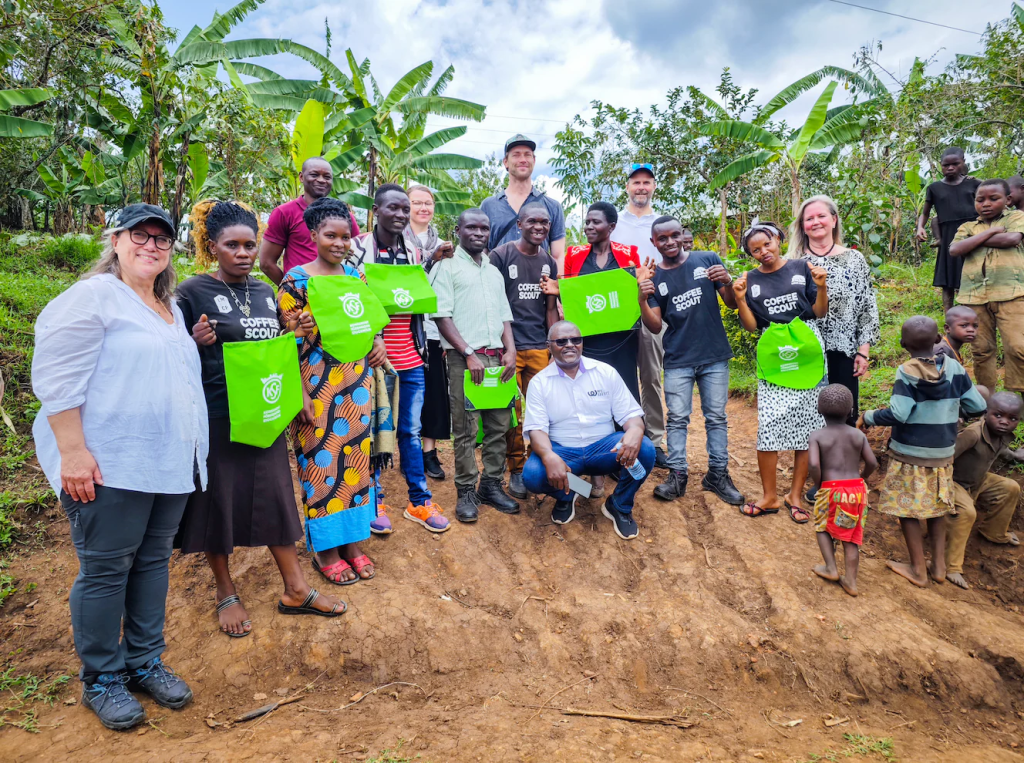
Lykke “555” Uganda – We snagged this ultra limited edition for a few reasons: the selections of coffee farmers, the selections of trees, and the strict farming practices by Lunar Coffee. Lunar Coffee is a scout program that Lykke has installed in Uganda. Throughout the western Uganda region, the potential for high quality specialty coffee is great but with bad farming practices and lack of resources the coffee will never advance to what it can be. The “555” comes from the scouts each picking 5 farmers, and allowing the farmers to choose 5 trees and then implement Lunar’s 5 best practices for production: Mulching, Pruning, Stumping, De-suckering, and Soil Conservation. This is the very first lot from this program and Lykke was so excited about it that it got me second hand excited. This cup profile is actually blueberries. The roasters tasting notes did not lie. I also tasted banana with macadamia nut butter with a graham crackery finish. I brewed this with a 16.2:1 ratio and ground it one click coarser than my typical starting point. I poured three pulses spaced out by 40 seconds, finishing my third pour at 2:25 for a 3:10 total brew time.

Lykke team with the Uganda Coffee Scouts

Vivid Kenya Kiri AA – Kenya Kiri comes from the Kirinyaga region, and Kiri is the washing station that sits on a five hectare plot of land serving the Ngiariambu farmer’s co-op. The co-op consists of about 1400 members, and has existed in the Kirinyaga county since 1997. The average elevation for these smallholding farmers is 1450 MASL in a warm, mediterranean climate. I tasted boysenberry and lavender, with a tangerine and grapefruit finish. I brewed this with a 15.7:1 ratio and ground it one click coarser than my typical starting point. I poured two pulses spaced out by 50 seconds (1st at 40 seconds, 2nd at 90 seconds), finishing my second pout at 1:55 for a 2:40 final brew time

Vivid Colombia Luis Ariel Bermuda Ramirez – A natural Caturra from Colombia, how could I not?!?! Luis Ariel Bermuda Ramirez is an outstanding producer in the Huila department in a town called Algeciras, where he owns a farm located at 1800 MASL. The cherries from this lot were harvested and delivered to the fermentation tanks in full cherry where they were left for 72 hours to ferment and develop the fun lil profile it has. After rinsing the fruit and parchment off, it was dried for 20 days in parabolic dryers. I taste papaya, starfruit, and strawberry. Ridiculously tropical cup. I brewed this with a 15.5:1 water to coffee ratio, and ground it four clicks finer than my usual grind setting. After a 45 second bloom, I poured four pulses spaced out by 30-35 seconds for a 3:20 total brew time. I recommend pouring wider circles to slow this down. This also is an exceptional coffee to try with an immersive method such as Aeropress.