

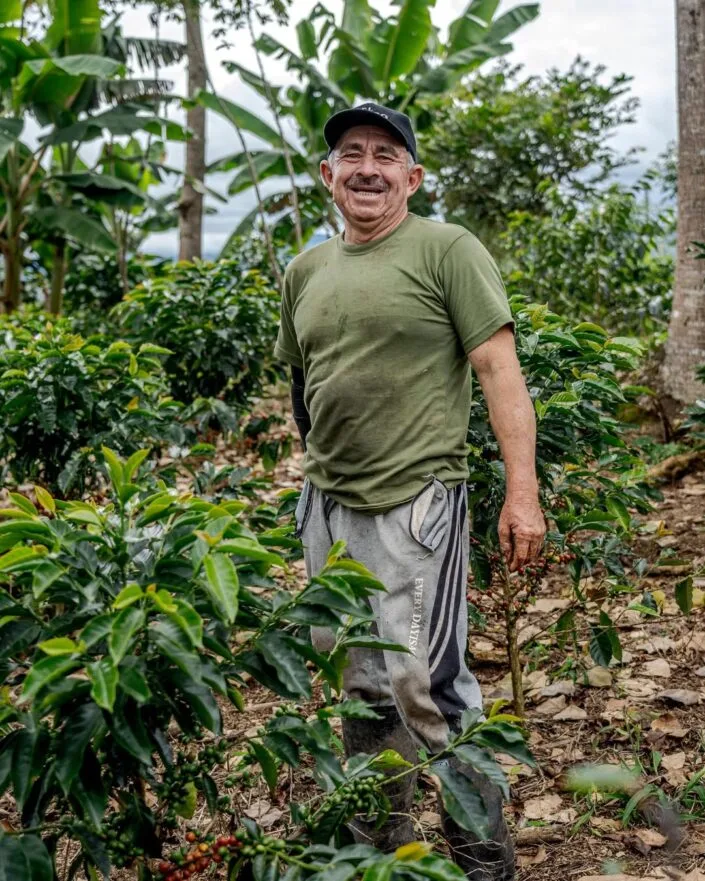
A Matter Of Concrete Colombia Don Hector Diaz – A Pink Bourbon from Huila, AND it is natural processed. A dynamic combination I know more than a few of us will be excited about. Hector Diaz is the operator of La Armenia, a farm in the town of Pitalito, Huila. The farm is located at 1,800 MASL, with not many varietals grown other than Pink Bourbon. This is partly due to the small plot size of 1.5 hectares. The smaller land size forces Diaz to be much more intentional about the quality of the trees grown here. Diaz is one of the founding members of the El Bombo cooperative, which helps ensure education on coffee growing practices, and educates future Huila coffee farmers on the traditions that have ensured its well-deserved fame. After harvesting, the cherries are sorted and floated to detect any defects. The whole cherry is then dried on raised beds, and monitored throughout to ensure consistency. The cherries are turned regularly to regulate the moisture content of each cherry. I taste pineapple, mango, and ginger candy. I brewed this with a 16.2:1 ratio, and ground it one click finer than my typical starting point. I poured three pulses spaced out by 40 seconds, finishing my last pour at 2:20 for a 3:20 final brew time.
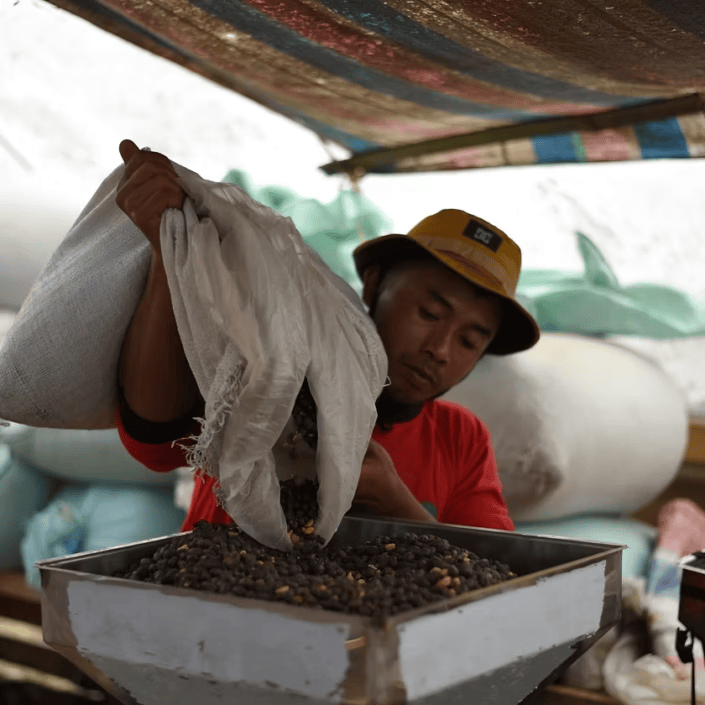
A Matter Of Concrete Indonesia Rukun Saudara – Finally a coffee from Sumatra! It has been far too long. This one is from Kerinci, Sumatra, a volcanic region close to the coast. Rukun Saudara cooperative is operated by Abdul Aziz Thohari, a coffee farmer in the region since 2015. After starting the co-op, Thohari focused on giving local smallholding farmers more autonomy and power in the process. In 2017, the drying area at the Co-op was 50 sq meters and is now 800 sq meters. The washing station sits on the slopes of Mount Kerinci, with coffees grown between 1400 and 1700 MASL. The soil here is lush, made up of fertile, volcanic minerals. The varieties in this lot are Andungsari and Sigarautang… $20 to anyone that has ever heard of these. They are local varietals tied to traditional Indonesian coffee growing. Now to the processing – the ripe cherries are pulped, but not totally stripped of mucilage, making this a honey process. The cherries are then sealed in low-oxygen tanks for anaerobic fermentation, then dried with the mucilage still attached. I smelled an intense dark chocolate aroma on my first, slightly over-extracted brew. I sped it up and then tasted way more acidity and candied apricot. There is a lot of flavor to unpack in here. Crazy cup! I brewed this with a 16.5:1 ratio, and ground it two clicks finer than my typical starting point. I poured three pulses spaced out by 35 seconds following by 35 second bloom. I finished my last pour at 2:15 for a 3:00 drop time. Pour wide circles to get this to slow down. Going finer will make it TOO sour.
Vivid Mexico Leodegario Lopez Santiago – Leodegario is a 28 old year old coffee producer in Mixteca, Oaxaca. He operates the farm, La Cascada, located at 2,000 MASL. For my fellow Mexican coffee connoisseurs, that is pretty insane elevation for Oaxacan coffee. The surrounding area of La Cascada is famous for sweeping hills, where crops have grown under larger shade trees for centuries, with traditional farming techniques still used for the fancy coffees that Leodegario is growing. The only varietals grown here are Typica and Bourbon, which is what this lot is a blend of. The farm is super small, so all the Typica and Bourbon cherries are harvested and processed in the same fashion – washed. The seeds are rinsed and washed after the fermentation until the water runs clear. They use drying mats called Petates, which are woven mats for drying. The seeds are dried for about five days. Vivid has been crushing hard on this coffee, and I can see why, it weirdly has a strong heavy cream flavor that I found sort of unusual but also really cool. I also taste roasted walnuts. I brewed this with a 16:1 ratio and ground it two clicks finer than my typical starting point. I poured three pulses spaced out by 35 seconds after a 45 second bloom, finishing my last pour at 2:15 for a 3:10 final brew time.
Vivid Ethiopia Habtamu Fikadu – This coffee comes from a larger farm in Guji, operated by Aaga Dinsa, a third generation coffee farmer that inherited this farm from their grandfather. This plot of land spans 105 hectares, and acts as a washing station for an additional 144 coffee farmers in the region. Habtamu Fikadu is the name of the washing station that all of these coffees are processed through. The company reinvests 12 cents for every pound of exported green coffee plus an additional 5% of profits in a local development fund that works to stabilize food, clothing, schools, and other infrastructures in the local economy. The factory exports directly now, avoiding any larger exporting giant. The coffees here undergo a 48-72 wet fermentation, then washed, and soaked for 12 hours before drying on raised beds for 10-12 days. This coffee has a bit of harshness to it, like biting into a rosemary sprig or other strong herb’s leaf. It is not a delicate little flower of a washed Ethiopia. I definitely recommend letting it cool down quite a bit, as that brings out a nice raspberry galette note. I brewed this with a 16.3:1 ratio, and ground it seven clicks coarser than my typical starting point. I poured three pulses spaced out by 30 seconds, finishing my last pulses at 1:50 for a 2:45 final brew time.

