
Clever Uganda Mount Elgon – This coffee is produced in conjunction with the Mountain Harvest project, a new program helping to uplift communities through coffee production. The Mount Elgon region has great potential for specialty coffee with the high elevations and fertile, volcanic soil. The Mountain Harvest project works with the local farmers, usually holding smaller lot sizes, to educate while promoting quality and sustainable practices to produce higher quality coffee – of which, there are financial benefits for said quality. The project incentivizes farmers to also grow other crops that can generate income outside of the short coffee season. The elevations are between 1400 and 2200 MASL, and the farmers grow SL-14, SL-28, and Nyasaland. This is a super Ethiopia reminiscent mouthfeel with a lovely central African profile. I taste black tea, orange marmalade, and lime. I brewed this with a 15.5:1 ratio and ground it four clicks coarser than my typical starting point. After a 35 second bloom, I poured two pulses spaced apart by 45 seconds, finishing my second pour at 1:50 for a 2:50 final brew time.
Clever Colombia “Sneaky Cinnamon” – Yes, I hate the name of this too. Clever is a Danish roaster, and they are a very silly people. Oh well! We love them anyways. This is technically a blend of a few coffees from smallholding producers in Huila; it blends together varietals like Geisha, Red Bourbon, Tabi, and Caturra. The producers that have come together on this coffee are not big enough to export their own coffee and rely on community effort to get their coffees around the world. The coffees are grown at elevations of 1600-2000 MASL, and when brought together, the cherries are fermented with various experimental techniques before washing. I tasted maple syrup and melon. I brewed this with a 16.3:1 ratio, and ground it two clicks coarser than my typical starting point. I poured three pulses spaced out by 35 seconds following a 40 second bloom. I finished my third pour at 2:10 for a 3:10 brew time.
Duck-Rabbit Rwanda Gitwe – I know at least a few of you that are going to be pissed at me about this one. We have had some tough natural Rwandas recently. Working with Duck-Rabbit, I was convinced I needed to give this one a chance even after I expressed my concerns over some recent disappointments. I am out here VETTING for us. Gitwe is a washing station in the Nyamasheke district, located in south Rwanda alongside Lake Kivu. This area near the southern forest has incredible biodiversity from plants to wildlife. The coffee-growing region of Nyamasheke is known for high altitudes and volcanic soil. Gitwe processes coffee from around 800 smallholding farmers ranging from 1800-2000 MASL. This lot is 100% Bourbon. The flavor is like a light Pinot Noir, with blackberry and spices. I brewed this with a 16.2:1 ratio, and ground it two clicks coarser than my typical starting point. I poured three pulses spaced out by 30 seconds, finishing my third pour at 2:15 for a 3:00 brew time.
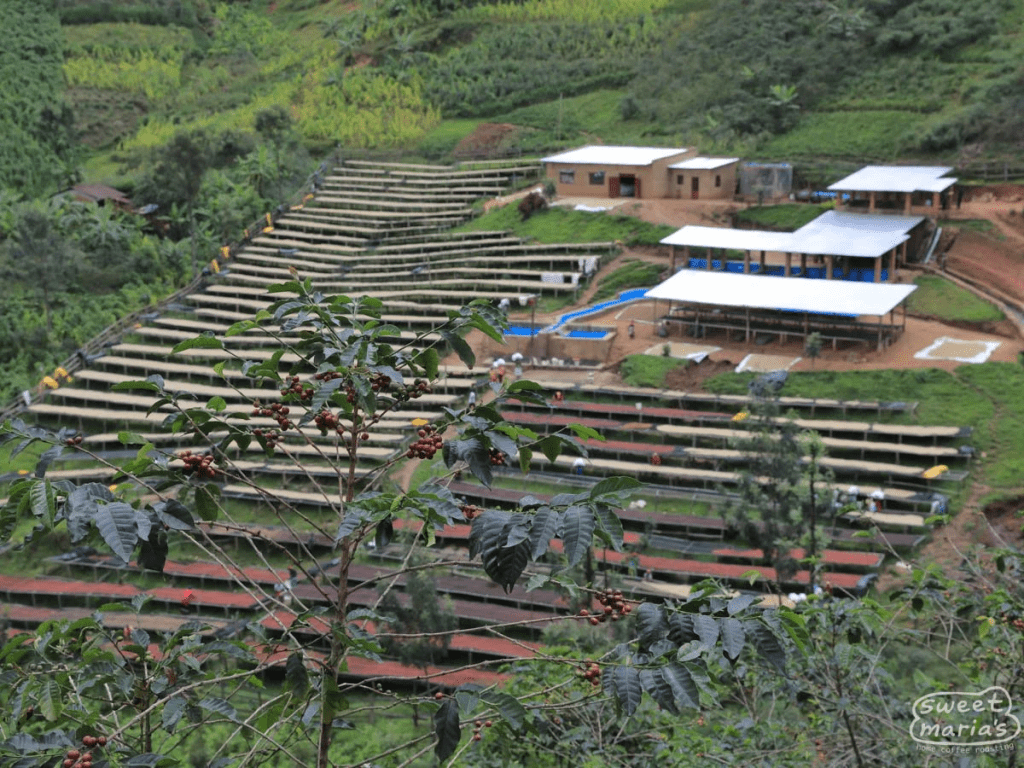
Duck-Rabbit Peru Finca Quillabamba – This complex and sweet Peru comes from producer Juan Quilla Laura, from Puno, Peru. This region is called Sandia, and the town or Puno is right against the Titicaca lake. This is all the way in the south of Peru near the Bolivian and Chilean border. Juan has been cultivating coffee on the land that makes up Finca Quillabamba for 18 years, after starting in the coffee business in 1984 as a day laborer. Finca Quillabamba is located at 1800 MASL and is in a unique region with difficult to access areas in the Peruvian Andes. Most of the coffee grown here is Bourbon. This cup is straight up Peanut Butter Marshmallows, a nuanced dessert coffee through and through. I brewed this with a 16.5 ratio, and ground it one click coarser than my typical starting point. I poured three pulses spaced out by 35 seconds, and finished my third pour at 2:20 for a 3:20 final brew time.
 Stimulus Coffee Club