
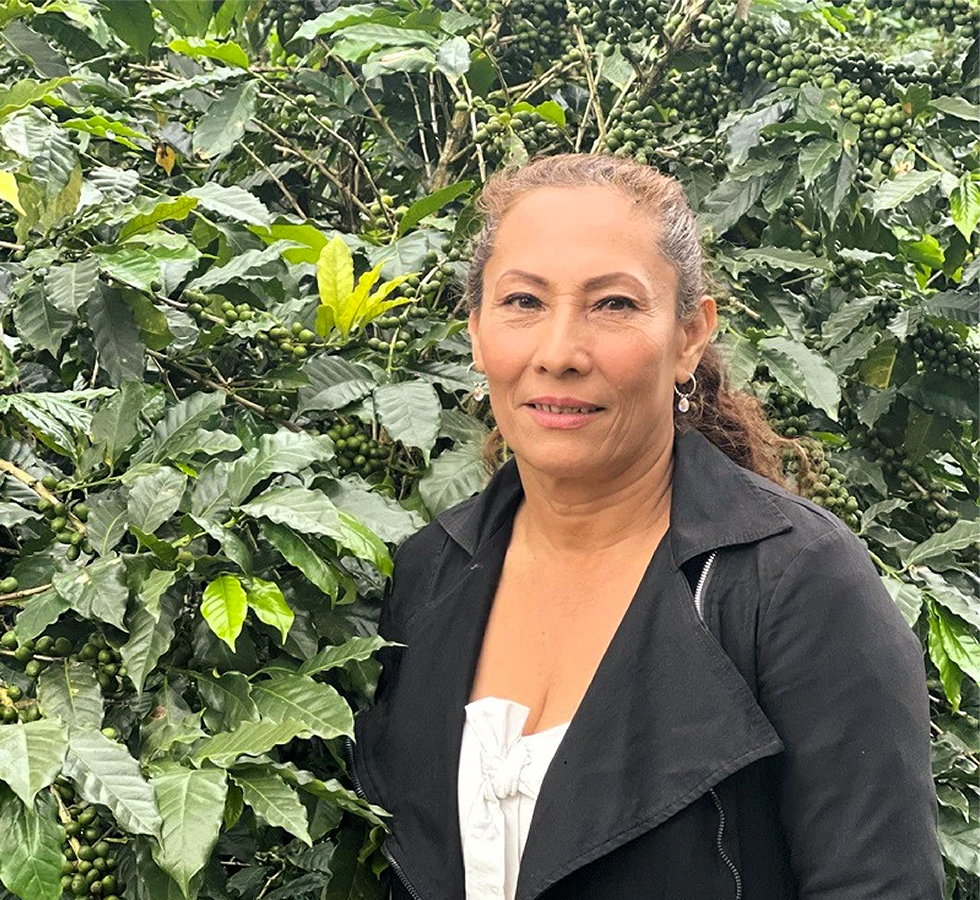
Manhattan Colombia Maria Belen Diaz – Maria Belen Diaz is the operator and owner of the Resinas farm in Acevedo, Huila. She has been deeply connected to the coffee trade her whole life, coming from generations of coffee farmers. Previously, she was one of the coffee quality analysts for the Cauca department and is on the Huila Condor project, a coalition of 96 female coffee growers in Huila. On the Resinas farm, Maria, her husband, and three children grow Bourbon, Caturra, Castillo, PInk Bourbon, and Gesha. This is a “semi-washed” Pink Bourbon – a combination that can still get me excited about this industry after (so) many years. The cherry pickers start by picking only the ripest cherries. The cherries start with a pre-fermentation in the cherry, and then sealed in bags for 36 hours for the anaerobic fermentation. The cherries are then washed, then dried on raised beds for 15 days. I tasted cantaloupe, ginger, and geranium. I brewed this with a 16.3:1 ratio, and ground it right at my typical starting point. I poured three pulses spaced out by 35 seconds, finishing my last pour at 2:10 for a 3:15 final brew time.
Manhattan Colombia El Paseo – I must admit, the Maria Belen Diaz was my first choice for this month based on the varietal and process (See above for that madness). However, Manhattan ran out of the Maria Belen Diaz and was only able to fulfill half my order. I was already interested in this coffee so I just supplemented it with this and then when actually I started tasting it I realized this was the true winner. This coffee comes from El Paseo, a farm located at 1800 MASL in Narino. This is an anaerobic washed Caturra, a dangerous combination of processing and varietal in Narino. I should have known this coffee would be fantastic based on this. El Paseo is operated by Huver Castillo, a 3rd generation coffee farmer. Huver was a math teacher up until several years ago and then joined the family business after learning the coffee trade from his father. Huver picked only the ripest cherries and then did a 36-hour fermentation in the cherry. After this, the cherries are floated in a sea salt bath to separate defects and also to disinfect cherries. The coffee seeds are then sealed in stainless steel tanks for 6 days, while specific enzymes are added to the fermenter and pH is monitored. This cup is straight up Bergamont in a cup. Super sweet, and I would believe it is a co-ferment (but it’s not). I brewed this with a 16.3:1 ratio and ground it one click finer than my typical starting point. I poured three pulses spaced out by 35 seconds, finishing my last pour at 2:20 for a 3:00 brew time.
Manhattan Tanzania Edelweiss SL28 – We have had coffee roasted by Manhattan, grown in Arusha, Tanzania at the Edelweiss farm located at 1800 MASL. Edelweiss is operated by Neel Vohora, an extremely excited producer in the region, and is located on the edge of the Ngorongoro Crater. Vohora is pushing the boundaries of specialty in Tanzania by using different varietals and a more focused approach on processing. This is a 100% SL28, the Kenyan varietal. It isn’t CRAZY to transplant SL28 to Tanzania, but in a world where the country is dominated by Bourbon, Kent, and various peaberries, it is exciting to see this. I tasted Caramel apple and dry riesling. Dry like a vermouth, but great acidity. I brewed this with a 15.6:1 ratio, and ground it one click coarser than my typical starting point. I poured two pulses spaced out by 50 seconds after my 45 second bloom. I finished my last pour at 2:10 for a 2:50 drop time.
Kaffa Ethiopia Nensebo Refisa – The name from this one comes from the Refisa washing station located in Nensebo Woreda in West Arsi, Ethiopia. Refisa is comprised of 588 smallholding coffee growers that live and tend to their coffee gardens in Refisa and neighboring towns. The average plot sizes are around 2 hectares at an elevation of 2070 MASL. As with most of Ethiopia, various native varietals are grown. However, Kaffa claims this is exclusively 74110. This is a washed coffee, where the seeds are washed, then wet-fermented for 72 hours. The seeds are then soaked for an additional 5 hours, then dried until they reach a moisture content of 10.5%. This is a super sweet Ethiopia, with much more of a sugar content than tea-like characteristics. I brewed this with a 15.8:1 ratio, and ground it seven clicks coarser than my typical starting point. I poured two pulses spaced out by 40 seconds following a 30 second bloom, finishing my last pour at 1:40 for a 2:40 final brew time.
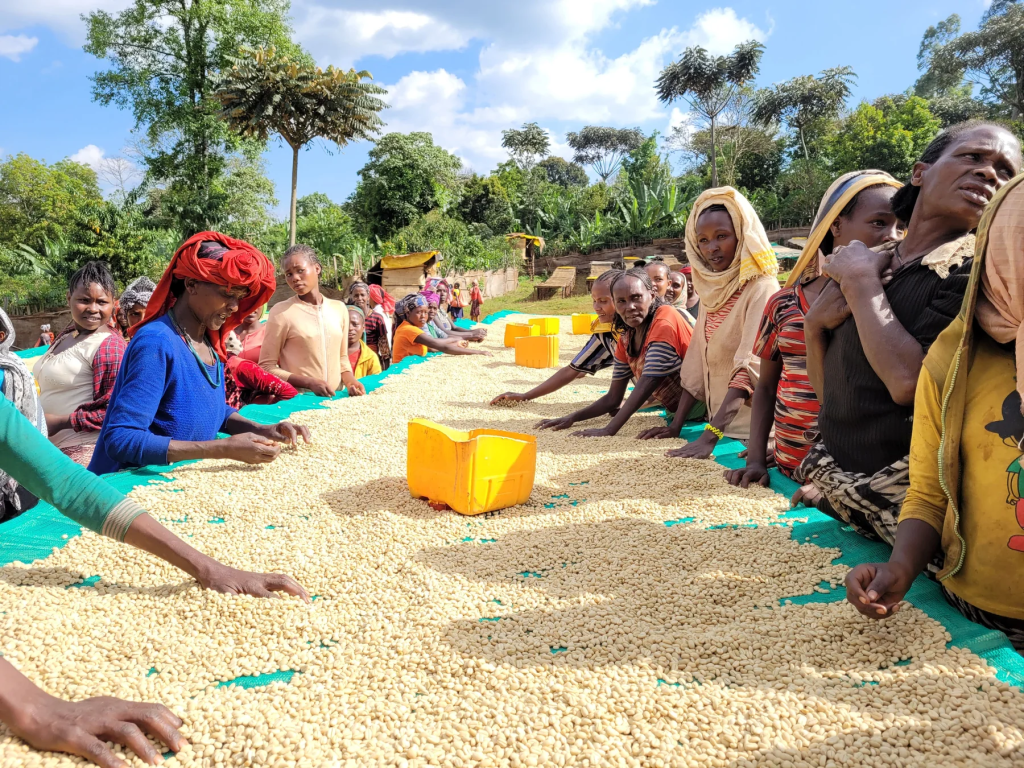
Kaffa Honduras La Orquidea – The Easter coffee! I swear we have had La Orquidea before, but my archives tell me otherwise. La Orquidea is a super cool farm that is the brain-child of the Morenos and Benjamin Paz. The heavy-hitters of the Santa Barbara region of course. Kaffa has worked with the Moreno family, specifically their farm “El Filo” for as long as I have bought their coffee. These are consistently so solid and I can always trust that these are going to be great coffees. When Miguel Moreno and Ben Paz bought La Orquidea in 2014, they planted around 7000 Pacas and 2000 Catuai trees. This lot is a Pacas, grown at 1520-1600 MASL, located down the road from the El Filo farm that the Morenos own. This is a clean, washed coffee, with flavors that are super indicative of this region. I love a natural terroir flavored coffee like this. I taste flavors like marzipan, plum, and maple syrup. I brewed this with a 16.3:1 ratio, and ground it one click coarser than my typical starting point. I poured four pulses spaced out by 30 seconds, finishing my last pour at 2:45 for a 3:30 final brew time.
 Stimulus Coffee Club