
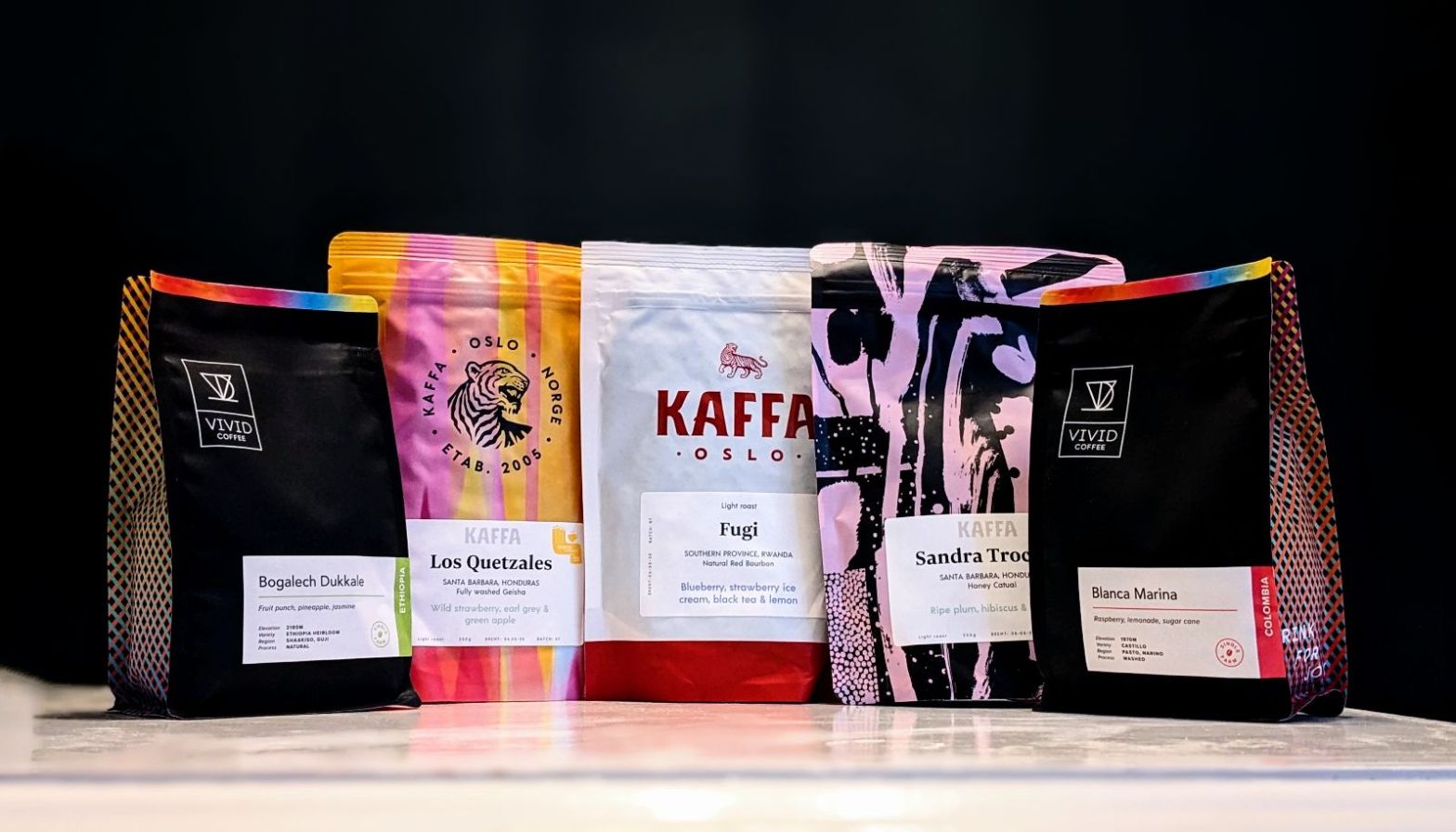
Kaffa Rwanda Fugi – This absolute fruit bomb comes from a small plot in southern Rwanda near the Burundi border and the Nyungwe National Park. Fugi is a washing station operated in the BAHO network, a company that operates several washing stations in the region. Fugi is one of the first mills in the network, and is considered an innovation hub of the network. Over half of the green coffee from last years harvest was processed using alternative methods, with anaerobic being the hot girl of the season (as with everywhere else). BAHO exported 900 sacks of green coffee last year, a sign of growing demand for delicious specialty coffee from Rwanda. This coffee is a classic full natural Red Bourbon, the majority varietal produced in Rwanda. In the specialty market, that is. This cup smells like straight up blueberry pancakes. I used a 15.6:1 ratio, and ground this two clicks coarser than my typical starting point. I poured three pulses spaced out by 30 seconds, finishing my third pour at 2:10 for a 3:00 brew time.
Kaffa Honduras Sandra Trochez – Sandra Trochez is yet another wonderful small producer in the Santa Barbara region of Honduras that Kaffa works with. They have had excellent luck in the region since I have been buying from them and the consistency from year to year continues to impress. The farm this is sourced from is Don Amado, a coffee we have had from Kaffa before. Amado passed away in 2019, and his wife Sandra Trochez operates the farm along with their four children continuing the legacy that the original Don Amado, father-in-law of Sandra has built. This coffee is a honey-processed catuai. The cherries are dry-fermented for 15 hours before depulping and wet processing. The cup is sweet, spiced, and crispy. I tasted spiced apple, maple sugar, with dry minerality. I brewed this with a 16:1 ratio and ground it two clicks finer than my typical starting point. I poured three pulses spaced out by 35 seconds, finishing my third pour at 2:20 for a 3:10 total brew time.
Vivid Ethiopia Bogalech Dukkale – The first single-farm Ethiopia from Vivid! This is from Sidamo, and comes from Shaakiso, Guji. The craziest thing about this coffee for me is the elevation, and being a natural process. At 2180 MASL, this is much higher than a lot of Ethiopians we are used to. Typically the highest elevation Ethiopians at around this level are ALWAYS washed. At least in my experience. This being natural, the flavors are so so clean and clarified but still has the ripe fruit notes that natural Ethiopians are known for. Bogalech is a mother of six, and is a coffee producer owning a four hectare plot in Guji. Her parents were coffee farmers on this plot and they have carried down the wisdom of excellent coffee production. This cup has washed Ethiopian flavors like lemon and lavender combined with natural Ethiopia flavors like blackberry. and sweet sugars. I brewed this with a 15.5:1 ratio and ground it 8 clicks coarser than my typical starging point. After a 50 second bloom, I poured two pulses spaced out by 45 seconds, finishing my second pour at 2:05 for a 3:05 brew time.
Vivid Colombia Blanca Marina – Blanca Marina is the name of the producer Vivid has been working with consistently for some years now. She recently passed away, but had been producing coffee for decades, and now we look to her daughters, granddaughters, and great-granddaughters for help on the farm – called “El Aguacate”. While a simple Narino Castillo, the harvesting and processing methods are advanced and meticulous. The flavor yield is an exciting cup with balanced, bright fruits and a great example on why standard washed Colombians continue to be the most exciting coffees. The fermentation was a standard 24 hours in tanks, then dried for two weeks on raised beds. This means the extra fruit flavor in this coffee comes directly from the cherry ripening longer than typical. The flavors in the cup are vibrant. Brown Sugar, Dark Plum, and hibiscus. I brewed this with a 15.5:1 ratio, and ground it two clicks finer than my typical starting point. After a long 50-60 second bloom, I poured three wide pulses spaced out by 35 seconds. I finished my last pour at 2:35 for a 3:15 final brew time.
 Stimulus Coffee Club