

April Ethiopia Zewde Estate – This coffee will be the most drank this month by far, and we only have it by mistake. The coffee I originally chose ended up being sold out and so I deferred to this one. The Zewde Estate coffees are a staple in April’s lineup now and for some reason I always pass them up but serendipity worked in our favor this time. Zewde Estate is a single-farmer lot in Hambela, Guji – a rarity as we all know. April’s Ethiopia partner is an organization called METAD, which typically helps a lot in developing low-income farmers but for the Zewde Estate, it is METAD’s own micro-lot focused farm where they grow exclusively Ethiopian Heirloom varietals separated to keep distinct Ethiopian profiles. This lot is a 100% Krume varietal and natural processed. I am always amazed how clean these natural profiles are but still with a distinctive natural profile that is recognizable. I tasted bright peach and lavender right away, with jasmine and bubble gum. So refreshing. I brewed this with a 15.5:1 water to coffee ratio and ground it 7 clicks coarser than my typical starting grind. I poured 2 pulses, first one at around 45 seconds, and the second at 90 seconds for a 2:55 total brew time.
April Kenya Kainamui – This is the same lot of Kainamui from this summer and it is even better this time around. This is always one of my favorite coffees. Honestly, I am surprised this is even a Kenya. This is from the Kainamui processing station in Ngariama, Kirinyaga. The processing station is owned by the New Ngariama Farm co-op and is a SL-28/SL-34 AA lot grown at 1750 MASL. The Ngariama co-op is comprised from around 950-1000 local smallholding farmers from the community that bring their harvests to the Kainamui factory where it is graded and floated for defects. All coffee is then fermented for 24-48 hours before drying on raised African Beds. The Kainamui Factory sorts the different sizes by AA, AB, PB, etc. The highly acidic Kenya cup is not what I am finding with this. It has so much more mapley sweetness than what the world has come to expect from Kenya. I tasted a touch of apple and pomegranate. This is a super complex and another outstanding selection from Kainamui. I brewed this with a 15.7:1 ratio and ground it 4 clicks coarser than my typical starting point. After a quick 35 second bloom, I poured three pulses spaced out by 35 seconds. I finished my last pour at 2:15 for a 3:20 brew time.
Junto Ethiopia Hada Molecha – This is a small processing station in Aricha, Gedeo. This is a great station that is committed to paying the smallholding farmers better prices. The average plot size for the farmers is between 2 and 10 hectares,and will only yield a few bags per year. Hada Molecha has the privilege of DNA testing the cherries that are brought to the station and this lot apparently is a blend of Krume, Dega, Wolishu, 74148, 74110, 74165, and 74112. I would say a blend of seven varietals is basically not even worth knowing as it is almost impossible to taste the variances. The brightness here is out of this world. I tasted Meyer lemon, floral, cherry, all the potential of what a Washed Ethiopian can be. I brewed this one with a 15.5:1 water to coffee ratio and ground it 7 clicks coarser than my typical starting point. After a 40 second bloom, I poured two pulses spaced out by 45 seconds, finishing my second pour at 1:50 for a 2:45 brew time.
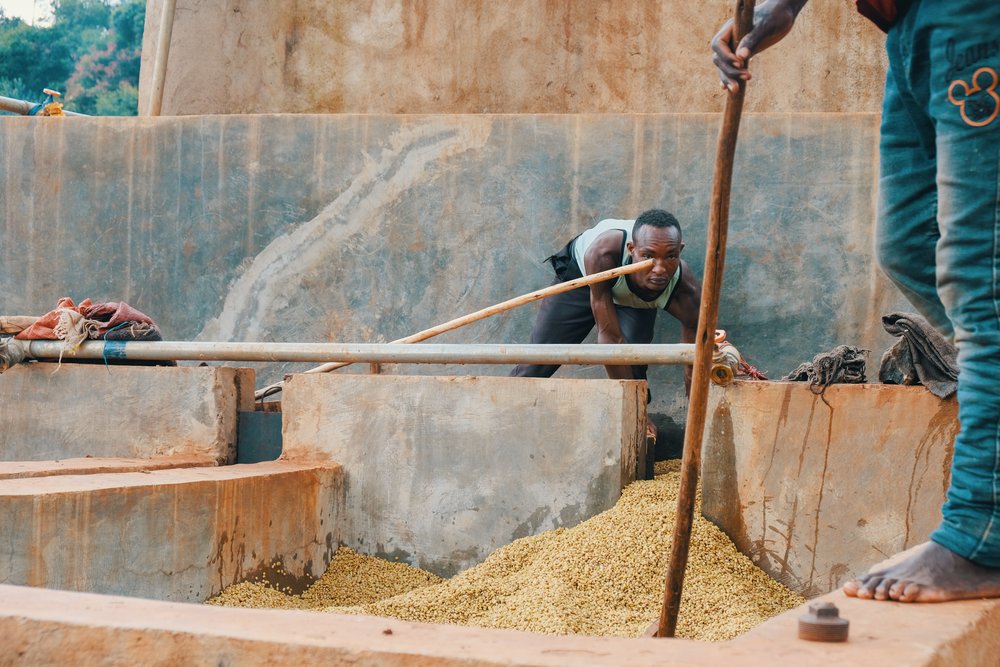
Junto Colombia El Guayapo – This comes to us from the Huila district by producer Jaime Burbano. This is a Pink Bourbon varietal grown at 1750 MASL, in an ideal forested climate for my favorite varietal. The cherry is picked and then held in the cherry for 15 hours before being dry fermented in sealed containers for 42 hours. This is technically not natural processing but is an advanced technique of washed where the cherry is used to ferment the seed for a fruitier profile. In the cup, I tasted Guava, orange marmalade, and cherry. I brewed this with a 16.2:1 water to coffee ratio and ground it right at my typical starting point. After a 40 second bloom, I poured three pulses spaced out by 40 seconds, finishing my last pour at 2:30 for a 3:10 brew time.
 Stimulus Coffee Club